The Authenticity Tax: How Being Yourself Became Labor

The Authenticity Tax: How Being Yourself Became Labor

The Vacancy Paradox: Empty Homes and Homelessness

How Engagement Algorithms Turn Social Media Into Outrage

Data Dignity: Should You Own Your Personal Data?

The Great Log-Off: Why Millions Quit Social Media

Platform Cooperativism: Workers Buying Back the Gig Economy
TL;DR: The quantified self movement began as a hacker-ethos pursuit of personal insight, but corporate wearables now funnel biometric data to employers, insurers, and data brokers. With 81% of Americans wrongly believing health apps are HIPAA-protected, a regulatory void enables health data to be sold for pennies while generating anxiety instead of empowerment.
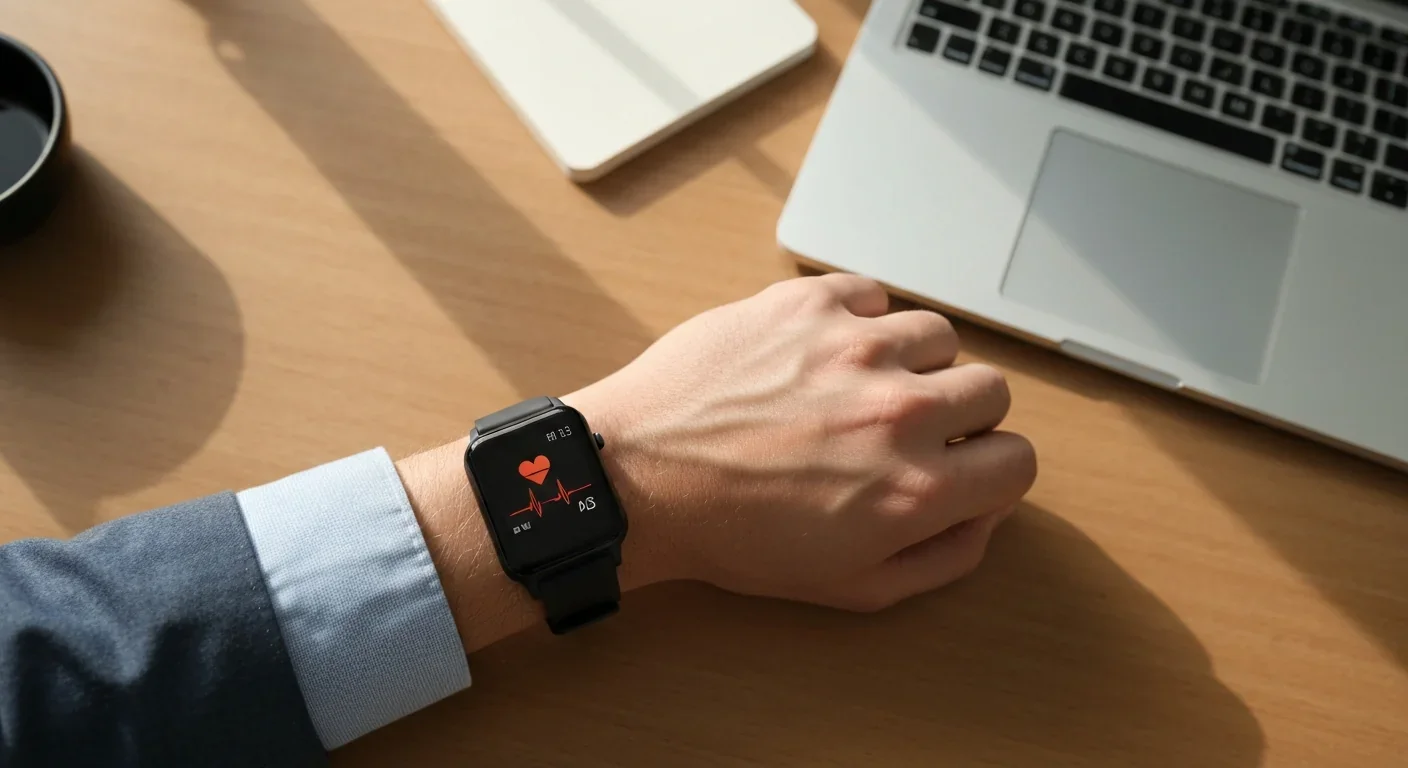
A quiet transformation is happening on the wrists of over half a billion people worldwide, and most of them have no idea. The fitness tracker you strap on every morning, the sleep app you check before coffee, the calorie counter you consult at lunch: each was sold to you as a tool for personal empowerment. Know yourself through numbers, the pitch went. Optimize your life on your own terms. But somewhere between the first Fitbit and your employer's latest wellness initiative, the data started flowing in directions nobody promised you it would.
In 2007, two Wired magazine editors named Gary Wolf and Kevin Kelly coined the term "Quantified Self" and organized the first meetups in San Francisco. Their rallying cry was simple and seductive: self-knowledge through numbers. The early community was small, nerdy, and genuinely idealistic. Members built their own tracking tools, shared spreadsheets at meetups, and debated what heart rate variability actually meant for wellbeing. Wolf gave a TED talk in 2010, and the ethos was clear: tools are means, not ends, and the point was question-driven experimentation, not algorithmic obedience.
The movement drew from hacker culture, DIY biology, and the Californian Ideology's faith in personal technology as liberation. It was radically individualist. You tracked what you wanted, you kept the data yourself, and you decided what it meant. Nobody was watching over your shoulder, and no corporation was monetizing your REM cycles.
That world is gone.
The mainstreaming happened fast. Fitbit launched in 2009. The Apple Watch arrived in 2015, adding GPS and swim-proofing by 2016, an ECG sensor by 2018, and blood oxygen monitoring by 2020. Wearable device shipments exploded from 102.4 million units in 2016 to 515.6 million by 2022. The global wearable biometric monitor market hit $10.72 billion in 2024 and is projected to reach $25.26 billion by 2034.
But here's what changed with scale. When the Quantified Self was a hobbyist community, you were both the researcher and the subject. When Apple, Google, and Garmin took over, you became the product. The language of self-knowledge persisted in marketing materials, but the architecture underneath was built for data extraction. A 2023 Pew Research study found that 45% of American adults now use wearables. Amazon's Halo, Apple Watch, Fitbit, and Garmin collectively hold biometric data on hundreds of millions of users globally.
That data doesn't just sit on your wrist.

Perhaps the most unsettling transformation has been the rise of employer wellness programs that use wearable data as a condition of benefits. In 2019, 88% of large employers offered some form of wellness program, and 42 million covered employees worked at companies with biometric screening programs requiring personal health disclosure. The Affordable Care Act actually codified that employers can offer incentives up to 30% of the cost of group health coverage for health-contingent wellness programs, including penalty premiums for non-participants.
That's not a nudge. That's a financial shove. Companies like BP and Target have rolled out wearable-based wellness programs, offering devices or subsidies to encourage participation. The average maximum incentive hit $783 in 2019, with 20% of firms offering incentives over $1,000. And participation is coerced through money: workers offered financial incentives completed health risk assessments at 50% rates versus 31% without incentives.
In 2019, 42 million American employees worked at companies with biometric screening programs that required disclosing personal health information. The Affordable Care Act permits employers to penalize non-participants with premiums up to 30% higher.
The legal landscape makes this worse. If an employer's wellness program isn't tied to its group health plan, HIPAA likely doesn't even apply to the data collected. And accessing individualized biometric data can trigger ADA discrimination claims if used in employment decisions, even inadvertently.
"If an HR department reviews a dashboard showing an employee's elevated heart rate, that might not just be a HIPAA issue, it could implicate disability discrimination laws as well."
- Akerman LLP, Employment Law Analysis
Research from HBR shows that 50% of employees resist tracking if it feels coercive, and a 2024 SHRM survey found that 60% of workers would quit over invasive tracking. Meanwhile, 60% of employees worry about data misuse according to a 2024 Edelman survey. The system generates compliance, not wellness.
The data flowing from your wrist doesn't stop at your employer. It enters a sprawling and largely unregulated data broker industry. Brokers including Acxiom, LexisNexis, and Epsilon have been documented selling health-inferred consumer segments derived from app and device data. These profiles categorize individuals into segments like "likelihood of having anxiety," "diabetes," and "high blood pressure".

The prices are shockingly low. Data brokers can sell your health and fitness data for as little as $0.06 per record. A Duke University investigation found that when researchers contacted 37 data brokers about purchasing mental health data, 11 were willing and able to sell it, with minimal vetting of the buyer and virtually no controls on use. One broker advertised names and postal addresses of individuals with depression, bipolar disorder, anxiety, PTSD, and OCD, along with their races and ethnicities. Another offered a 5,000-record dataset for $275.
Google paid almost $400 million in 2022 to settle FTC findings that it had been tracking Fitbit location data even after users disabled location services. In 2018, US military troops inadvertently shared routes on Strava, compromising operational security. A 2025 Nature study found that Apple and Google tend to be vague about how they report data sharing, often failing to disclose why user data is shared with third parties.
Some insurers now require a data feed from policyholders' devices to qualify for coverage. Academic research describes this as the extraction of "unwaged labor", where users continuously generate valuable data while remaining unaware that their biometric outputs are commodified and used against them.
Data brokers sell your health data for as little as $0.06 per record. A Duke University study found 11 out of 37 brokers were willing to sell mental health data with minimal buyer vetting and no controls on use.
Here's a fact that should alarm anyone who tracks their health digitally: 81% of Americans mistakenly believe that the data collected by their health apps is protected by HIPAA. It isn't. Health and fitness apps are typically not covered by HIPAA because app developers are not classified as "covered entities." Your doctor's records are protected. Your Fitbit data is not.
"We are witnessing an explosion of health apps and connected devices, many of which aren't covered by HIPAA, collecting vast amounts of sensitive consumer health information."
- Samuel Levine, Director, FTC Bureau of Consumer Protection
The FTC has started pushing back. It took enforcement action against GoodRx for sharing prescription data with Facebook, Google, and other advertising platforms. Its amended Health Breach Notification Rule, effective July 2024, expands breach notification requirements to apps not covered by HIPAA, with potential penalties of $43,792 per day for non-compliance. Senator Bill Cassidy introduced HIPRA in November 2025, essentially "HIPAA for apps and wearables," which would create a new category called Applicable Health Information and require consumer consent before any sale of health data.

But the US still lacks a comprehensive federal privacy law. Only four states have enacted data broker registration laws. Compare that to the EU, where the GDPR classifies biometric and health data as special categories requiring explicit consent, with fines that have hit Google for 50 million euros and Meta for 450 million euros. Most US privacy laws still operate through opt-out models rather than lawful bases, leaving users to navigate a patchwork of state statutes and corporate fine print.
Beyond privacy, there's a psychological cost that the self-tracking industry rarely acknowledges. A 2025 study published in the British Journal of Health Psychology analyzed 58,881 social media posts about top fitness apps and found widespread negative sentiment. Users described calorie targets that feel unattainable, confusion over exercise calories, and shame over eating ordinary foods. Streak mechanics amplified the pressure. "I was three days away from hitting my 100-day log streak on MyFitnessPal," one user wrote. "I missed one day and it's back at zero."
Clinicians have given this phenomenon a name: orthosomnia, sleep anxiety triggered by wearable feedback. Sleep tracking, designed to improve rest, actually worsens it for a significant number of users. A 2024 review in Frontiers in Digital Health found that while gamified health interventions improved short-term engagement, intrinsic motivation dropped once rewards were removed. A 2023 Lancet Digital Health commentary warned that "adaptive gamification risks replacing autonomy with algorithmic dependency."
Longitudinal evidence reveals attrition rates exceeding 50% within months for self-tracking devices, driven by usability issues, data overload, and waning motivation. Celebrity trainer Lauren Kleban captured it plainly: "Counting steps or calories can quickly spiral into a bit of an obsession."
Sociologist Deborah Lupton's research on self-tracking cultures has documented how many users don't fully understand the implications of giving data to third parties. Rachel Sanders' Foucauldian analysis in Body & Society argues that digital self-tracking devices "expand individuals' capacity for self-knowledge and self-care at the same time that they facilitate unprecedented levels of biometric surveillance". The same tool that tells you your resting heart rate also feeds a system designed to classify, predict, and monetize your body.

Something is shifting. The Global Wellness Summit's 2026 report identifies a decisive cultural pivot away from peak optimization toward nervous-system safety, emotional repair, and pleasure over metrics. Corporate wellness programs that once offered step-count challenges are adding breathwork facilitators and somatic coaches. A growing anti-tech fitness movement is advocating for unplugged workouts, body literacy, and the removal of algorithmic nudging from daily activity.
Shoshana Zuboff, whose concept of surveillance capitalism frames much of this analysis, has argued that the US missed an early opportunity to regulate data collection after 9/11, when the conversation shifted from privacy to "total information awareness." Harvard's Mathias Risse noted that the devices we carry are "the first thing we touch in the morning and the last thing we touch at night", and all the data they emit is processed for commercial purposes.
What would genuine data autonomy look like? It would mean open-source tracking tools where you own the data. It would mean real data portability and an enforceable right to deletion, like California's Delete Act, which lets consumers request removal of personal information from data brokers through a single request. It would mean ethical gamification with transparency about why challenges exist, alignment with actual health outcomes, and opt-out features that don't penalize you.
Gary Wolf, who started all of this in 2007, spent 2020 co-developing a conceptual framework for "personal science", trying to return self-tracking to its roots of individual inquiry rather than corporate compliance. The tools are still powerful. The question is whether we can reclaim them from the systems that have co-opted them, or whether "self-knowledge through numbers" will remain a marketing slogan for an infrastructure of behavioral surveillance.
The tracker on your wrist is still collecting data right now. The question worth asking isn't what your sleep score was last night. It's who else is reading it.

Project Orion was a real 1960s program to reach other stars by detonating 800 nuclear bombs behind a spacecraft. The physics worked and the engineering was feasible, but the 1963 nuclear test ban treaty killed it. It remains the most credible interstellar spacecraft ever designed.

The locus coeruleus, a tiny brainstem structure, degenerates decades before Alzheimer's symptoms appear. Its loss cripples the brain's inflammation control, waste clearance, and sleep regulation. New imaging tools and noradrenergic therapies offer hope for early detection and prevention.

Research shows the sharing economy often increases total resource consumption through the Jevons paradox and rebound effects. Ride-sharing adds billions of vehicle miles, co-working spaces use more energy per worker, and diffused responsibility erodes conservation behavior. Breaking the paradox requires congestion pricing, accountability design, and matching sharing models to appropriate resource types.

Psychological reactance theory explains why banning or restricting things makes people want them more. From Prohibition to the Streisand effect to scarcity marketing, research shows that threatening people's freedom reliably backfires, and autonomy-supportive communication is far more effective.

A carnivorous pitcher plant in Borneo evolved to house bats instead of trapping insects, gaining up to 95% of its nitrogen from bat guano. The plant even built an ultrasonic reflector to help bats find it, revealing that carnivory in plants is a flexible spectrum.
The quantified self movement began as a hacker-ethos pursuit of personal insight, but corporate wearables now funnel biometric data to employers, insurers, and data brokers. With 81% of Americans wrongly believing health apps are HIPAA-protected, a regulatory void enables health data to be sold for pennies while generating anxiety instead of empowerment.

CXL memory pooling lets servers dynamically share DRAM over a cache-coherent interconnect, eliminating the 40% stranded memory waste in data centers. With commercial hardware now shipping and Azure deploying CXL cloud instances, this technology promises to cut memory costs by 50% while enabling composable infrastructure.

Loading featured articles...