Self-Tracking to Surveillance: Quantified Self's Fall

Self-Tracking to Surveillance: Quantified Self's Fall

The Authenticity Tax: How Being Yourself Became Labor

The Vacancy Paradox: Empty Homes and Homelessness

How Engagement Algorithms Turn Social Media Into Outrage

Data Dignity: Should You Own Your Personal Data?

Platform Cooperativism: Workers Buying Back the Gig Economy
TL;DR: Millions are leaving social media platforms driven by privacy scandals, mental health concerns, and algorithmic manipulation. While 60% relapse within a week, those who stay away report dramatically improved wellbeing, and decentralized alternatives like Bluesky are surging.

The data reveals a pattern that sociologists never predicted. For a generation that grew up believing social media was as essential as running water, millions of users are now doing something extraordinary: they're deliberately walking away. Not in a dramatic, door-slamming fashion, but through a slow, steady erosion of faith in platforms that once promised to connect the world. Global survey data from 250,000 adults across 50 countries shows that time spent on social media peaked in 2022, with young people leading the sharpest declines. What started as scattered personal choices has become something bigger, louder, and harder for Silicon Valley to ignore.
Something fundamental shifted in the relationship between users and platforms around 2018. That was the year the Cambridge Analytica scandal broke wide open, revealing that the personal data of up to 87 million Facebook users had been harvested through a seemingly innocent personality quiz app. The #DeleteFacebook hashtag erupted globally.
Surveys found that 42% of Facebook users took a break from the platform that year, and 7.8% deleted or deactivated their accounts entirely. The cost wasn't just reputational. An estimated $1.4 billion in advertising revenue vanished with those deleted accounts.
When 42% of a platform's users take a break in a single year, that's not a trend. That's a warning shot.
But Cambridge Analytica was just the opening act. The real earthquake came in October 2022, when Elon Musk completed his $44 billion acquisition of Twitter. What followed was a cascade of mass layoffs that gutted content moderation and safety teams, a rebrand to X that erased the platform's iconic identity, and policy changes that left both users and advertisers scrambling.
By October 2024, X's daily active users in the US had fallen 8.4%, dropping from 32.3 million to 29.6 million. The platform's brand value plummeted from $5.7 billion to just $673 million.
Just as the printing press didn't merely change reading habits but restructured how societies organized knowledge, the social media exodus is reshaping the architecture of digital public life. There's a crucial difference between someone quietly deleting Instagram over the weekend and the coordinated waves of departure we've seen over the past four years.

Individual sabbaticals tend to be driven by mental health concerns. A 2022 meta-analysis by Liu et al. found that depression risk increases by roughly 13% for every additional hour of daily social media use. A JAMA Pediatrics study from the same year showed that cutting social media use by 50% for just three weeks significantly reduced depression and anxiety in young adults.
Mass exodus events, by contrast, require a trigger and a destination. The Musk acquisition provided both. Research on platform migration shows that leaving a platform requires a compelling reason and an immediate viable alternative. When Musk began dismantling Twitter's content moderation infrastructure, Bluesky surged to 20 million users in November 2023, gaining several users per second.
Mastodon reported surges of several hundred thousand new accounts within 48-hour windows after each new X controversy.
The psychological case for stepping back has never been stronger. 66% of Gen Z report that social media impacts their mental health, with Instagram and TikTok most associated with negative self-image. Instagram's own internal research, leaked in 2021, found the platform worsened body image issues for teenage girls, a revelation that poured fuel on an already smoldering fire.
Here's what makes this paradoxical: 55% of Gen Z users have taken at least one social media detox in the past year, yet they remain the heaviest users. The average Gen Z person spends roughly nine hours a day in front of screens and over six hours on their phones alone. That tension between knowing something hurts you and being unable to stop is the hallmark of addictive design, and platforms are built to exploit it.
"The infinite scroll design, deliberately engineered with no natural stopping point, makes habitual disengagement structurally difficult."
- North American Community Hub, Digital Fatigue Report 2026

51% of Gen Z report doomscrolling, the compulsive consumption of negative news, driven by algorithmic amplification of emotionally charged content. And when users do try to leave, research shows nearly 60% relapse within a single week. Social media withdrawal triggers symptoms remarkably similar to substance withdrawal, including mood shifts, anxiety, and intense cravings.
But there's good news too. Among those who do manage to leave, 45.6% report being significantly happier and another 40.5% slightly happier. More than 53% say their relationships improved after deleting Facebook. The science increasingly supports what the quitters already know: stepping away works, if you can actually stay away.
The exodus hasn't created a single new digital homeland. Instead, it has fragmented the audience across a constellation of alternatives with different philosophies and trade-offs.
Bluesky has emerged as the most successful Twitter replacement precisely because it feels like old Twitter. Created in 2019 as a research project within Twitter under Jack Dorsey, it became independent after the Musk acquisition. Its growth has been explosive, with a 1,064% increase in users since October 2023. Starter packs, curated lists of people to follow, have accelerated community building and lowered the friction that killed previous alternatives.
Mastodon and the broader Fediverse represent the ideological alternative: decentralized networks where each server governs its own moderation policies, connected through the ActivityPub protocol. The Fediverse grows in waves tied directly to events on centralized platforms, but Mastodon's server-selection barrier has limited mainstream adoption.

Then there are those who leave for nowhere digital at all. Digital detox has evolved from a personal wellness trend into a structured set of practices involving device minimalism, time-management tools, and intentional offline recreation. The movement has its own paradox, though: influencers now document their detox journeys in detail, framing disconnection as aspirational content, essentially performing their exit on the very platforms they claim to be leaving.
Advertisers have responded to the exodus with their wallets. In November 2023, major brands including Apple, Disney, and Coca-Cola stopped advertising on X over content moderation failures and brand safety concerns. X's US ad revenue fell 78% in December 2022 and continued declining 55% year-over-year each month after that.
But the advertising money didn't disappear. It migrated. Influencer marketing spending has surpassed traditional digital ad budgets even as overall user time declines. Platforms like Reddit have found success by embedding brands within the user journey rather than interrupting it, blending community trust with advertising in ways that feel less extractive.
X's brand value dropped from $5.7 billion to $673 million in just two years, one of the fastest value destructions in social media history.
Meanwhile, Facebook still counts over 3.07 billion monthly active users. Even Instagram hit 3 billion. The platforms aren't dying, but they're changing who uses them and how. Average daily social media time dropped to 2 hours and 21 minutes, the first decrease since 2018. Facebook has quietly shifted to metrics like "family daily active people", a creative rebrand that obscures per-platform user loss.
Why is leaving so hard? The answer lies in dark patterns, the design choices that make departure psychologically costly. Platforms deploy confirmshaming, roach motels, and forced continuity to keep users locked in. The process of actually deleting an account is often buried behind multiple screens, punctuated by guilt-inducing messages about friends you'll lose and memories you'll forfeit.
Research from UNSW found that social media platforms actively trap users in networks they would rather leave. The average internet user maintains accounts on 6.7 social media platforms, creating a web of cross-platform dependencies that makes any single departure feel incomplete. Facebook's role as a universal contact directory keeps billions of users tethered even when engagement plummets.

81% of Gen Z say they're concerned about data privacy on social media, yet only 14% fully trust platforms to handle their information responsibly. That gap between distrust and continued use is the space where algorithmic design does its most effective work.
"Our days of trusting Big Tech without hesitation are over, and there's a palpable sense that things need to change."
- 1827 Marketing, The Rise of the Fediverse
The social media exodus isn't a single event with a beginning and an end. It's an ongoing negotiation between users who want connection and platforms that profit from attention. Within the next decade, you'll likely see this tension reshape the internet itself.
The rise of AI-generated content is accelerating the departure. When feeds fill with synthetic posts and bot-generated engagement, the social part of social media withers. 94% of consumers want AI content disclosed, but platforms are slow to comply.
Decentralized networks built on open standards like ActivityPub offer something that legacy platforms cannot: data portability and user sovereignty. If one server fails or changes its policies, the wider network persists. That resilience, built into the architecture itself, represents a genuine shift in how digital communities can organize.
The great log-off isn't really about logging off at all. It's about millions of people, armed with better data about what these platforms cost them, making more deliberate choices about where to invest their attention. The era of passive, unlimited scrolling is ending. What replaces it will depend on whether users demand better, or whether the algorithms once again find a way to pull them back.

Project Orion was a real 1960s program to reach other stars by detonating 800 nuclear bombs behind a spacecraft. The physics worked and the engineering was feasible, but the 1963 nuclear test ban treaty killed it. It remains the most credible interstellar spacecraft ever designed.

The locus coeruleus, a tiny brainstem structure, degenerates decades before Alzheimer's symptoms appear. Its loss cripples the brain's inflammation control, waste clearance, and sleep regulation. New imaging tools and noradrenergic therapies offer hope for early detection and prevention.
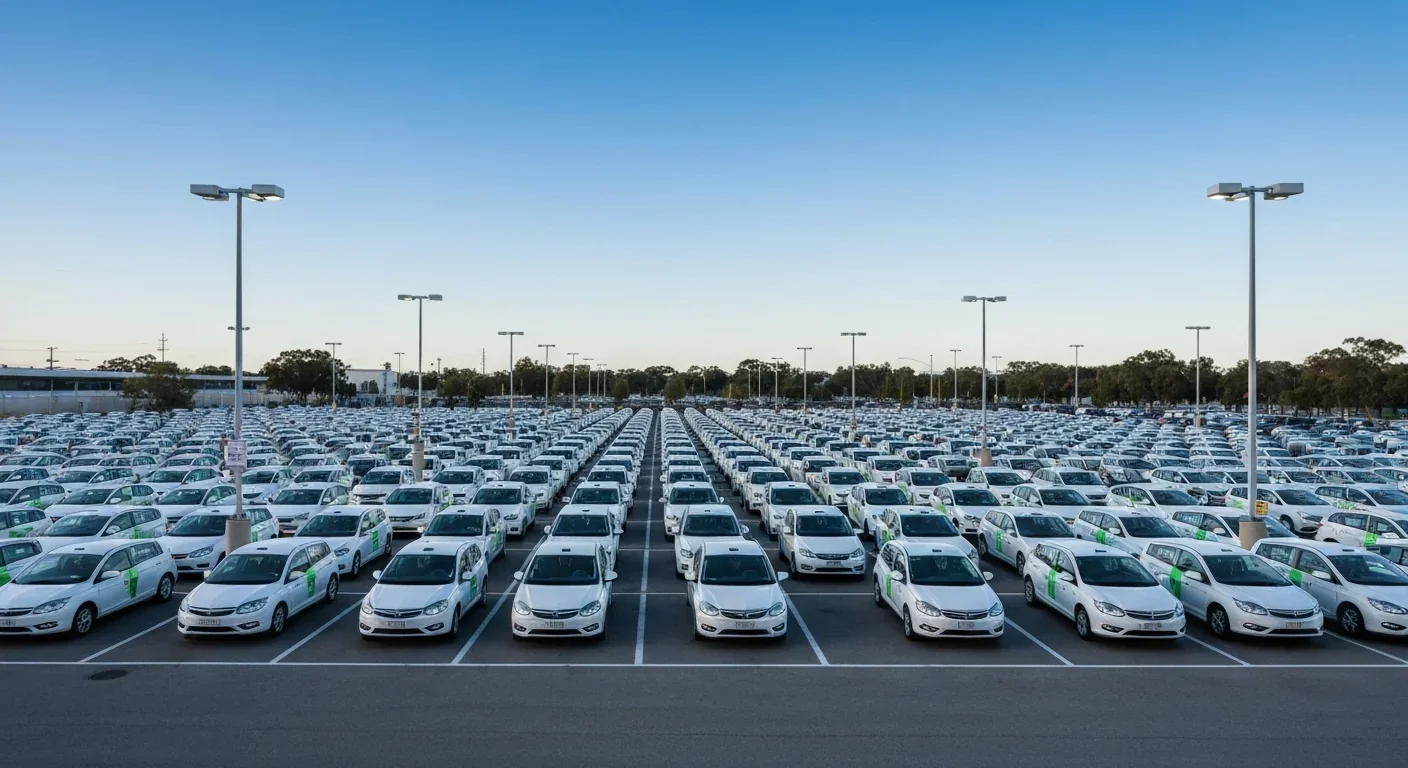
Research shows the sharing economy often increases total resource consumption through the Jevons paradox and rebound effects. Ride-sharing adds billions of vehicle miles, co-working spaces use more energy per worker, and diffused responsibility erodes conservation behavior. Breaking the paradox requires congestion pricing, accountability design, and matching sharing models to appropriate resource types.

Psychological reactance theory explains why banning or restricting things makes people want them more. From Prohibition to the Streisand effect to scarcity marketing, research shows that threatening people's freedom reliably backfires, and autonomy-supportive communication is far more effective.

A carnivorous pitcher plant in Borneo evolved to house bats instead of trapping insects, gaining up to 95% of its nitrogen from bat guano. The plant even built an ultrasonic reflector to help bats find it, revealing that carnivory in plants is a flexible spectrum.
The quantified self movement began as a hacker-ethos pursuit of personal insight, but corporate wearables now funnel biometric data to employers, insurers, and data brokers. With 81% of Americans wrongly believing health apps are HIPAA-protected, a regulatory void enables health data to be sold for pennies while generating anxiety instead of empowerment.

CXL memory pooling lets servers dynamically share DRAM over a cache-coherent interconnect, eliminating the 40% stranded memory waste in data centers. With commercial hardware now shipping and Azure deploying CXL cloud instances, this technology promises to cut memory costs by 50% while enabling composable infrastructure.

Loading featured articles...