Self-Tracking to Surveillance: Quantified Self's Fall

Self-Tracking to Surveillance: Quantified Self's Fall

The Authenticity Tax: How Being Yourself Became Labor

The Vacancy Paradox: Empty Homes and Homelessness

How Engagement Algorithms Turn Social Media Into Outrage

Data Dignity: Should You Own Your Personal Data?

The Great Log-Off: Why Millions Quit Social Media
TL;DR: Platform cooperatives are worker-owned alternatives to gig economy giants like Uber and DoorDash, with over 1.2 million workers in 53 countries. Real examples like Namma Yatri and Stocksy United show the model works, though scaling against VC-backed incumbents remains the central challenge.

What happens when gig workers stop complaining about Uber and build their own version instead? In cities from New York to Bangalore, that question has gone from coffeehouse fantasy to functioning business model. A growing network of worker-owned digital platforms is proving that the technology powering the gig economy doesn't require the exploitation baked into it. They're called platform cooperatives, and while they won't topple Silicon Valley tomorrow, the most successful ones are generating real revenue, paying workers significantly more, and forcing a serious rethinking of who should own the apps we all depend on.
Platform cooperativism applies a simple but radical idea to digital labor: what if the people who do the work also owned the platform? The concept, first articulated by scholar Trebor Scholz at The New School in the mid-2010s, emerged from a pointed critique of venture-capital-funded platforms like Uber and Airbnb that prioritize rapid scaling and profit extraction over worker welfare. In a platform cooperative, workers, users, or communities collectively own and govern the digital infrastructure they use, following one-member-one-vote principles and distributing surpluses to members rather than external investors.
This isn't just theory. More than 1.2 million workers across 53 countries now participate in the cooperative digital economy, according to the Platform Cooperativism Consortium. The movement has grown from a sketch on a whiteboard to a global network spanning more than 60 countries, linking universities, cooperatives, unions, and grassroots organizations. Its 11th international conference, held in Istanbul in November 2025, drew participants from over 30 countries.
But here's the tension that makes this story interesting: as of 2022, fewer than 100 platform cooperatives had been documented worldwide, compared to thousands of investor-backed platforms. The movement is real, growing, and producing tangible results, yet it remains a fraction of the gig economy's total footprint.
More than 1.2 million workers in 53 countries now participate in the cooperative digital economy, yet fewer than 100 platform cooperatives had been documented as of 2022, compared to thousands of investor-backed platforms.
The cooperative model is hardly new. In 1844, a group of weavers in Rochdale, England opened a grocery store based on shared ownership and democratic governance. That experiment became the template for a global movement: by 2012, roughly one billion people across 96 countries belonged to at least one cooperative, and the world's 300 largest cooperatives generated $2.2 trillion in turnover.
What is new is applying these 180-year-old principles to software. The gig economy's rise in the 2010s created a paradox: technologies that promised to liberate workers from traditional employment instead produced a new regime of algorithmic management where "deactivation" became an everyday form of automated dismissal. AI systems now mediate pricing, scheduling, evaluation, and discipline, with workers having zero input into the rules governing their livelihoods.
The financial data tells the story clearly. From December 2024 to December 2025, average customer ride prices on Uber and Lyft rose 9.6%, while driver gross pay per hour increased just 4.1%. Platform fees per trip surged by more than 33% while driver pay growth was less than half that. DoorDash workers earned an average of $11 per hour, the lowest of all major gig apps analyzed by Gridwise. The gap between what customers pay and what workers earn has become the defining feature of the conventional gig model.

Against this backdrop, platform cooperativism didn't emerge from academic abstractions. It grew from the frustration of workers watching platforms capture an increasingly large share of the value they created. US startups attracted $178 billion in venture funding in 2024.
"If you're not trying to bankroll an assault on workers rights in the United States, it turns out you save a lot of money."
- Erik Forman, co-founder of The Drivers Cooperative
The most compelling evidence for platform cooperativism comes not from academic papers but from the cooperatives themselves. Several have moved well beyond the proof-of-concept stage into sustained, revenue-generating operations.
Stocksy United, a stock photography cooperative founded in 2013 by iStock co-founder Bruce Livingstone, pays artists 50-75% of every license sold, compared to an industry average of roughly 20%. The cooperative has paid out over $50.1 million in royalties to its artist-members, grown to more than 1,800 artists across 80 countries, and manages over 2 million assets. Each member holds one vote in company decisions through a resolution framework, and surplus profits are distributed through a year-end patronage program.
Stocksy's three-class shareholder structure, covering advisors, staff, and artists, ensures that the people creating the content govern the company that sells it. The cooperative's hybrid model of licensing royalties plus end-of-year profit sharing provides both immediate and residual income, mitigating the pay volatility that plagues traditional gig work.
The Drivers Cooperative launched in New York City in May 2021, enrolling 2,500 drivers at its inception and reaching 40,000 users by August of that year. The cooperative takes just 15% of each fare for overhead, compared to the 25-40% charged by Uber and Lyft. Drivers earn a minimum of $1.64 per mile, above the city's mandated $1.26. The platform doesn't engage in surge pricing, offering riders fixed-price rides instead.
Built using existing commercial APIs like Google Maps, Stripe, and Waze, the cooperative kept technology development costs manageable without requiring massive VC investment. Seed money came from community-development financial institutions, local credit unions, and crowdfunding on Wefunder, illustrating a bootstrapping model other cooperatives could replicate.
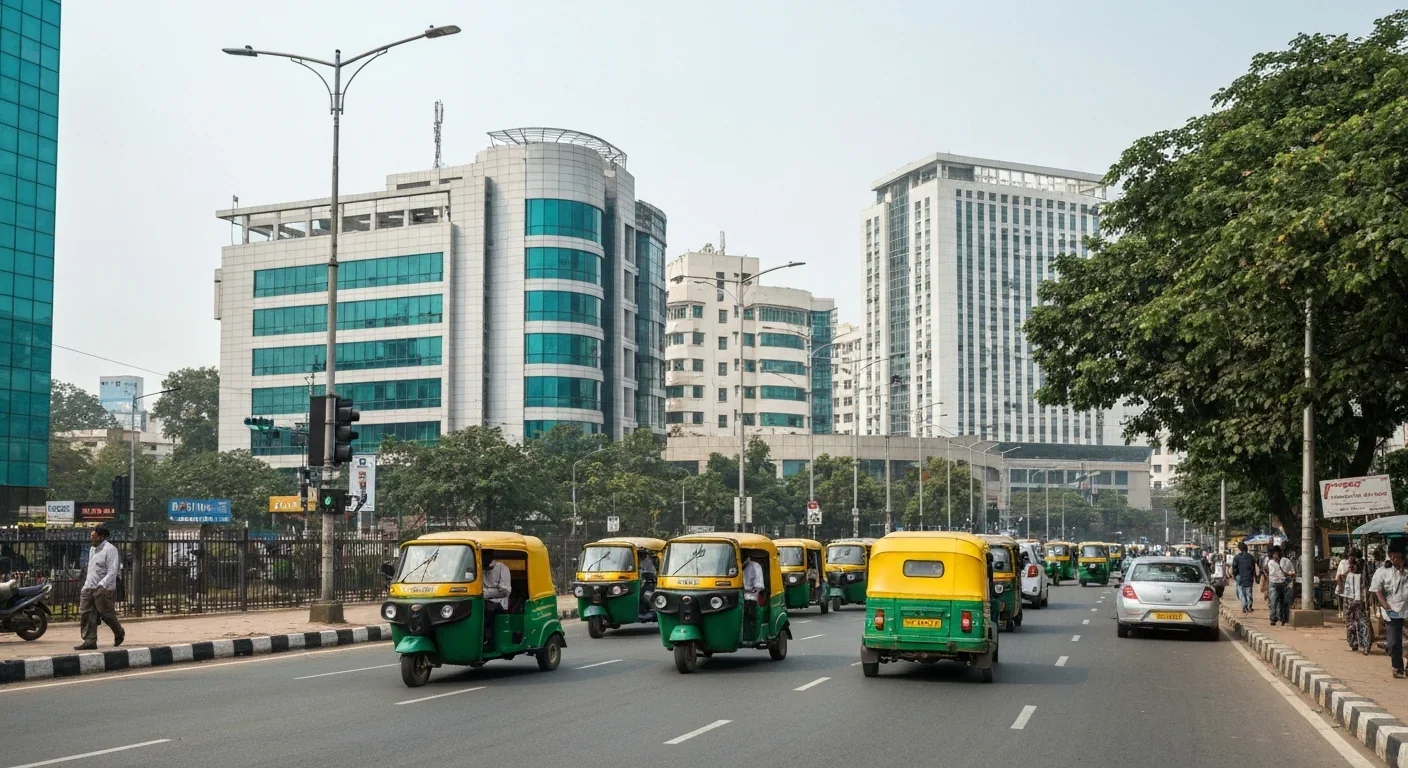
Namma Yatri in Bangalore, India, may be the movement's most dramatic success story. Built on an open-source Beckn protocol under India's Open Network for Digital Commerce initiative, the platform charges zero commission to drivers, instead using a flat subscription fee of roughly $0.30 per day. Within two years, it captured 25% of Bangalore's ride-hailing market share, with per-ride infrastructure costs driven down to about $0.06 through open-source routing and cloud optimization. Drivers receive 100% of payment directly from customers.
In the creative industries, TheFlow operates as a California cooperative corporation where musicians can earn over $100,000 per year with just 3,608 dedicated subscribers. Resonate, the ethical music streaming co-op, uses a "Stream2Own" model where listeners pay $0.005 for the first stream, doubling until the ninth, when the track becomes free forever. Membership costs $10 per year, granting one share and a vote in platform governance.
Platform cooperatives face a fundamental structural disadvantage: they can't access venture capital without surrendering the democratic ownership that defines them. Raising capital without diluting member control is arguably the single biggest obstacle to scaling.
But a dedicated financing ecosystem is emerging to fill the gap. Seed Commons has provided over $100 million in loans to worker-owned businesses since 2016. Capital Impact Partners has lent $250 million in support of cooperatives. The Capital to Cooperatives Act has been signed into law, improving small business loan access for employee-owned businesses through SBA lending programs.
The numbers show cooperatives can work financially. Worker cooperatives in the US employ an estimated 6,454 workers across 465 operational co-ops, generating roughly $505 million in annual revenue. The average wage paid is $19.67, more than $7.00 above the minimum wage in the states with the most co-ops. Worker-owners earn an additional $8,241 on average through patronage distributions, providing a financial cushion that gig workers on conventional platforms simply don't have.
Research indicates that employee-owned firms outperformed peers during the 2020 pandemic in retaining employees, safeguarding health, and maintaining wages. Cooperatives, it turns out, are built for resilience, not just revenue.
Worker-owners in US cooperatives earn an average of $19.67 per hour, plus $8,241 annually in patronage distributions, while DoorDash gig workers average just $11 per hour with no ownership stake or profit sharing.

Platform cooperatives aren't just about better pay. They're reshaping power dynamics for workers who have historically had the least of it.
Research from New York City's cleaning and care worker cooperatives found that members' hourly wages jumped from $7-20 before joining to $15-30 after. But the effects went beyond money. Workers reported greater schedule flexibility, improved safety on job sites, increased confidence in negotiating with clients, and growing political awareness and activism.
For immigrant women in low-wage service work, cooperative membership provided the knowledge, skills, and confidence to challenge traditional power structures, both at work and at home. As one member described it, joining the cooperative made her aware of social-justice issues she'd never considered before. The cooperative model becomes a vehicle for broader empowerment, not just economic improvement.
"Worker cooperatives may be the most coherent alternative to capitalism as we know it because they put capital at the service of labor instead of the other way around."
- Esteban Kelly, executive director of the US Federation of Worker Cooperatives
Platform cooperativism looks different depending on where you stand. In Europe, CoopCycle has built a federation of food delivery cooperatives emphasizing local governance and ethical labor standards. Fairbnb applies cooperative principles to short-term rentals, channeling booking fees back into local communities.
In India, the government's dual role as both supporter and potential competitor of Namma Yatri illustrates the complex policy environment cooperative platforms navigate. While the ONDC initiative provides infrastructure, the government is also planning a state-run platform that could compete with the very cooperatives it helped create. The platform's open-source code and real-time dashboard provide a transparency that conventional ride-hailing giants simply don't offer.
In the United States, concrete legislative action is moving forward. Colorado and New York have passed or considered legislation supporting cooperative platforms. Brooklyn's Center for Family Life has incubated more than 20 cooperative businesses since 2006, including Up & Go, described as the first gig platform owned by its member cooperatives. Governments in Brazil, South Korea, and Kerala have also stepped into digital markets to confront platform monopolies and reduce labor precarity.

The PCC itself has evolved significantly. Over the past two years, the consortium has shifted its focus toward cooperative approaches to AI, recognizing that the underlying technology stack, from data to algorithms to governance, must also be democratized. The "Solidarity Stack" concept envisions cooperative data centers, federated AI infrastructure, and locally anchored language models stretching from South Africa and Kenya to Mongolia, all coordinated through democratic governance inspired by systems like SWIFT.
From localized large language models in the Global South to union-led AI strategies in the United States, the movement is positioning cooperative ownership as relevant not just to ride-hailing and photography, but to the entire artificial intelligence ecosystem. The question is no longer just "who owns the app?" but "who owns the algorithm?"
Platform cooperativism won't replace Uber anytime soon. The movement faces genuine structural barriers: limited access to growth capital, slower decision-making inherent in democratic governance, and the brutal challenge of competing against incumbents with massive network effects and subsidy-driven pricing.
But dismissing cooperatives because they haven't achieved Uber-scale growth misses the point entirely. These platforms were never designed to play that game. They're designed to prove that technology can serve workers instead of extracting from them, and that businesses can be both financially sustainable and structurally fair.
The market conditions are shifting in their favor. Fifty-five percent of US consumers say they'd cut back on rideshare usage if prices continue rising. Autonomous vehicles threaten to eliminate gig driving jobs altogether. Pay for many gigs has fallen over recent years. In this environment, the cooperative model offers something VC-backed platforms structurally cannot: a business where the interests of the people doing the work are, by design, the interests of the company itself.
Within the next decade, you'll likely encounter platform cooperatives in transportation, creative work, care services, and food delivery. They might not have the sleekest app or the cheapest fare. But they'll offer something increasingly rare in the platform economy: the knowledge that the person serving you actually owns a piece of the business, and had a vote in how it runs.

Project Orion was a real 1960s program to reach other stars by detonating 800 nuclear bombs behind a spacecraft. The physics worked and the engineering was feasible, but the 1963 nuclear test ban treaty killed it. It remains the most credible interstellar spacecraft ever designed.

The locus coeruleus, a tiny brainstem structure, degenerates decades before Alzheimer's symptoms appear. Its loss cripples the brain's inflammation control, waste clearance, and sleep regulation. New imaging tools and noradrenergic therapies offer hope for early detection and prevention.
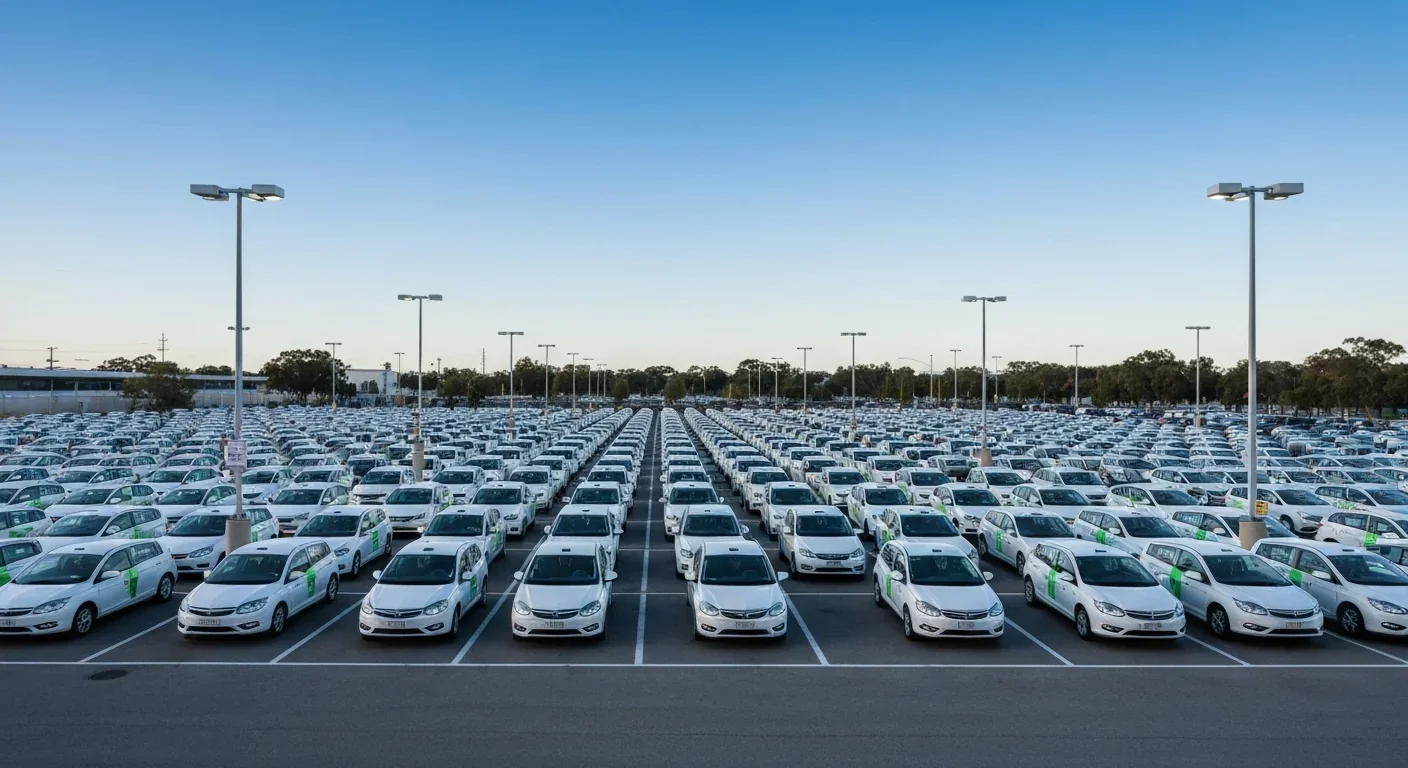
Research shows the sharing economy often increases total resource consumption through the Jevons paradox and rebound effects. Ride-sharing adds billions of vehicle miles, co-working spaces use more energy per worker, and diffused responsibility erodes conservation behavior. Breaking the paradox requires congestion pricing, accountability design, and matching sharing models to appropriate resource types.

Psychological reactance theory explains why banning or restricting things makes people want them more. From Prohibition to the Streisand effect to scarcity marketing, research shows that threatening people's freedom reliably backfires, and autonomy-supportive communication is far more effective.

A carnivorous pitcher plant in Borneo evolved to house bats instead of trapping insects, gaining up to 95% of its nitrogen from bat guano. The plant even built an ultrasonic reflector to help bats find it, revealing that carnivory in plants is a flexible spectrum.
The quantified self movement began as a hacker-ethos pursuit of personal insight, but corporate wearables now funnel biometric data to employers, insurers, and data brokers. With 81% of Americans wrongly believing health apps are HIPAA-protected, a regulatory void enables health data to be sold for pennies while generating anxiety instead of empowerment.

CXL memory pooling lets servers dynamically share DRAM over a cache-coherent interconnect, eliminating the 40% stranded memory waste in data centers. With commercial hardware now shipping and Azure deploying CXL cloud instances, this technology promises to cut memory costs by 50% while enabling composable infrastructure.

Loading featured articles...