Self-Tracking to Surveillance: Quantified Self's Fall

Self-Tracking to Surveillance: Quantified Self's Fall

The Authenticity Tax: How Being Yourself Became Labor

The Vacancy Paradox: Empty Homes and Homelessness

How Engagement Algorithms Turn Social Media Into Outrage

Data Dignity: Should You Own Your Personal Data?

The Great Log-Off: Why Millions Quit Social Media
TL;DR: Mutual aid apps like Buy Nothing and Olio are building massive networks where neighbors share resources without money. These platforms, supercharged by the pandemic, face a central tension: can community trust survive when Silicon Valley logic comes knocking?

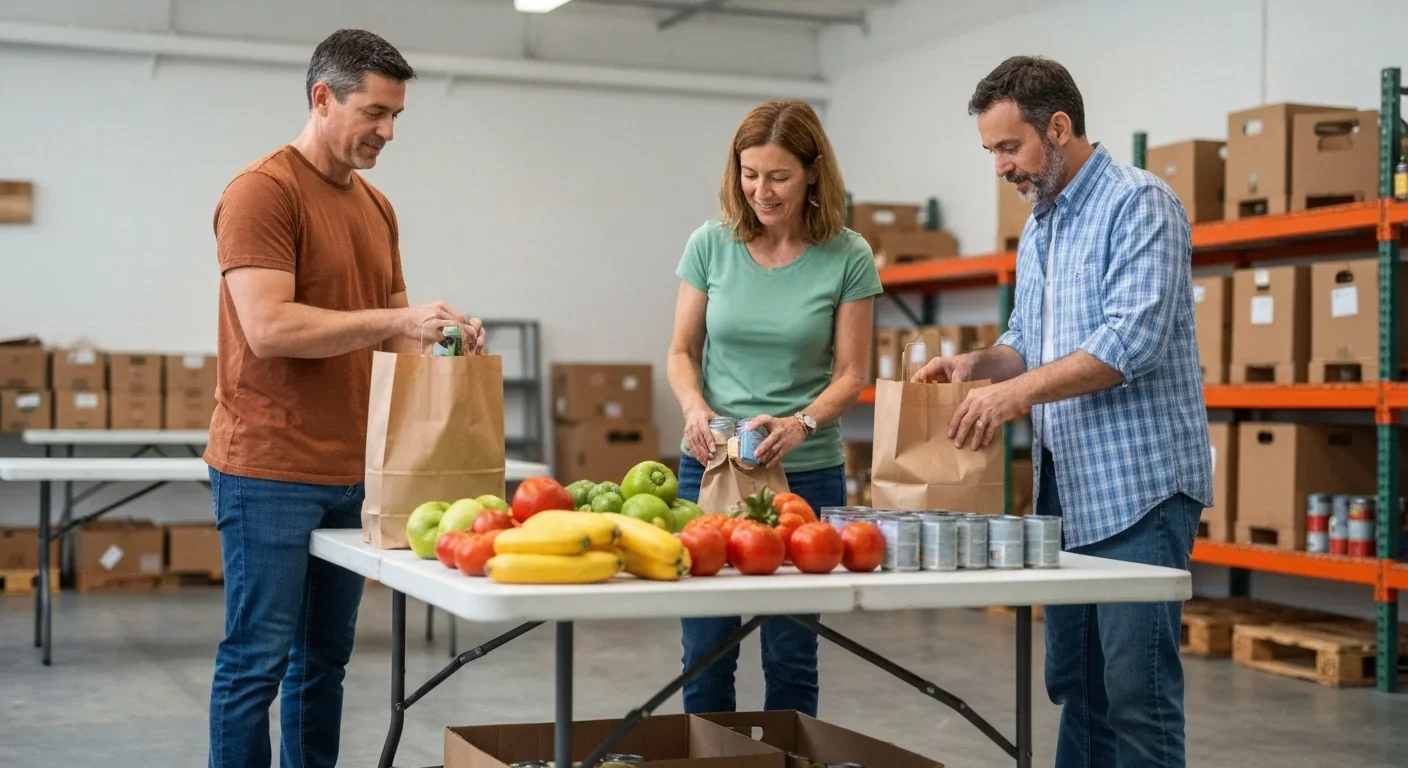
Over six million people worldwide now belong to Buy Nothing groups, hyper-local communities organized by neighborhood where members give away things they no longer need and request items they want, entirely for free. In the UK, Olio has grown to 8.8 million users across 60 countries, rescuing 120 million meals from waste through peer-to-peer sharing and business partnerships. These aren't fringe projects. They represent a fundamental rethinking of what "sharing economy" actually means, because the so-called sharing economy never really involved much sharing at all.
Geographer Lizzie Richardson put it bluntly: the sharing economy is "a paradox, since it was framed as both capitalist and an alternative to capitalism." Platforms like Uber and Airbnb marketed access as sharing, but underneath the branding sat a profit-extraction engine. The new mutual aid platforms reject that logic at a structural level. There are no transaction fees. No ratings that determine whether you deserve help. No algorithmic sorting of who gets served first. Resources are shared unconditionally, and the design choices that make these platforms work are as deliberate as anything Silicon Valley has ever built.
What researchers are now discovering is that this model doesn't just survive without money. In many cases, it thrives precisely because money is absent.
The idea that cooperation beats competition isn't new. In 1902, Russian naturalist Peter Kropotkin published Mutual Aid: A Factor of Evolution, arguing that species practicing mutual support were the ones that survived and flourished. Kropotkin saw cooperation not as charity or sentimentality but as a biological imperative, as much a law of nature as the struggle for existence. More than a century later, JSTOR Daily notes that mutual aid "still gets short shrift" in popular culture because it's "not as sexy or box office as the idea of nature, red in tooth and claw."
But history tells a different story. The Black Panther Party's breakfast programs in the 1960s fed thousands of children through volunteer networks. LGBT+ communities built mutual aid infrastructure during the AIDS crisis when governments looked away. In the 1980s, legal scholar Edgar Cahn developed time banking, a system where one hour of anyone's service equals exactly one credit, regardless of what you do. Plumber or poet, your time counts the same.
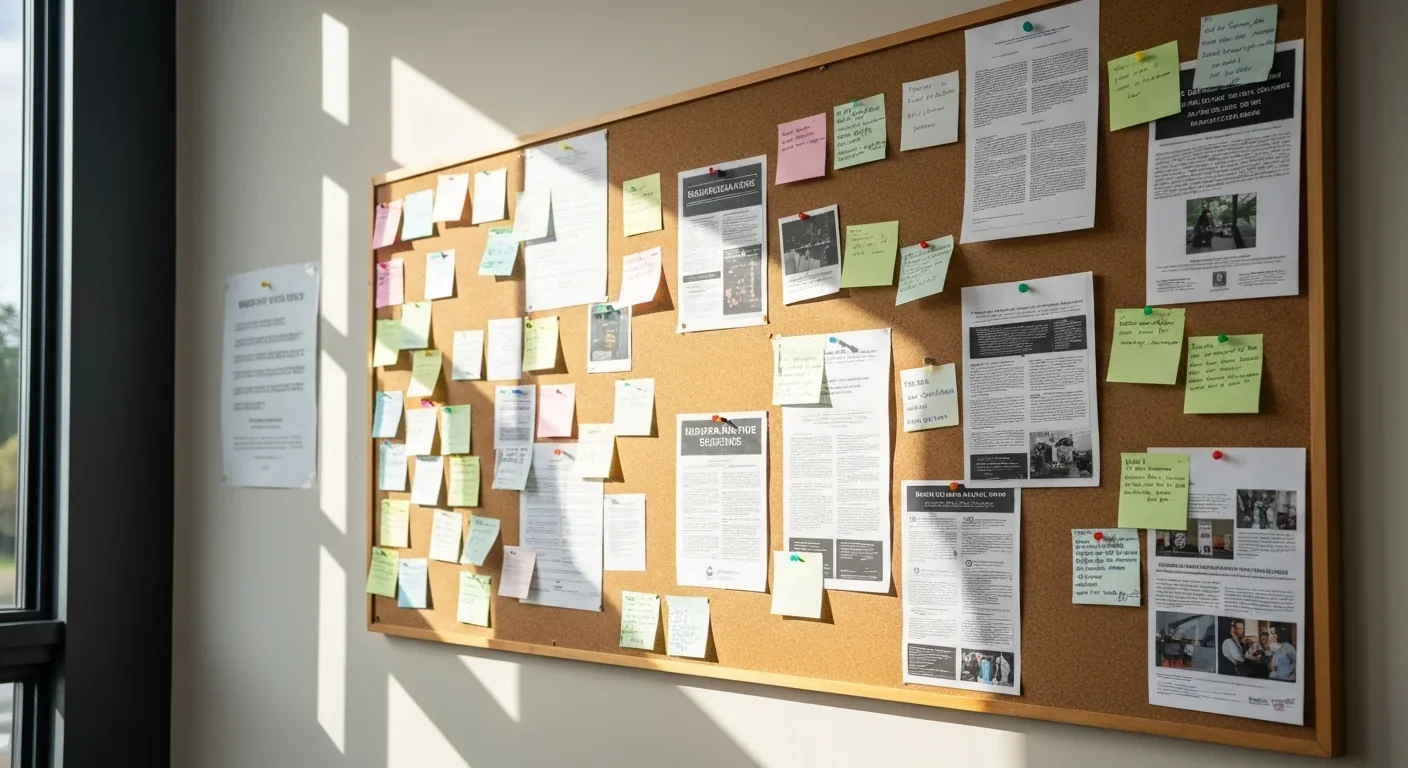
Modern time banks now use digital platforms to match needs with offerings, and in many jurisdictions these exchanges are exempt from taxation because they're classified as mutual aid rather than commercial activity.
"The fundamental concept behind time banking is simple yet radical: one hour of service equals one time credit, regardless of the skill or service provided."
- TimelessJustice, on the egalitarian principle behind time banks
The thread connecting all of this is a simple design principle: flatten the hierarchy. Typical mutual aid groups are member-led, member-organized, and open to all. Unlike charity, which often flows in one direction with conditions like means testing or grant stipulations attached, mutual aid is reciprocal. As one FAQ from a mutual aid network explains, "Charity often flows one direction; mutual aid is reciprocal." You give what you can, you take what you need, and there's no paperwork or stigma in between.
This philosophical distinction matters enormously when you start building software around it.
COVID-19 didn't invent mutual aid, but it compressed decades of gradual growth into months. In the UK alone, the New Local Government Network reported that over 4,000 new mutual aid groups formed during the early lockdowns, reaching people more quickly than traditional public services. In the United States, Mutual Aid USA mapped over 400 groups coordinating everything from grocery deliveries to mask-making cooperatives.
The tools these groups used were strikingly simple. In Ypsilanti, Michigan, residents coordinated aid through Facebook groups and shared Google Drive spreadsheets, with volunteers marking each request as required, started, ongoing, or completed. No app store download necessary. In Detroit, where communities had years of practice responding to water shutoffs and school closures, a home-based sewing cooperative scaled from a handful of volunteers to 50 people making masks from their homes within weeks.
In China, the pandemic transformed community group buying into a mutual aid network. Group leaders on WeChat shifted from purely commercial roles to community facilitators who sacrificed profits to secure supplies for neighbors. Research from Frontiers in Public Health found this transformation strengthened community resilience by reinforcing trust, reciprocity, and collective efficacy, though it also exposed a "dark side" of social capital where digital divides deepened social inequality for older and less tech-savvy residents.
The pandemic proved something Kropotkin would have predicted: when institutions falter, people don't wait for permission to help each other. They just need the tools to coordinate.
What makes these platforms work isn't technical sophistication. It's restraint. Buy Nothing groups deliberately keep membership hyper-local, usually organized by neighborhood or zip code, because trust doesn't scale the same way user acquisition does. When you know the person picking up your old bike lives three blocks away, the transaction carries a different weight than handing it to a stranger through a marketplace.
Olio takes a similar approach, facilitating local sharing of surplus food and household goods among neighbors with zero monetary exchange. Successful mutual aid pods coordinate grocery delivery, prescription pickups, childcare swaps, and tech support using nothing more than group texts and email lists. Some organizers still recruit neighbors with handwritten notes slipped under doors.
This pattern echoes what scholars call Commons-Based Peer Production, or CBPP, a model where large groups self-organize to produce shared outcomes. The key insight from CBPP research is that successful collaborative systems rely on modularity and granularity, breaking tasks into small, independent pieces that anyone can contribute to. Intrinsic motivation, not financial reward, drives participants who are fueled by passion, learning, and community connection.

The UC Berkeley Cybersecurity Clinic has outlined specific design principles for mutual aid platforms: design for community control and privacy, build with deplatforming in mind so funds can route through multiple payment methods, and incorporate security features like multi-factor authentication by default. Their guidance emerged from pro-bono risk assessments with six mutual aid organizations and reflects a core truth: these platforms must be designed for trust, because trust is all they run on.
Here's where things get complicated. Buy Nothing's transition from Facebook Groups to its own standalone app created real tensions within the community about platform control and intimacy. When a network built on neighborhood trust starts looking like a tech startup, members notice.
Olio faces a similar tension. While the platform's growth to millions of users demonstrates that community-driven sharing can scale, critics point out that venture-capital funding could shift priorities toward growth metrics at the expense of the grassroots efficiency that made the platform work in the first place.
"The main thing is that you're not trying to be an institution. You're trying to be a neighbor helping a neighbor."
- Mary Zerkel, mutual aid organizer, Chicago
The Urban Institute's research reveals another structural problem. Mutual aid groups are held back by mainstream funders who view the absence of hierarchical structure, non-linear outcomes, and poor metrics as high risk. These groups need financial resources for basics like storage space and transportation, and they need recognition that mutual aid leaders are trauma responders who face serious burnout.
As AP News reports, many mutual aid networks operate solely through volunteer labor without formal incorporation. While this keeps them nimble, it exposes them to risks: opportunists taking advantage, privacy concerns, police interference, and money being flagged as income by payment processors. In Chicago, a group transformed an art space into a free store serving 400 families, proving that scale and soul can coexist, but only with relentless community commitment.

The models emerging around the world are strikingly diverse. The Mutual Aid Network has established 16 pilot sites across the United States, United Kingdom, Sweden, France, and Zambia, weaving together timebanks, transition towns, permaculture initiatives, and restorative justice movements under one cooperative structure. Their funding comes from crowdfunding and volunteer trainers rather than venture capital, a deliberate choice to avoid the growth-at-all-costs dynamics that hollow out community platforms.
In reproductive healthcare, mutual aid networks in Idaho deliver emergency contraception to rural areas within hours and coordinate cross-state clinic transportation, operating as community lifelines in hostile legal environments. This is mutual aid filling gaps where formal institutions have failed, powered by volunteer coordination and community trust rather than bureaucratic approval.
Emerging technologies are expanding what's possible. As of 2025, over 13,000 Decentralized Autonomous Organizations manage collective assets worth $24.5 billion, with some exploring mutual aid applications. Mesh networks using LoRa technology provide communication infrastructure during disasters when cellular networks fail. Decentralized platforms like Matrix and emerging protocols offer alternatives to centralized tools, though their usability still lags behind the simplicity of a WhatsApp group.
Physical-digital hybrid networks are scaling too. LittleFreeLibrary.org has expanded to over 175,000 locations worldwide, proving that the simplest sharing models can achieve massive reach without a single line of venture capital.
Digital commons like Wikipedia demonstrate that non-profit foundations and community-supported models can sustain massive collaborative projects indefinitely. The governance model of Commons-Based Peer Production, with its three stakeholder classes of contributors, entrepreneurial coalitions, and enabling institutions, offers a blueprint for mutual aid platforms seeking long-term viability.
The question isn't whether mutual aid apps will persist beyond crisis moments. They already have. The question is whether they can resist the gravitational pull of the same market logic they were built to escape.
The challenges are real: lack of technical expertise, chronic underfunding, limited public legitimacy, and the ever-present risk that platforms designed to empower communities will get co-opted by the startup playbook. But the evidence suggests that when you design for reciprocity instead of profit, something durable emerges.
If you want to participate, start small. Join a Buy Nothing group in your neighborhood. Download Olio and share that food you're not going to eat before it expires. Look up your local mutual aid pod and ask what they need, whether that's a ride, a skill, or just someone willing to listen. The tools are astonishingly simple because the principle behind them is ancient.
As Kropotkin argued over a century ago, mutual support isn't an invention. It's what we do when the systems around us stop working. The only thing that's changed is that now there's an app for that, and for once, the app isn't trying to take a cut.

Project Orion was a real 1960s program to reach other stars by detonating 800 nuclear bombs behind a spacecraft. The physics worked and the engineering was feasible, but the 1963 nuclear test ban treaty killed it. It remains the most credible interstellar spacecraft ever designed.

The locus coeruleus, a tiny brainstem structure, degenerates decades before Alzheimer's symptoms appear. Its loss cripples the brain's inflammation control, waste clearance, and sleep regulation. New imaging tools and noradrenergic therapies offer hope for early detection and prevention.
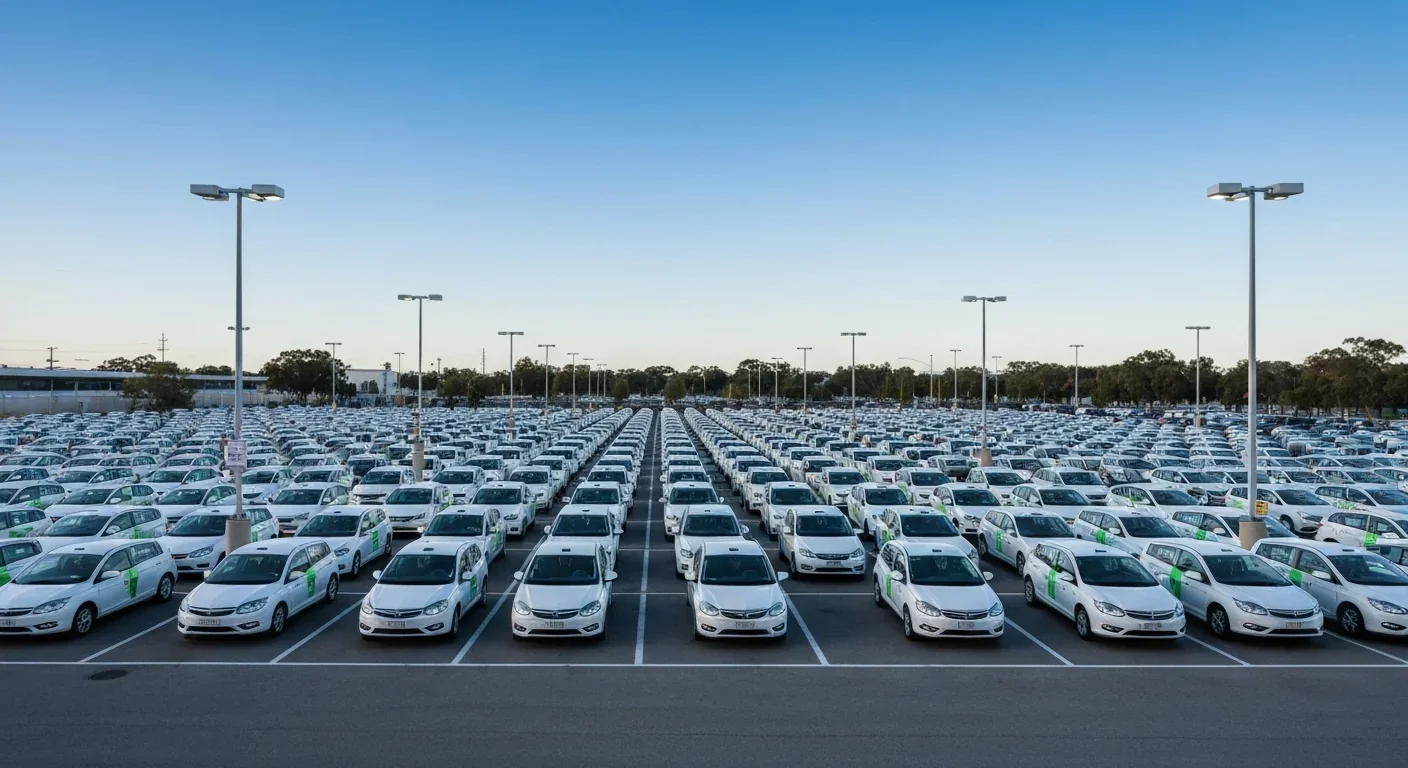
Research shows the sharing economy often increases total resource consumption through the Jevons paradox and rebound effects. Ride-sharing adds billions of vehicle miles, co-working spaces use more energy per worker, and diffused responsibility erodes conservation behavior. Breaking the paradox requires congestion pricing, accountability design, and matching sharing models to appropriate resource types.

Psychological reactance theory explains why banning or restricting things makes people want them more. From Prohibition to the Streisand effect to scarcity marketing, research shows that threatening people's freedom reliably backfires, and autonomy-supportive communication is far more effective.

A carnivorous pitcher plant in Borneo evolved to house bats instead of trapping insects, gaining up to 95% of its nitrogen from bat guano. The plant even built an ultrasonic reflector to help bats find it, revealing that carnivory in plants is a flexible spectrum.
The quantified self movement began as a hacker-ethos pursuit of personal insight, but corporate wearables now funnel biometric data to employers, insurers, and data brokers. With 81% of Americans wrongly believing health apps are HIPAA-protected, a regulatory void enables health data to be sold for pennies while generating anxiety instead of empowerment.

CXL memory pooling lets servers dynamically share DRAM over a cache-coherent interconnect, eliminating the 40% stranded memory waste in data centers. With commercial hardware now shipping and Azure deploying CXL cloud instances, this technology promises to cut memory costs by 50% while enabling composable infrastructure.

Loading featured articles...