Self-Tracking to Surveillance: Quantified Self's Fall

Self-Tracking to Surveillance: Quantified Self's Fall

The Authenticity Tax: How Being Yourself Became Labor
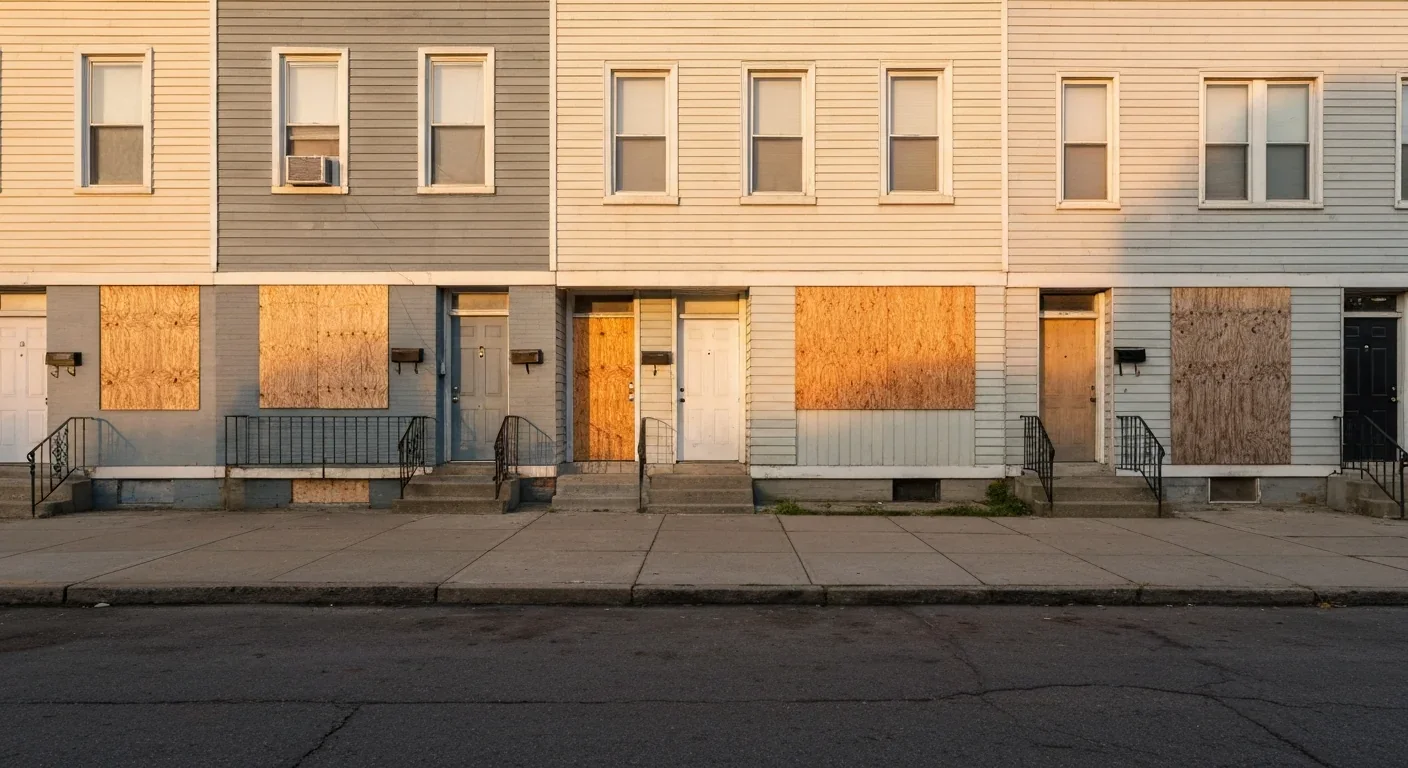
The Vacancy Paradox: Empty Homes and Homelessness

How Engagement Algorithms Turn Social Media Into Outrage

Data Dignity: Should You Own Your Personal Data?

The Great Log-Off: Why Millions Quit Social Media
TL;DR: AI-powered tenant screening algorithms from companies like SafeRent and RealPage are reshaping housing access in America, but these opaque systems perpetuate discrimination against minorities and low-income renters through digital redlining. Lawsuits and new regulations are beginning to challenge these practices.
When Megan Fountain applied to rent an apartment in Connecticut, she had a steady income, no eviction history, and a good credit score. Yet she was denied. The culprit wasn't a skeptical landlord or a reference that fell through, it was an algorithm she never knew existed. Fountain's experience became the centerpiece of a federal lawsuit against CoreLogic Rental Property Solutions, now known as SafeRent Solutions, marking one of the first major legal challenges to algorithmic tenant screening. She's far from alone. Across America, millions of renters are discovering that whether they get approved for housing increasingly depends not on a conversation with a property owner, but on a black-box algorithm that aggregates data from dozens of sources and spits out a single, often inscrutable, score.

The rise of automated tenant screening represents a fundamental shift in how Americans access housing. What began as a tool to help landlords quickly check credit histories has evolved into sophisticated AI systems that analyze everything from social media activity to consumer purchasing patterns. These platforms now mediate housing decisions for an estimated 80 million rental applications annually, wielding enormous power over who gets housed and who doesn't. But as these systems proliferate, they're revealing a troubling pattern: the automation of age-old discrimination, creating what housing advocates call "digital redlining" that disproportionately harms Black, Hispanic, and low-income renters.
Three major players dominate the algorithmic tenant screening market. SafeRent Solutions, formerly CoreLogic Rental Property Solutions, is the largest, processing millions of rental applications annually. TransUnion's SmartMove platform leverages the credit bureau's massive database to generate tenant scores. RealPage, while better known for its controversial rent-pricing algorithms, also operates extensive screening services. Together, these companies have transformed tenant screening from a localized, human-driven process into a centralized, automated industry that operates largely beyond public scrutiny.
The business model is deceptively simple. Property managers subscribe to these platforms, which then pull data from multiple sources: credit bureaus, criminal record databases, eviction court filings, and rental history databases. The algorithms synthesize this information into proprietary scores that claim to predict whether someone will pay rent on time or cause problems. Landlords get a recommendation, often color-coded for easy decision-making: green for approve, yellow for review, red for reject. In practice, many property managers simply follow the algorithm's advice without question, outsourcing one of the most consequential decisions a person faces to a system they don't understand.
The exact formulas used to calculate tenant scores are closely guarded trade secrets, making it nearly impossible for rejected tenants to challenge inaccurate information or understand why they were denied housing.
What makes these systems particularly powerful, and troubling, is their opacity. The exact formulas used to calculate tenant scores are closely guarded trade secrets. Applicants denied housing often receive vague explanations that cite "risk factors" without specifying what those factors are or how much weight they carried. This lack of transparency makes it nearly impossible for rejected tenants to understand why they were denied or to challenge inaccurate information.
The market for these services is booming. Industry analysts project the tenant screening services market will grow significantly in coming years, driven by landlords' desire to minimize risk and maximize efficiency. For the companies involved, it's a lucrative business: each screening report generates fees typically ranging from $30 to $100, paid either by the applicant or the landlord. Multiply that by millions of rental applications, and you have an industry generating hundreds of millions of dollars annually while fundamentally reshaping access to housing.

The human cost of algorithmic errors became painfully clear in the Louis v. SafeRent Solutions case. The plaintiffs, a group of Black and Hispanic renters, were systematically flagged as high-risk by SafeRent's "SafeRent Score" despite having solid rental histories and stable incomes. The lawsuit revealed that SafeRent's algorithm assigned risk points based on factors including whether applicants received housing vouchers, a practice that disproportionately affected people of color and effectively constituted illegal discrimination under the Fair Housing Act.
The problems with automated screening extend far beyond intentional bias. Data errors plague these systems at alarming rates. SmartMove's background checks have been documented matching applicants with criminal records of people who simply share similar names. A transposed digit in a Social Security number can pull up someone else's eviction history. Court records from different people with the same name get conflated into a single damning file. One woman discovered she'd been denied apartments for years because the screening system confused her with someone who had the same first and last name but lived in a different state and had a serious criminal record.
"These inaccuracies can become red flags which can hinder your ability to find reasonable housing terms and conditions, which is why if you have been rejected based on a CoreLogic background check, you are entitled to raise a dispute."
- Consumer Attorneys Legal Guidance
What happens when you're wrongly denied? The Fair Credit Reporting Act (FCRA) requires screening companies to investigate disputes within 30 days, but that's cold comfort when you need housing now and have already paid non-refundable application fees. Challenging algorithmic decisions feels like arguing with a vending machine. You submit documentation proving the error, wait weeks for a response, and often receive a form letter stating the information has been "verified" without any explanation of how that verification occurred or what specific steps were taken.
The impact on vulnerable populations is particularly severe. Formerly incarcerated individuals face systematic barriers as algorithms flag any criminal history, regardless of how old the conviction is, whether it has any bearing on someone's ability to be a tenant, or whether the person has successfully rebuilt their life. People who've experienced domestic violence often have eviction records from fleeing abusive situations, and the algorithms don't distinguish between someone who broke a lease to escape violence and someone who simply stopped paying rent. Low-income families using housing vouchers get penalized not for their actual behavior but for the stigma encoded into the algorithm's training data.

The most insidious aspect of algorithmic tenant screening isn't the dramatic cases of wrong-person matches, it's the subtle, systemic bias baked into how these systems are designed. Here's how digital redlining works: algorithms are trained on historical data that reflects decades of housing discrimination. If Black renters in a particular ZIP code historically had more evictions, the algorithm learns to view applications from that ZIP code as higher risk. If low-income renters are more likely to have gaps in their rental history (because they moved in with family during hard times or lived in informal housing arrangements), the algorithm penalizes those gaps without understanding the context.
This creates what researchers call "algorithmic redlining", a 21st-century version of the explicitly racist policies that once marked Black neighborhoods as "hazardous" on federal housing maps. The difference is that modern algorithms don't need to explicitly mention race. They achieve the same discriminatory outcomes through seemingly neutral proxies: ZIP codes, income sources (like housing vouchers), gaps in formal employment, and even less obvious factors like the types of stores someone shops at or their social media connections.
The Connecticut Fair Housing Center case against CoreLogic revealed how these proxies work in practice. CoreLogic's system assigned risk scores based on whether applicants were using housing vouchers, which in Connecticut are used disproportionately by Black and Hispanic renters. The algorithm effectively coded "receives government housing assistance" as a negative factor, creating a two-tiered system where voucher holders faced higher rejection rates regardless of their actual qualifications. The legal settlement required SafeRent to stop penalizing voucher holders and implement bias testing, but only after years of discriminatory denials.
Research into AI bias in housing has documented similar patterns across multiple platforms. A study examining algorithmic discrimination found that even when researchers controlled for credit scores and income, applications from majority-Black neighborhoods received lower approval recommendations than identical applications from majority-white areas. The algorithms weren't programmed to discriminate, but they learned to discriminate by absorbing the patterns of historical bias embedded in their training data.
The legal landscape around algorithmic tenant screening is rapidly evolving, driven by civil rights attorneys who recognize these systems as the new frontier in fair housing enforcement. The wave of lawsuits against screening companies represents more than individual grievances, they're testing whether decades-old civil rights laws can constrain 21st-century AI discrimination.
The Louis v. SafeRent case resulted in a groundbreaking settlement in which SafeRent agreed to eliminate the use of voucher status in its screening algorithm and implement ongoing monitoring for discriminatory effects. More importantly, the settlement established the principle that algorithmic screening systems are subject to the Fair Housing Act. Companies can't hide behind "the computer said no" as a defense when their systems produce discriminatory outcomes.

The federal government has taken notice. The Department of Housing and Urban Development (HUD) has issued guidance warning that tenant screening practices, including algorithmic ones, can violate fair housing laws if they have a discriminatory impact on protected classes. HUD has emphasized that even facially neutral policies can be illegal if they disproportionately harm minorities and aren't justified by a legitimate business need. This creates a powerful tool for challenging screening algorithms that penalize factors like criminal records or eviction histories that disproportionately affect people of color.
The RealPage settlement with the Department of Justice marked another significant victory. While focused primarily on algorithmic price-fixing, the case put algorithmic housing systems under intense scrutiny and established that these companies can face serious consequences when their automated systems harm consumers. The settlement included provisions limiting how RealPage's algorithms can be used and requiring greater transparency, setting a precedent for holding AI-powered housing platforms accountable.
Private litigation is accelerating, with fair housing organizations and consumer protection attorneys pursuing FCRA claims against screening companies that fail to properly investigate disputes or maintain accurate records.
Private litigation is accelerating. Open Communities has filed multiple lawsuits challenging discriminatory AI tools used by landlords. Consumer protection attorneys are pursuing FCRA claims against screening companies that fail to properly investigate disputes or maintain accurate records. The legal theory is evolving: attorneys now argue that algorithmic systems have a heightened duty to ensure accuracy precisely because they operate at such massive scale and with so little human oversight.
While federal action has been limited, several states are pioneering regulations specifically targeting algorithmic decision-making in housing. These legislative efforts represent the first attempts to create guardrails for AI systems that affect fundamental rights.
California's SB 649 requires landlords using AI-based housing decisions to provide applicants with specific information about how the algorithm works and what data it considers. Rejected applicants must receive clear explanations of the factors that led to denial and have the right to challenge the decision. The law also prohibits certain types of data from being used in tenant screening algorithms, including some sources of criminal history and eviction records that are known to have high error rates.
New York's housing reforms tackle algorithmic rent-setting and discriminatory screening practices, requiring greater transparency in how automated systems make decisions. Local Law 144, originally focused on employment algorithms, has become a model for other jurisdictions considering how to regulate AI in high-stakes decisions. The law requires bias audits of automated decision systems and gives people the right to know when they're being evaluated by an algorithm rather than a human.
These state efforts face significant challenges. The screening industry has pushed back hard, arguing that regulations will increase costs for landlords and slow down the rental process. RealPage has even sued to block Berkeley's ordinance limiting algorithmic pricing systems, claiming it violates the company's First Amendment rights. Some critics worry that a patchwork of state laws will create confusion rather than clarity, making it harder for both renters and landlords to navigate the system.

If you're denied housing based on a tenant screening report, you have specific legal protections, though you'll need to be proactive in asserting them. First, you have the right to receive an "adverse action notice" explaining that you were denied based on information in a consumer report and identifying which screening company provided the report. This is required by federal law but not always provided. If you don't receive one within a few days of being denied, follow up in writing requesting it.
Once you know which company generated the report, you can request a free copy. The FCRA guarantees this right, and the screening company must provide the report within 30 days. Review it carefully for errors: wrong-person matches, outdated information, records that should have been sealed, or mistakes in your credit history. Even seemingly small errors matter because algorithms can heavily weight particular factors.
To dispute inaccurate information, submit a written dispute letter to the screening company with supporting documentation. Be specific about what's wrong and provide evidence: court records showing a case was dismissed, identity documents proving you're not the person with that criminal record, rental references contradicting a claimed eviction. The screening company must investigate within 30 days and correct any errors they verify.
"Under the FCRA, you can recover damages including compensation for your actual losses, harm to your credit, and attorney's fees if you prevail. Some cases have resulted in substantial settlements, particularly when they involve systematic problems affecting many renters."
- Consumer Law Firm Guidance on Tenant Rights
If the screening company doesn't adequately address your dispute, you have several options. File a complaint with the Consumer Financial Protection Bureau (CFPB), which oversees consumer reporting agencies. If you believe you were discriminated against based on race, national origin, disability, or another protected class, file a complaint with HUD or your state's fair housing agency. These agencies can investigate and potentially pursue enforcement action against the landlord or screening company.
For serious cases, consider consulting an attorney who specializes in consumer protection or fair housing law. Many consumer attorneys work on contingency, meaning you don't pay unless they win your case. Under the FCRA, you can recover damages including compensation for your actual losses, harm to your credit, and attorney's fees if you prevail. Some cases have resulted in substantial settlements, particularly when they involve systematic problems affecting many renters.
As criticism of algorithmic tenant screening mounts, a question emerges: is it possible to design these systems in ways that help landlords assess risk without perpetuating discrimination? Some advocates and technologists believe the answer is yes, but it requires fundamentally rethinking how screening works.
One promising approach focuses on "pay-to-stay" data rather than historical risk factors. Instead of looking at criminal records, evictions, or credit scores that may be years old and reflect circumstances that no longer apply, these alternative models prioritize recent rental payment history. Did the applicant pay rent on time for the past 12 months? That's far more predictive of future behavior than an eviction from five years ago when they lost a job.
Some property managers are experimenting with holistic review processes that use algorithms to flag potential issues but require human review before making final decisions. This hybrid approach leverages AI's ability to process large amounts of data quickly while preserving human judgment to assess context and extenuating circumstances. A gap in employment history might look like a red flag to an algorithm but makes perfect sense when a human learns the applicant took time off to care for a sick family member.
Tenant advocacy groups have called for regulatory standards that would require screening algorithms to be periodically audited for discriminatory impact, similar to how financial institutions must undergo fair lending examinations. These audits would test whether the algorithm produces different approval rates for protected classes when controlling for legitimate risk factors. If disparities emerge that can't be explained by business necessity, the algorithm would need to be adjusted or abandoned.
Greater transparency is another key reform. If applicants understood exactly how they were scored and which factors mattered most, they could make informed decisions about which properties to apply for and what aspects of their application need explanation or context. Some newer platforms are beginning to provide detailed breakdowns of screening criteria, though they still protect the exact formulas as proprietary.
The American approach to automated tenant screening, characterized by privatized, profit-driven systems with minimal oversight, stands in stark contrast to how many other developed nations handle rental housing access. Understanding these international differences reveals that the algorithmic screening crisis isn't inevitable but rather the result of specific policy choices.
In many European countries, tenant protections are far stronger and algorithmic screening is less prevalent. Germany's rental market, for instance, operates on principles of strong tenant rights and regulated rent increases that reduce landlords' perceived need for intensive screening. Landlords typically request proof of income and perhaps a reference from a previous landlord, but centralized databases tracking rental history and credit scores play a much smaller role. Privacy laws make it difficult for companies to aggregate the types of data that American screening algorithms rely on.
Under Europe's GDPR, people have the right to receive meaningful information about the logic involved in automated decisions and to challenge decisions made without human involvement, rights that American renters lack.
The European Union's General Data Protection Regulation (GDPR) creates significant constraints on algorithmic decision-making that affects individuals' access to opportunities. Under GDPR, people have the right to receive meaningful information about the logic involved in automated decisions and to challenge decisions made without human involvement. If a European company developed a system like SafeRent's algorithm, applicants would have legal rights to explanation and human review that American renters can only dream of.
Canada has taken steps to address algorithmic discrimination through human rights frameworks. Several provinces have issued guidance clarifying that landlords using automated screening systems can be held liable if those systems produce discriminatory outcomes, even if the landlords themselves didn't intend to discriminate. This creates strong incentives for landlords to carefully vet any algorithmic tools they use and maintain meaningful human oversight.
These international examples suggest potential models for reform. Stronger privacy protections could limit the data available for screening algorithms, forcing them to focus on more relevant and recent information. Legal requirements for human review of automated decisions could prevent the worst algorithmic errors from determining housing access. More robust tenant protections overall could reduce landlords' dependence on screening systems designed to minimize any possible risk.
The algorithmic tenant screening crisis reveals fundamental tensions in how we think about housing, technology, and fairness in America. On one side are landlords who argue they need tools to assess risk in an environment where evicting a problem tenant is time-consuming and expensive. On the other are renters who increasingly face automated gatekeepers using opaque criteria that may encode historical discrimination. Meanwhile, technology companies profit from a system that generates millions of dollars in fees while operating largely beyond public accountability.
The next few years will determine whether algorithmic screening becomes more transparent and fair or further entrenches digital redlining. Several scenarios seem possible. In an optimistic case, continued litigation and regulatory pressure force screening companies to improve their systems, eliminate the most discriminatory practices, and provide meaningful transparency to applicants. State-by-state reforms could create effective models that spread nationally, establishing baseline standards for algorithmic fairness in housing.
A more pessimistic trajectory would see screening companies finding ways to evade accountability, perhaps by moving operations offshore or restructuring to avoid classification as consumer reporting agencies. As AI systems become more sophisticated, they might learn to disguise discriminatory patterns in ways that are harder to detect and prove in court. The asymmetry between applicants' limited ability to challenge denials and companies' vast data resources could widen further.
Perhaps the most likely outcome is messy and mixed. Some platforms will improve while others resist change until forced by lawsuits. Some states will pass effective regulations while others leave renters unprotected. Fair housing organizations and tenant advocates will score significant wins in individual cases without fundamentally transforming the system. Renters will gradually gain more rights to explanation and dispute resolution, but the basic model of algorithmic screening will persist because it serves landlords' interests in a tight housing market.
What seems clear is that algorithmic tenant screening is here to stay. The question isn't whether AI will mediate housing access but how we ensure it does so fairly. That requires moving beyond the fiction that algorithms are neutral and confronting the reality that they can automate discrimination at scale. It requires rejecting the idea that proprietary formulas should be shielded from scrutiny when they determine access to a fundamental human need. Most importantly, it requires recognizing that in a country where housing increasingly feels like a luxury good rather than a right, we can't allow opaque algorithms to become another tool that separates the haves from the have-nots.
The algorithms at our doors aren't going away, but we can insist they open rather than close opportunities. We can demand transparency, accuracy, and accountability from systems that wield such enormous power over people's lives. We can build alternatives that assess risk without perpetuating discrimination. The technology exists to do this better, we just need the political will to require it. For millions of renters facing automated rejection, that change can't come soon enough.

Project Orion was a real 1960s program to reach other stars by detonating 800 nuclear bombs behind a spacecraft. The physics worked and the engineering was feasible, but the 1963 nuclear test ban treaty killed it. It remains the most credible interstellar spacecraft ever designed.

The locus coeruleus, a tiny brainstem structure, degenerates decades before Alzheimer's symptoms appear. Its loss cripples the brain's inflammation control, waste clearance, and sleep regulation. New imaging tools and noradrenergic therapies offer hope for early detection and prevention.

Research shows the sharing economy often increases total resource consumption through the Jevons paradox and rebound effects. Ride-sharing adds billions of vehicle miles, co-working spaces use more energy per worker, and diffused responsibility erodes conservation behavior. Breaking the paradox requires congestion pricing, accountability design, and matching sharing models to appropriate resource types.

Psychological reactance theory explains why banning or restricting things makes people want them more. From Prohibition to the Streisand effect to scarcity marketing, research shows that threatening people's freedom reliably backfires, and autonomy-supportive communication is far more effective.

A carnivorous pitcher plant in Borneo evolved to house bats instead of trapping insects, gaining up to 95% of its nitrogen from bat guano. The plant even built an ultrasonic reflector to help bats find it, revealing that carnivory in plants is a flexible spectrum.
The quantified self movement began as a hacker-ethos pursuit of personal insight, but corporate wearables now funnel biometric data to employers, insurers, and data brokers. With 81% of Americans wrongly believing health apps are HIPAA-protected, a regulatory void enables health data to be sold for pennies while generating anxiety instead of empowerment.

CXL memory pooling lets servers dynamically share DRAM over a cache-coherent interconnect, eliminating the 40% stranded memory waste in data centers. With commercial hardware now shipping and Azure deploying CXL cloud instances, this technology promises to cut memory costs by 50% while enabling composable infrastructure.

Loading featured articles...