Self-Tracking to Surveillance: Quantified Self's Fall

Self-Tracking to Surveillance: Quantified Self's Fall

The Authenticity Tax: How Being Yourself Became Labor
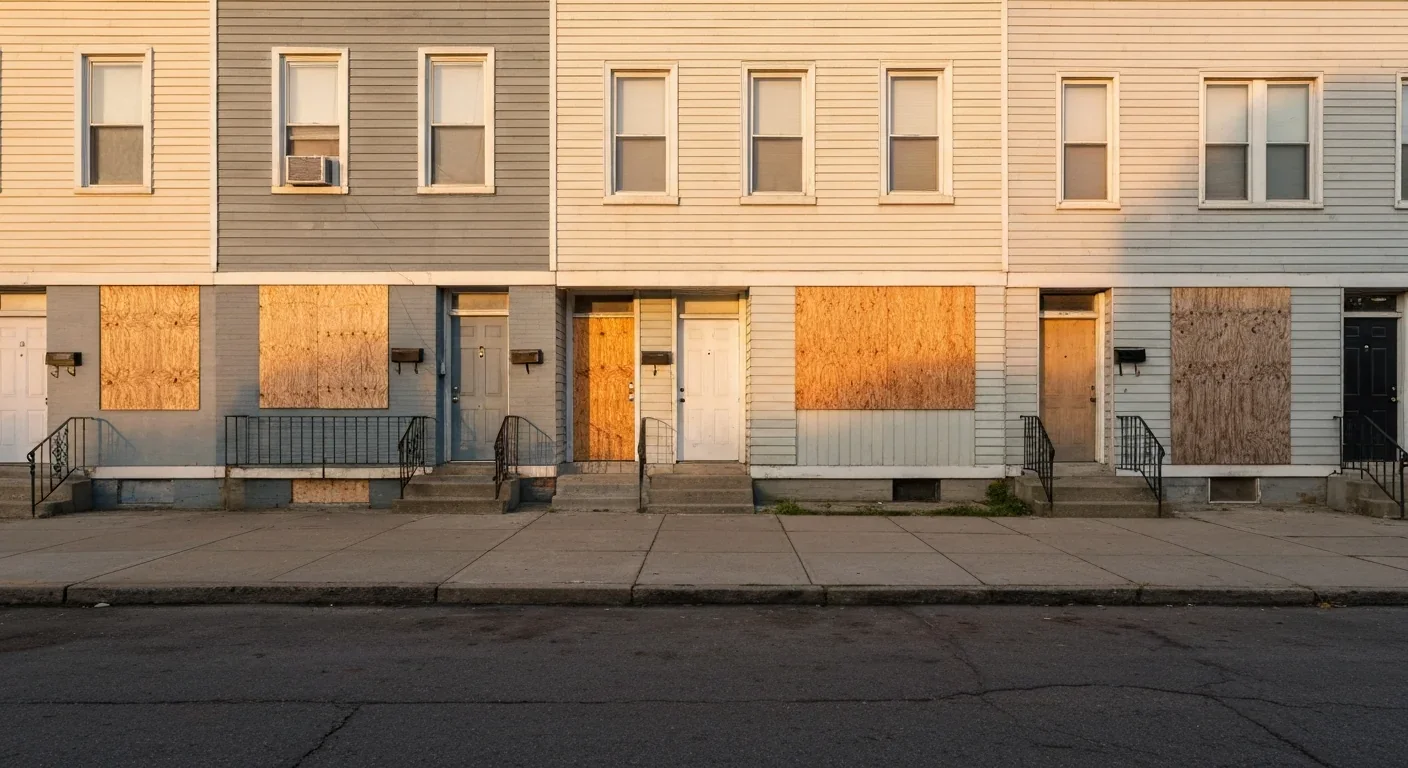
The Vacancy Paradox: Empty Homes and Homelessness

How Engagement Algorithms Turn Social Media Into Outrage

Data Dignity: Should You Own Your Personal Data?

The Great Log-Off: Why Millions Quit Social Media
TL;DR: Automated systems in housing - mortgage lending, tenant screening, appraisals, and insurance - systematically discriminate against communities of color by using proxy variables like ZIP codes and credit scores that encode historical racism. While the Fair Housing Act outlawed explicit redlining decades ago, machine learning models trained on biased data reproduce the same patterns at scale. Solutions exist - algorithmic auditing, fairness-aware design, regulatory reform - but require prioritizing equity over profit.

Crystal Marie McDaniels got the call from her mortgage broker at 9:47 AM. "It seemed like it was getting rejected by an algorithm," the broker explained, "and then there was a person who could step in and decide to override that or not." Three days later, after manual review, the loan cleared. No explanation why the code said no. No transparency about what triggered the denial. Just an invisible system making consequential decisions about who gets access to the American dream.
This isn't rare. It's systematic. Across America, automated decision-making systems in mortgage lending, tenant screening, home appraisals, and insurance pricing are reproducing the discriminatory housing patterns that were supposedly outlawed decades ago, but through code rather than explicit racial maps. The tools have changed from red ink on paper maps to machine learning models processing millions of data points per second, yet the outcome remains disturbingly similar: communities of color face higher denial rates, lower appraisals, and restricted access to housing opportunities.
The ghost of 1930s redlining haunts every line of algorithmic code in housing today. Understanding how requires tracing a direct lineage from government maps to modern machine learning, from explicit racism to proxy discrimination, from human bias to automated inequality at scale.
In 1935, the Home Owners' Loan Corporation created "residential security maps" for 239 American cities. Neighborhoods were graded from A to D, color-coded from green to red. The criteria were explicitly racial: areas with African American residents were automatically marked "hazardous" and outlined in red, regardless of the actual condition of the housing stock or the creditworthiness of residents.
Between 1945 and 1959, African Americans received less than 2 percent of all federally insured home loans. The HOLC maps didn't just document discrimination; they institutionalized it, creating feedback loops that persist today. Denied mortgages meant less homeownership. Less homeownership meant less wealth accumulation. Less investment meant deteriorating neighborhoods. Deteriorating neighborhoods justified the original red rating.
Those maps are nearly a century old, but their geographic patterns remain encoded in the variables that algorithms use today.
During the mid-1900s, financial institutions used ZIP codes and neighborhood boundaries in place of race to avoid lending to predominantly African American areas. Modern algorithms don't need the maps anymore because the maps are in the data.
The Fair Housing Act of 1968 and the Equal Credit Opportunity Act of 1974 made explicit racial discrimination illegal. Lenders couldn't ask about race. They couldn't draw red lines on maps. So they found proxies - facially neutral variables that correlate with race so strongly they function as substitutes. ZIP code. Credit score. Employment type. Social media activity. Device type.

Machine learning models don't discriminate because programmers write racist code. They discriminate because they're trained on historically biased data and designed to optimize for patterns that reflect past inequality.
Here's how it works: Machine learning models trained on historical mortgage data may deny loans at higher rates to applicants from historically marginalized neighborhoods because their profiles match biased past decisions. The algorithm sees that loans in certain ZIP codes had higher default rates historically - but those higher rates were themselves products of discriminatory lending that denied borrowers in those areas access to favorable terms, financial services, and wealth-building opportunities.
The technical mechanism is straightforward but devastating. Algorithms need variables to make predictions. Lenders can't use race directly, so they use proxies. Features that are proxies for sensitive attributes, such as ZIP codes, credit scores, or neighborhood characteristics, enable algorithms to discriminate without explicitly using race as an input.
Consider credit scores, required by Freddie Mac and Fannie Mae for conventional mortgages. Classic FICO, the credit scoring model required by these agencies, is widely considered detrimental to minority groups because it rewards traditional credit histories that minorities have less access to. The model doesn't count on-time rent or utility payments, which disproportionately affects communities of color who are more likely to be renters than homeowners. It penalizes medical debt more heavily - debt that studies show falls disproportionately on Black and Latino families due to healthcare access disparities.
The result? An algorithm that never mentions race but produces racially disparate outcomes by design.
The data showing algorithmic discrimination in housing isn't speculative. It's empirical, repeated, and increasingly well-documented by investigators, regulators, and researchers.
"The Markup's investigation has found that lenders in 2019 were more likely to deny home loans to minority groups than to white people with similar financial characteristics, even when controlling for dozens of variables."
- The Markup Investigation
Mortgage Lending Disparities
In 2019, The Markup's investigation found that lenders were more likely to deny home loans to minority groups than to white people with similar financial characteristics, even when controlling for 17 different variables including income, debt-to-income ratio, loan amount, and property location. The analysis covered more than 2 million conventional mortgage applications.
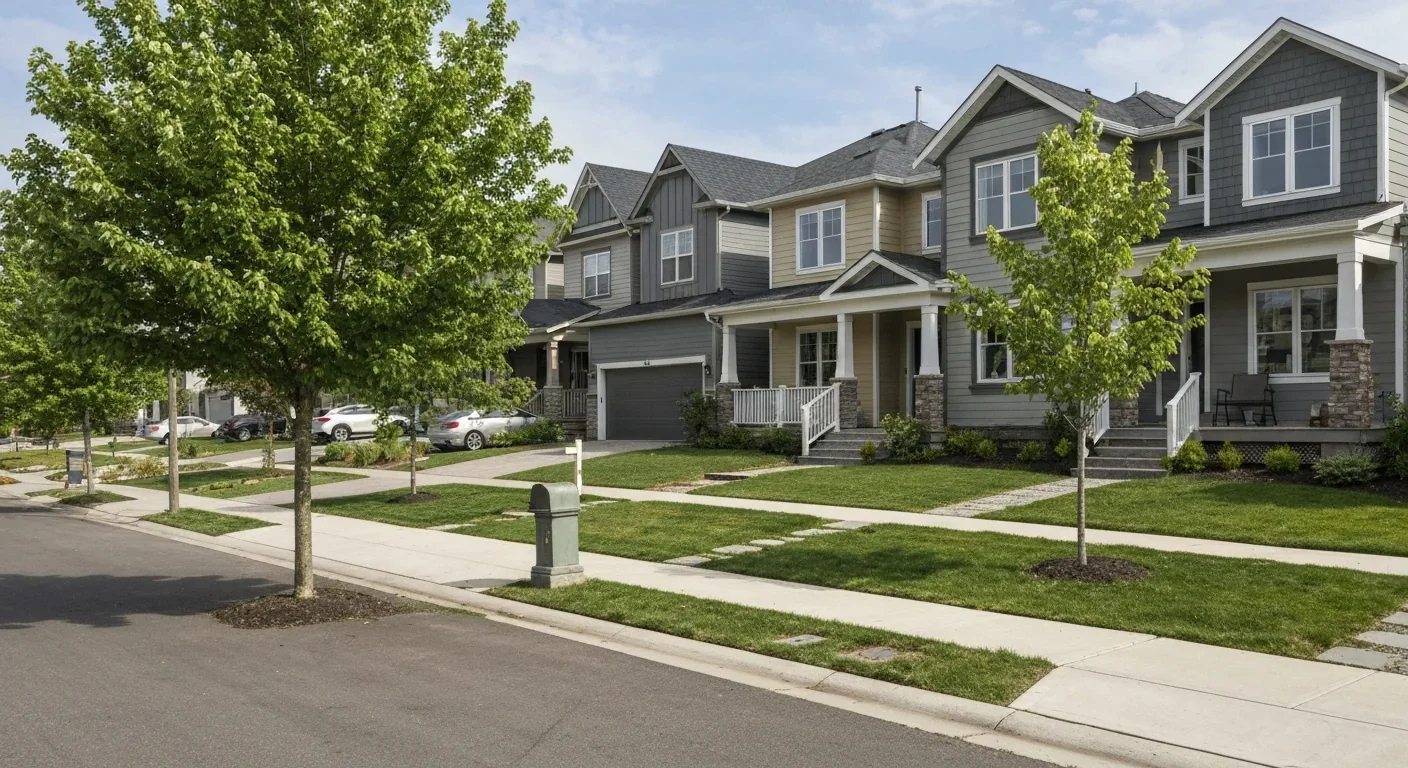
The findings were stark: Latino applicants faced denial rates more than 200 percent higher than white applicants in certain metropolitan areas. Black applicants saw consistently higher denial rates across nearly every market examined. Native American applicants faced some of the highest rejection odds. The statistical controls ruled out legitimate financial differences - what remained was algorithmic bias.
Home Appraisal Discrimination
The Mitchell family's experience illustrates a pattern researchers have quantified systematically. When Lorenzo Mitchell and his family were present for the first appraisal, the appraiser valued their home at $405,000. For the second appraisal, they removed all family photos and had a white colleague present. The second appraiser gave the home a value of $550,000 - a $145,000 increase for the exact same property.
This isn't anecdotal. Freddie Mac's analysis of 12 million transactions showed that 12.5% of homes in mostly Black census tracts were appraised below contract price, compared to just 7.4% in predominantly white areas. The Brookings Institution calculated that homes in majority-Black neighborhoods are valued 21-23% below comparable homes in non-Black neighborhoods, resulting in $162 billion in cumulative losses for Black communities.
Tenant Screening Algorithms
SafeRent Solutions marketed an algorithm that "assigned a value" to rental applicants based on credit history, public records, and housing voucher usage. The system was found to disproportionately deny Black and Hispanic renters under the Fair Housing Act. The algorithm's design didn't allow applicants to contest scores or provide context about negative items in their history - automation masquerading as objectivity, producing discriminatory outcomes without human oversight.
The Massachusetts District Court allowed the disparate impact claim to proceed, and SafeRent ultimately settled for $2 million in 2024. But thousands of rental decisions had already been made, lives already disrupted, housing opportunities already denied.
Insurance Discrimination
State Farm's fraud detection algorithm provides perhaps the clearest example of how neutral-sounding "risk assessment" can encode racial discrimination. The machine learning algorithm relied on biographical, behavioral, and housing data that functioned as racial proxies, resulting in statistical disparities against Black policyholders. Black homeowners faced longer wait times for claim processing, more frequent manual reviews, and greater scrutiny at every stage - not because of actual fraud indicators, but because the algorithm learned patterns from historically biased data.
A Northern Illinois District Court ruled the disparate impact claim could proceed, noting that "the inference that State Farm's use of algorithmic decision-making tools has resulted in longer wait times and greater scrutiny for Black policyholders is plausible."

Here's where algorithmic discrimination becomes particularly insidious: the accountability gap. When a human loan officer denies an application based on race, the law is clear. When an algorithm produces the same outcome without any individual making a consciously racist decision, who is liable?
The legal framework is evolving, but slowly. The Fair Housing Act and Equal Credit Opportunity Act were written for human decision-makers, not machine learning models. Courts have begun applying disparate impact doctrine to algorithmic systems - the principle that policies producing discriminatory outcomes are illegal even without discriminatory intent - but enforcement remains inconsistent.
In August 2024, the Consumer Financial Protection Bureau made their position explicit: "There are no exceptions to the federal consumer financial protection laws for new technologies."
Using AI doesn't exempt lenders from fair lending requirements. The decision to deploy an algorithm is itself a policy choice that can trigger disparate impact violations, even when the algorithm produces accurate predictions.
But enforcement faces three major obstacles.
The Opacity Problem
Federal housing regulators at FHFA do not know the exact decision logic used by Freddie Mac and Fannie Mae's automated underwriting systems, yet these systems process the majority of conventional mortgage applications in America. Algorithm vendors claim trade-secret protections. Lenders claim competitive disadvantage. Models become black boxes that process applications but resist independent auditing.
How do you regulate what you can't inspect? How do borrowers contest decisions they can't understand?
The Explanation Problem
The CFPB issued guidance in 2022 clarifying that ECOA requires lenders to provide specific reasons for credit denials even when using complex AI/ML models. But what does "specific" mean when a neural network with millions of parameters produces a risk score based on interactions between hundreds of variables?
Lenders often provide generic explanations: "insufficient credit history," "high debt-to-income ratio," "property location characteristics." These don't explain why Algorithm A denied an applicant while Algorithm B might have approved, or why two applicants with nearly identical profiles received different outcomes. The illusion of explanation without actual transparency.
The Data Problem
The Equal Credit Opportunity Act prohibits lenders from collecting data on protected characteristics like race for most applications - precisely the data needed to audit for bias. This creates the "Fairness Paradox": we can't directly measure bias against protected categories if we don't collect data about those categories, yet collecting such data raises concerns about potential misuse.
Researchers use proxy methods and statistical techniques to infer disparate impact, but these aren't as definitive as direct measurement. Enforcement actions often rely on whistleblowers, complaints from affected individuals, or investigative journalism rather than systematic auditing.

Behind every statistic is a family denied the chance to build wealth through homeownership, a community watching property values stagnate while neighboring areas appreciate, a generation inheriting disadvantage encoded in training data.
The appraisal gap alone - that 21-23% undervaluation in Black neighborhoods - translates to $162 billion in lost wealth. That's not abstract; it's retirement savings that don't accumulate, college funds that don't get established, small businesses that don't receive home equity loans for startup capital, emergency reserves that don't exist when medical bills arrive.
Higher mortgage denial rates compound over time. Families who can't buy homes remain renters, where on-time rent payments don't improve credit scores the way mortgage payments do. The credit gap widens. The next generation faces even worse algorithmic risk scores because their parents couldn't build traditional credit history. The feedback loop tightens.
Tenant screening algorithms create homelessness risk. A single eviction, a medical debt collection, a period of unemployment - these appear in databases that algorithms weigh heavily. SafeRent's algorithm considered housing voucher usage, effectively discriminating against the poor by design. When algorithms deny housing based on past housing instability, they trap people in instability.
Insurance discrimination means higher premiums or coverage denials in neighborhoods that algorithms flag as risky. State Farm's fraud detection meant Black homeowners faced longer processing times during disasters, when quick claim resolution can mean the difference between rebuilding and financial ruin.
These aren't bugs. They're features of systems trained on discriminatory data, optimized for profit rather than fairness, deployed without adequate oversight.
"When this information, the training data, contains skewed representations or historical inequities, the algorithms trained on it will inevitably learn and perpetuate those same biases."
- Research on Algorithm Bias
Understanding how to fix algorithmic discrimination requires understanding where bias enters the pipeline. There are three critical points where discrimination gets encoded into automated systems.
Training Data Bias
When training data contains skewed representations or historical inequities, algorithms trained on it will inevitably learn and perpetuate those same biases. A mortgage approval model trained on loan decisions from the 1980s through 2000s learns patterns that reflect decades of discriminatory lending. Those patterns become predictions.
Missing data compounds the problem. Missing data patterns systematically skew algorithm performance, often disadvantaging minority subgroups who are under-represented or whose data are less detailed. When certain communities have thinner credit files, algorithms handle that missing data in ways that further disadvantage those groups - either ignoring those applicants entirely or imputing values based on majority patterns.
Feature Selection Bias
Every algorithm needs input variables (features) to make predictions. The choice of which features to include determines what the algorithm can "see" and therefore what it optimizes for.
Proxy discrimination occurs when a facially neutral trait is used as a stand-in for a prohibited trait. ZIP code is the most obvious example, but proxies can be surprisingly subtle:
Credit score (reflects historical access to traditional banking), employment type (contractor vs. employee status correlates with race and immigration status), length of residence (penalizes communities with higher mobility due to housing instability), email provider (free email services correlate with lower income), device type (Android vs. iPhone ownership correlates with income and by extension with race), and social media connections (network effects replicate real-world segregation).
An algorithm designer might include these features because they genuinely correlate with creditworthiness or risk. But when they also correlate with race, they enable discrimination without explicitly using race as an input.
Optimization Objective Bias
Algorithms optimize for the objective they're given. Mortgage lending algorithms typically optimize for default risk - predicting which applicants are most likely to repay. That sounds neutral, but "most likely to repay" in historical data means "most similar to past borrowers who repaid," and past borrowers skew white and affluent because of historical discrimination.
The algorithm learns to prefer profiles that match past success, which means replicating past patterns. It doesn't distinguish between "this applicant is risky" and "this applicant looks different from the people we've historically served."
Even worse, algorithms often optimize for profit, not fairness. The specific factors used in automated underwriting can disproportionately affect minorities, yet systems are evaluated for compliance with fair lending laws rather than actively designed for equitable outcomes.
The legal framework for addressing algorithmic discrimination is a patchwork of civil rights statutes written decades before machine learning existed, agency guidance attempting to apply old laws to new technologies, and court decisions establishing precedents case by case.
Federal Statutes
The Fair Housing Act of 1968 prohibits discrimination in housing based on race, color, religion, sex, national origin, disability, or familial status. Courts have interpreted this to include disparate impact - policies that have discriminatory effects even without discriminatory intent.
The Equal Credit Opportunity Act of 1974 prohibits credit discrimination and requires lenders to provide specific reasons for adverse actions. The CFPB has clarified this applies fully to algorithmic decisions.
The Community Reinvestment Act of 1977 requires banks to apply the same lending criteria in all communities, though enforcement has historically been weak.
Agency Enforcement
The Department of Justice has launched enforcement actions against algorithmic discrimination. DOJ's redlining initiative has secured over $100 million in relief for communities of color nationwide. In 2024, DOJ reached a $31 million settlement with Trustmark National Bank over lending discrimination allegations.
The Consumer Financial Protection Bureau has been particularly active. CFPB fined Apple $25 million and Goldman Sachs $45 million for Apple Card failures in October 2024, marking one of the largest algorithmic discrimination penalties to date.
The Department of Housing and Urban Development has pursued settlements targeting appraisal discrimination. HUD's settlement with the Appraisal Foundation established a $1.22 million scholarship fund to support diverse entrants to the appraisal profession, addressing the fact that about 90% of U.S. appraisers are white and less than 1% are Black.
Biden Administration Initiatives
The Biden administration launched the Interagency Task Force on Property Appraisal and Valuation Equity (PAVE) to address appraisal discrimination. PAVE has made recommendations, but enforcement depends on the Appraisal Foundation's cooperation, which is tied to industry stakeholders.
Executive orders on AI have directed agencies to address algorithmic discrimination, but translation into enforceable regulations remains incomplete.
What's Missing
Several critical gaps remain. There's no comprehensive federal algorithmic accountability law. No requirement for pre-deployment bias testing. No mandate for independent auditing of housing algorithms. No standardized metrics for measuring fairness. No right to algorithmic explanation that provides meaningful information rather than generic boilerplate.
Trade-secret protections shield proprietary algorithms from scrutiny while lenders face minimal penalties compared to the profits generated by high-volume automated systems.
Perhaps most fundamentally, after a disparate impact exists, the burden shifts to the algorithm user to demonstrate that its practice has a legitimate and nondiscriminatory purpose. But in practice, lenders can usually point to profit maximization or risk reduction as business justifications, even when those objectives reproduce discriminatory patterns.
Addressing algorithmic redlining requires interventions at every stage of the pipeline, from data collection through deployment and monitoring. Solutions exist; what's lacking is the political will and regulatory enforcement to implement them systematically.
Algorithmic Auditing
Independent third-party audits can detect bias that internal reviews miss. Fairness-enhancing techniques such as bias-aware training, data sanitization, fairness constraints, and algorithmic auditing can substantially reduce disparate outcomes in housing contexts.
Effective audits require access to training data, model architecture, and decision outputs - all currently protected by trade-secret claims. Legislation mandating auditability as a condition for deploying algorithms in housing decisions would be transformative.
Fairness-Aware Machine Learning
Technical solutions exist for building fairness into algorithms from the start. Institutions that embed transparency and fairness into AI architecture from inception move faster and scale more successfully than those treating compliance as an afterthought.
Fairness-aware approaches include bias-aware training (explicitly penalizing the model for disparate outcomes), fairness constraints (requiring approval rates meet parity thresholds across groups), adversarial debiasing (using adversarial networks to remove proxy signals), and counterfactual fairness (ensuring decisions would be the same if the applicant's race were different).
Removing or transforming ZIP code features can reduce location-based bias without sacrificing model accuracy. Alternative credit scoring models that include rent and utility payment history reduce bias while improving predictive power.
Explainable AI
Explainable AI techniques such as LIME or SHAP are required to meet CFPB's specific adverse action notice requirements. These methods break down complex model predictions into interpretable components, showing which features contributed most to a decision.
Better explanations enable better auditing, allow applicants to identify and correct errors, and create accountability when algorithms produce discriminatory outcomes.
Data Interventions
Addressing bias at the source - the training data - prevents it from propagating through the entire pipeline. Options include historical data rebalancing (adjusting past loan outcomes to remove discriminatory effects), synthetic data generation (creating training examples that reflect equitable lending), and alternative data sources (including non-traditional credit indicators).
Regulatory Reform
Policy solutions are perhaps most important. Proposals include mandatory pre-deployment bias testing for all housing algorithms, regular independent audits with public reporting, algorithmic impact assessments before deployment, reversal of burden of proof, meaningful penalties that exceed profits from biased systems, strengthened CFPB authority, and federal algorithmic accountability legislation.
Workforce Diversity
The appraiser profession is 94.7% white and 0.6% Black, contributing to systematic misvaluation. Diversity initiatives in appraisal, algorithm development, and compliance teams can surface blind spots that homogeneous teams miss.
JPMorgan Chase donated $3 million to the Appraiser Diversity Initiative, and HUD's scholarship fund represents steps toward workforce change. Similar initiatives are needed in data science and AI development.
Community Advocacy
Cross-sector collaboration between technologists, regulators, and affected communities is necessary to design and enforce effective anti-redlining safeguards. Community groups can identify discriminatory patterns that statistical tests miss, advocate for stronger regulations, and support litigation that establishes precedents.
The fundamental question algorithmic redlining raises isn't technical - it's moral and political. We know how to build fairer algorithms. We know how to audit for bias. We know which interventions reduce discrimination. What we lack is the institutional commitment to prioritize fairness over profit, transparency over trade secrets, equity over efficiency.
Courts have explicitly treated AI systems as unified policies capable of creating disparate impact claims under federal anti-discrimination statutes, holding AI vendors liable alongside the entities that deploy them. This legal framework provides tools for enforcement - if regulators use them.
The progress that has occurred shows what's possible. FHFA reports that property valuation inequalities decreased from 6% to 3.8% between 2013-2021 and 2022-2023. That's meaningful but insufficient - a 3.8% gap still represents billions in lost wealth and thousands of denied opportunities.
Every mortgage denial, every low appraisal, every rejected rental application matters because they're not isolated events. They're components of a system that determines which communities accumulate wealth and which remain locked out of opportunity. When algorithms make those decisions, discrimination scales instantaneously across millions of transactions, affecting millions of lives.
The housing algorithm revolution isn't coming; it's here. Automated underwriting processes most mortgages. Tenant screening algorithms evaluate most rental applications. Automated valuation models influence appraisals. Insurance algorithms set premiums and flag fraud. The question isn't whether to use algorithms - that choice has been made - but whether we'll build accountability into the systems that increasingly govern access to housing.
Code doesn't have to redline. Algorithms can be designed for fairness, audited for bias, corrected when they discriminate. But that requires treating algorithmic discrimination with the same seriousness we (theoretically) treat human discrimination, which means regulation with teeth, transparency over opacity, and recognition that "the algorithm did it" isn't a defense - it's an admission of automated inequality at scale.
The ghost of 1930s redlining will continue haunting housing algorithms until we exorcise it deliberately, systematically, and completely. That work begins with seeing automated discrimination for what it is: not a technical glitch to patch, but a policy choice to reverse.

Project Orion was a real 1960s program to reach other stars by detonating 800 nuclear bombs behind a spacecraft. The physics worked and the engineering was feasible, but the 1963 nuclear test ban treaty killed it. It remains the most credible interstellar spacecraft ever designed.

The locus coeruleus, a tiny brainstem structure, degenerates decades before Alzheimer's symptoms appear. Its loss cripples the brain's inflammation control, waste clearance, and sleep regulation. New imaging tools and noradrenergic therapies offer hope for early detection and prevention.
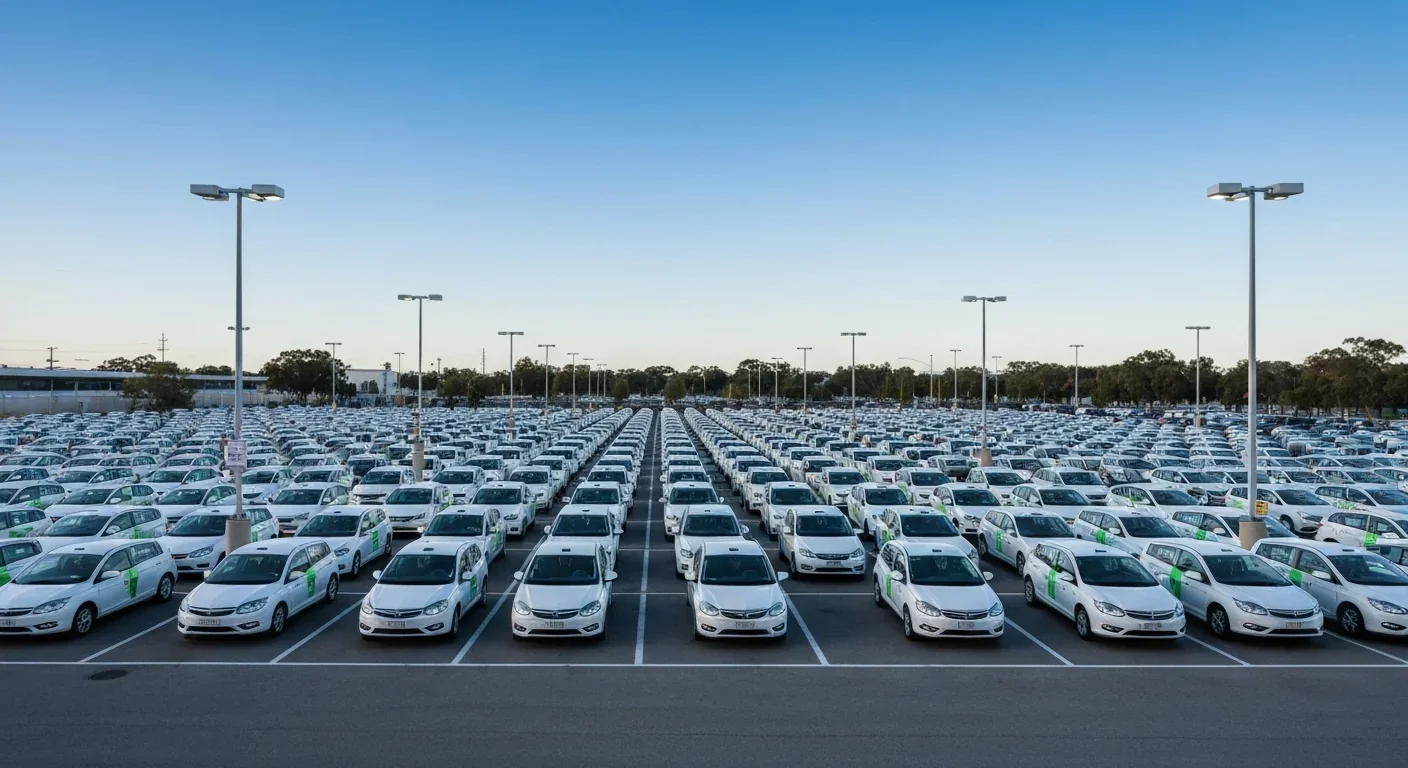
Research shows the sharing economy often increases total resource consumption through the Jevons paradox and rebound effects. Ride-sharing adds billions of vehicle miles, co-working spaces use more energy per worker, and diffused responsibility erodes conservation behavior. Breaking the paradox requires congestion pricing, accountability design, and matching sharing models to appropriate resource types.

Psychological reactance theory explains why banning or restricting things makes people want them more. From Prohibition to the Streisand effect to scarcity marketing, research shows that threatening people's freedom reliably backfires, and autonomy-supportive communication is far more effective.

A carnivorous pitcher plant in Borneo evolved to house bats instead of trapping insects, gaining up to 95% of its nitrogen from bat guano. The plant even built an ultrasonic reflector to help bats find it, revealing that carnivory in plants is a flexible spectrum.
The quantified self movement began as a hacker-ethos pursuit of personal insight, but corporate wearables now funnel biometric data to employers, insurers, and data brokers. With 81% of Americans wrongly believing health apps are HIPAA-protected, a regulatory void enables health data to be sold for pennies while generating anxiety instead of empowerment.

CXL memory pooling lets servers dynamically share DRAM over a cache-coherent interconnect, eliminating the 40% stranded memory waste in data centers. With commercial hardware now shipping and Azure deploying CXL cloud instances, this technology promises to cut memory costs by 50% while enabling composable infrastructure.

Loading featured articles...