Self-Tracking to Surveillance: Quantified Self's Fall

Self-Tracking to Surveillance: Quantified Self's Fall

The Authenticity Tax: How Being Yourself Became Labor

The Vacancy Paradox: Empty Homes and Homelessness

How Engagement Algorithms Turn Social Media Into Outrage

Data Dignity: Should You Own Your Personal Data?

The Great Log-Off: Why Millions Quit Social Media
TL;DR: Gig workers face unique organizing challenges as algorithms replace traditional bosses, making coordination difficult. New tactics like digital log-offs, platform cooperatives, and EU regulations offer paths forward, though platforms adapt quickly to evade rules.

When delivery driver Mohammed Radi watched Uber slash fares in his Paris neighborhood, he couldn't march into a boss's office to complain. There was no office. No manager. Just an app that dictated his earnings through lines of code he'd never see. So Radi did something unexpected - he helped build VTC Cab, a driver-owned platform where workers make the rules. His story captures the strange new battlefield of labor organizing in 2026, where millions of gig workers face a unique challenge: how do you fight for better conditions when your employer is an algorithm?
The platform economy has mushroomed into a massive global workforce that exists in a legal gray zone. Roughly 28 million workers in the European Union perform platform work, with projections suggesting this could reach 43 million by 2025. In India alone, over 10 million gig workers drive for ride-hailing apps, deliver food, or complete micro-tasks. Globally, the gig economy involves hundreds of millions of workers across ride-sharing, food delivery, freelance platforms, and task-based services.
These workers share a common vulnerability: they're classified as independent contractors rather than employees. This classification strips away unemployment insurance, health benefits, paid leave, and minimum wage protections. When you order lunch through DoorDash or catch an Uber, the person serving you likely has no safety net. They work without the basic protections that took labor movements a century to secure.
The Platform Work Directive that took effect in the EU in December 2024 represents the most comprehensive attempt yet to address this gap. It introduces a presumption of employment for platform workers, meaning companies must prove workers are genuinely independent rather than controlled employees. But as we'll see, platforms are proving remarkably creative at evading such rules.
In 2026, hundreds of millions of gig workers worldwide operate without basic employment protections, classified as independent contractors to avoid regulations meant to ensure fair wages, benefits, and working conditions.
Traditional labor organizing relied on a simple premise: workers share a workplace, see the same boss, experience common grievances, and can coordinate face-to-face. Platform work shatters this model. Uber drivers never meet in a central location. DoorDash couriers work alone, scattered across cities. TaskRabbit freelancers might never encounter another worker from the same platform.
The algorithmic control systems these platforms use create what researchers call "management by software." Instead of a human supervisor assigning tasks and evaluating performance, machine learning models make those decisions based on vast datasets of worker behavior, customer ratings, and operational metrics. These systems determine who gets which jobs, how much they're paid, whether they keep platform access, and even the routes they should take.
This opacity is intentional. When Chicago's Bike Courier Collective faced competition from delivery robots and apps, they couldn't negotiate with the algorithms displacing them. Platform workers routinely report sudden deactivations with no explanation, pay rates that change without notice, and rating systems that feel arbitrary yet determine their livelihood.
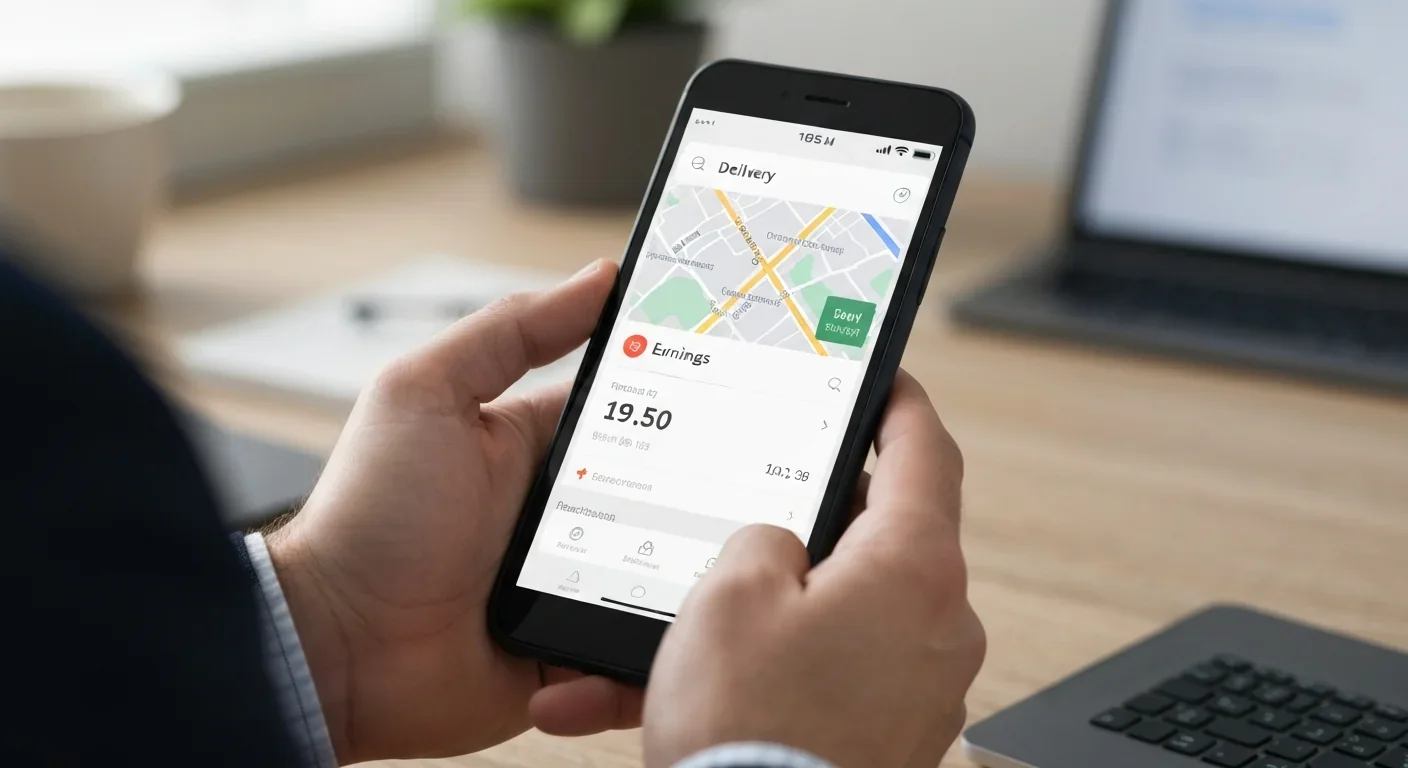
The EU's Platform Work Directive now requires platforms to inform workers about automated monitoring systems and provide human review of algorithmic decisions. Workers gain the right to explanation when an automated system significantly affects their conditions. But enforcement remains patchy, and platforms have shown remarkable skill at adapting their business models to skirt regulations.
Spain's experience offers a cautionary tale about the gap between legislative intent and real-world outcomes. The country's "Riders' Law" created a presumption of employment for delivery workers in 2021, seemingly a major victory. Yet one major platform responded by outsourcing couriers to third-party "fleet" operators who technically employed the workers while the platform retained algorithmic control.
The result? Over 30% of couriers remained classified as independent contractors through this fleet system, despite the law's intentions. Other platforms shifted to part-time contracts or created complex subcontracting networks. For the first year after the law's enactment, no penalties were imposed, effectively rewarding creative compliance over genuine reform.
"Platforms have often been described as 'institutional chameleons' due to their ability to reshape their business models and operational strategies to fit different social and legal contexts."
- Social Europe research on platform adaptation
This adaptation strategy isn't unique to Spain. Platforms have been described as "institutional chameleons" because of their ability to reshape business models to fit different legal contexts while preserving the core elements of algorithmic control and contractor classification. California's AB5 legislation faced similar pushback, culminating in Proposition 22, a $200 million campaign that carved out exemptions for gig companies.
The lesson? Legal victories on paper don't automatically translate into improved working conditions. Enforcement mechanisms matter as much as the laws themselves, and platforms invest heavily in maintaining flexibility that undermines worker protections.
Given the isolation and algorithmic management that define platform work, traditional organizing strategies often fall short. But workers are inventing new forms of collective action tailored to their digital environment.
In Bangkok, on-demand delivery riders staged synchronized "log-offs," collectively refusing orders during peak demand until platform management agreed to negotiations. This tactic - dubbed a "digital picket" - turns the platform's dependence on worker availability into leverage. When hundreds of drivers simultaneously stop accepting rides during Friday rush hour, the app's value plummets.

These coordinated log-offs require sophisticated communication networks. Workers use encrypted messaging apps like WhatsApp and Telegram to coordinate actions invisible to platform managers until they strike. Unlike traditional picket lines that announce themselves, digital pickets can materialize instantly and disperse just as quickly. The 2019 Uber and Lyft drivers' strikes demonstrated this approach across multiple cities simultaneously, showcasing cross-border coordination that mirrors the platform companies' own global scale.
Social media campaigns have also emerged as powerful tools. When Amazon Flex drivers reported that their supposedly flexible schedules were "anything but flexible", public attention forced some policy adjustments. Gig workers increasingly frame their struggles in terms that resonate with consumers - food safety, delivery quality, and the human cost of convenience - rather than purely labor terms.
Some organizers are building "worker power nodes" that blend mutual aid with advocacy. These groups offer practical support like legal advice, insurance navigation, and income smoothing during disputes, while also coordinating collective actions. They operate outside traditional union structures, sometimes registered as nonprofits or informal associations. This flexibility allows them to include workers who can't legally unionize under current labor law.
Data cooperatives represent another innovation. Since platforms hoard data about worker performance, earnings patterns, and customer behavior, some workers are pooling their own data to generate collective insights. By sharing earnings information and algorithm behaviors, they can identify discriminatory patterns and advocate for fairer treatment with evidence in hand.
If algorithmic management is the problem, what if workers controlled the algorithms? Platform cooperatives flip the traditional gig economy model by making workers the owners and decision-makers. These are digital platforms that operate like traditional cooperatives - democratically governed, with profits distributed among member-owners rather than extracted by distant shareholders.
Stocksy, an artist-owned stock photography platform, gives contributing photographers 50% of standard license sales and 75% of extended licenses. Compare that to typical stock photo sites where photographers might earn 15-30%. Union Taxi in Denver, a driver-owned cooperative, cut vehicle lease rates by two-thirds compared to what drivers paid under corporate fleet arrangements.
The platform cooperative movement spans diverse sectors. Fairmondo operates as a cooperative eBay alternative where sellers own the platform. After Uber's fare cuts in Paris, drivers created VTC Cab, which gives drivers control over pricing and algorithms. These examples prove that the platform model doesn't inherently require investor-owned extraction.
Platform cooperatives demonstrate that gig economy platforms can be democratically owned and governed by workers themselves, distributing profits fairly rather than extracting value for distant shareholders.
Platform cooperatives address the organizing problem at its root by eliminating the adversarial relationship between workers and management. When couriers collectively own the delivery platform, there's no external company manipulating algorithms to maximize extraction. Decisions about pay rates, scheduling algorithms, and customer ratings involve the workers affected by them.
However, platform co-ops face significant obstacles. They lack the venture capital that funded the explosive growth of Uber, DoorDash, and similar companies. Network effects favor established platforms - customers use Uber because drivers are on it, and drivers join because customers are there. Breaking into that cycle without massive subsidies is brutally difficult.
That said, platform cooperatives have raised substantial funding through alternative channels. Peerby's $2.2 million crowdfunding round represented the largest in the platform cooperative sector at the time. As awareness grows about the exploitative dynamics of extractive platforms, both workers and consumers may gravitate toward cooperative alternatives that align economic interests more fairly.

The European Union has positioned itself at the forefront of platform work regulation. The Platform Work Directive mandates that member states establish procedures to determine employment status based on the actual performance of work, not just contractual labels. It bans platforms from processing biometric data or emotional state information extracted from customer reviews. Workers gain rights to human monitoring of automated systems and explanations of significant algorithmic decisions.
Crucially, Article 10 extends protections to workers not classified as employees, ensuring that algorithmic transparency and human review rights apply broadly. This prevents platforms from simply reclassifying workers to avoid obligations. Member states have until December 2026 to implement these provisions, creating a window of uncertainty where platforms can continue operating under older rules.
In the United States, the regulatory landscape remains fragmented. California's AB5, which applied the "ABC test" to determine employment status, sparked fierce opposition and was partially rolled back by Proposition 22. Other states have not followed California's lead, leaving millions of gig workers without the protections that AB5 briefly promised. Federal legislation has stalled repeatedly, blocked by lobbying from platform companies and ideological disagreements about labor regulation.
India, with over 10 million gig workers, has begun exploring social security schemes specifically for platform workers. These proposals would provide health insurance and accident coverage without reclassifying workers as employees, attempting to thread the needle between protection and flexibility. Early results are mixed, with coverage gaps and implementation challenges.
Some governments are experimenting with sectoral approaches. Rather than trying to fit platform workers into existing employment law, they're creating new categories with tailored protections. These "dependent contractors" or "worker" categories (distinct from employees or independent contractors) acknowledge the unique features of platform work while extending some benefits and protections.
The global picture reveals a patchwork where workers in the EU enjoy growing protections, those in Asia see incremental reforms, and American gig workers largely remain in a regulatory void. This fragmentation creates competitive pressures - platforms may shift operations to jurisdictions with lighter regulation, threatening a race to the bottom unless international cooperation develops.
Beyond wages and benefits, platform workers face psychological tolls that traditional labor frameworks rarely address. Studies show that gig workers score lower on mental health measures compared to traditionally employed people, with higher rates of anxiety, depression, and loneliness. The isolation inherent in platform work - no coworkers, no shared break rooms, no workplace community - contributes significantly to this crisis.
Financial instability compounds the problem. Without guaranteed hours or minimum wages, platform workers face unpredictable income that makes planning impossible. The psychological strain of not knowing whether you'll earn enough to cover rent creates chronic stress that undermines mental health over time. Many gig workers report working extreme hours during busy periods because they can't count on future earnings, leading to burnout.
"When you're a gig worker, you don't have that same access to a built-in circle of acquaintances and friends."
- A Place of Hope on gig worker isolation
Algorithmic management introduces unique psychological pressures. When you don't understand why your rating dropped or why you're receiving fewer job offers, you can't improve or advocate for yourself. This lack of control and transparency creates learned helplessness. Platform workers describe feeling surveilled and judged constantly by systems they don't comprehend, a modern form of Bentham's panopticon.
The absence of workplace health benefits means most gig workers can't afford mental health care. This creates a vicious cycle: the conditions of platform work damage mental health, but workers lack the resources to address those harms. Some organizing efforts now prioritize mutual aid around mental health, pooling resources for counseling services and building peer support networks.
While gig workers struggle to improve their conditions, they face an existential threat: automation. DoorDash and Waymo have partnered to test self-driving delivery vehicles, potentially replacing human couriers entirely. Uber has invested billions in autonomous vehicle technology. If these companies succeed, the organizing challenges of platform work may become moot - not because conditions improved, but because the jobs disappeared.
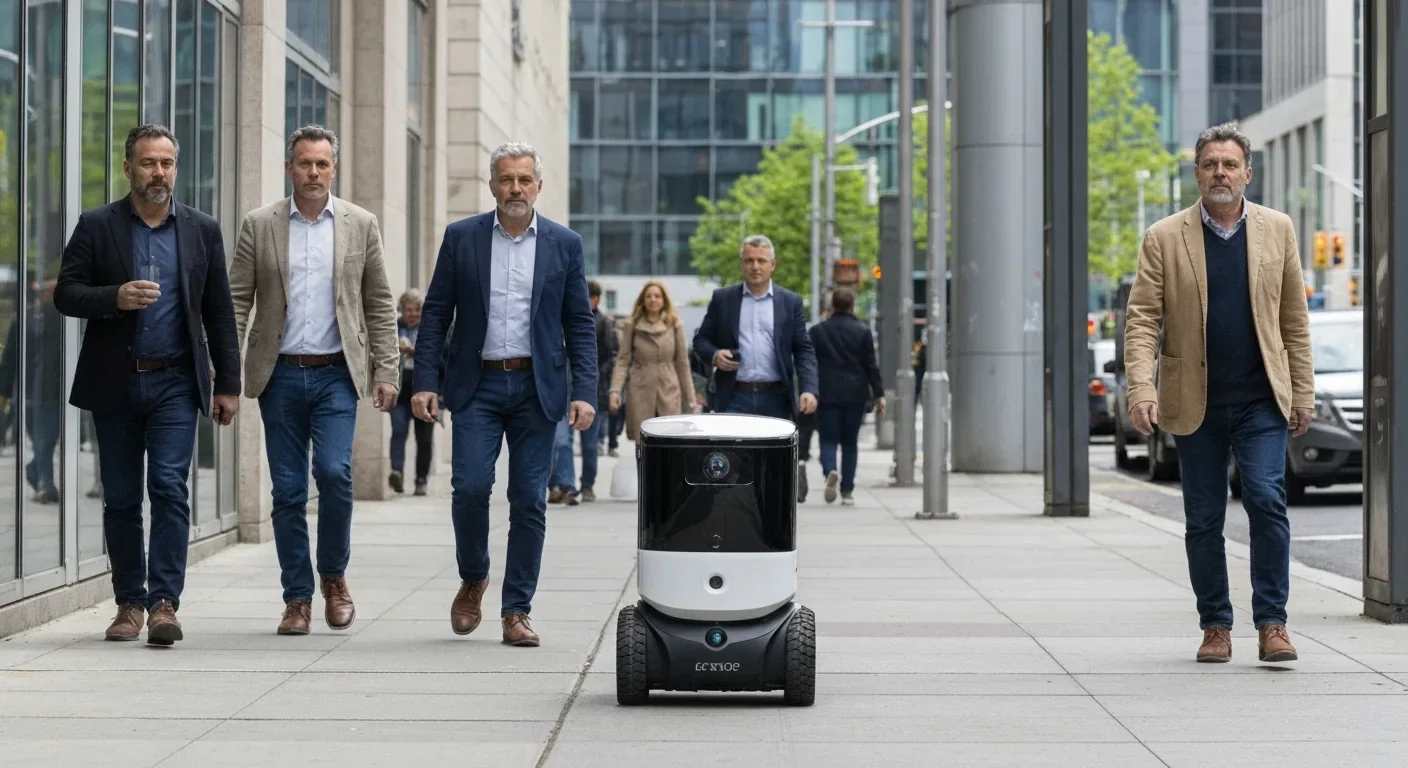
This automation threat creates complicated dynamics for organizing. Some gig workers argue for slowing autonomous vehicle adoption, framing it as job protection. Others recognize that opposing technological progress is unlikely to succeed and instead demand transition support - retraining programs, guaranteed income during displacement, and priority hiring for adjacent roles.
The automation timeline remains uncertain. Self-driving technology has proven harder to scale than initial predictions suggested, especially in complex urban environments. But the capital flowing into these projects signals that platforms view automation as the ultimate solution to labor challenges. Rather than negotiating with workers or complying with regulations, they're investing in eliminating human labor altogether.
This reality should inform organizing strategies. Purely defensive approaches focused on preserving current platform jobs may prove futile if those jobs vanish within a decade. Instead, workers and advocates might push for broader policy frameworks - universal basic income, portable benefits, public ownership of automated delivery infrastructure - that address displacement proactively rather than reactively.
The platform precariat isn't a monolithic category - working conditions, legal contexts, and organizing strategies vary dramatically across regions. In Southeast Asia, where ride-hailing and delivery platforms have exploded, workers often form community-based networks rooted in neighborhoods rather than formal unions. These groups blend social support with collective bargaining, reflecting cultural norms around mutual obligation.
European gig workers benefit from stronger labor traditions and more supportive regulatory environments. Formal unions in countries like Italy and France have made more progress incorporating platform workers than their American counterparts. The Riders Union Bologna negotiated directly with platforms after Italy reclassified food delivery workers as employees, demonstrating how legal changes can enable traditional union strategies.
In Africa, platform work often represents a step up from informal economy jobs with even less security. Organizing energy focuses more on basic safety standards and payment reliability than on benefits packages. Platforms sometimes collapse entirely in African markets, leaving workers with no recourse, so financial stability of the platform itself becomes a worker concern.
Latin American gig workers navigate environments where labor law is often strong on paper but weakly enforced. Organizing emphasizes community visibility - public protests, social media campaigns, and alliances with consumer groups - to create pressure that regulations alone don't generate. Mexican and Brazilian delivery workers have achieved some concessions through high-profile strikes that disrupted service during major events.
These global variations mean there's no single template for platform worker organizing. Strategies that work in Amsterdam may fail in Lagos. Cross-border solidarity networks are emerging, like the International Alliance of App-Based Transport Workers, but they must balance coordination with local adaptation.
Given the obstacles, what would meaningful progress actually look like for the platform precariat? Several benchmarks can help measure success beyond just legislative victories.
First, transparency in algorithmic management. Workers need to understand how job assignments, pay rates, and deactivation decisions get made. The EU's requirements for algorithmic transparency represent progress, but only if rigorously enforced. Success means workers can identify and challenge discriminatory patterns in how algorithms treat them.
Second, genuine worker voice in platform governance. This doesn't necessarily mean traditional unionization - it could involve worker councils, cooperative ownership structures, or mandatory consultation requirements. The key is shifting power so workers can influence decisions affecting their livelihoods rather than simply reacting to changes imposed by distant management.
Third, portable benefits that travel with workers across platforms. Since many gig workers use multiple apps and shift between platforms, tying benefits to specific employers doesn't work. Some proposals envision benefit funds that platforms contribute to based on hours worked, with workers accessing benefits regardless of which platform employed them. Seattle's portable benefits ordinance for gig workers represents an early experiment in this model.
Success for platform workers requires more than regulation - it demands algorithmic transparency, genuine worker voice in governance, portable benefits, minimum income standards, due process before deactivation, and collective bargaining rights that work without traditional employment relationships.
Fourth, minimum income standards. Whether through minimum wage coverage, earnings floors, or guaranteed minimums per hour of availability, workers need predictability. California's Proposition 22 included earnings guarantees, though critics argue they're calculated in ways that understate actual work time.
Fifth, due process before deactivation. Algorithmic firings happen constantly, often without explanation or appeal. Success means establishing procedures where workers can challenge deactivations and receive explanations backed by evidence rather than opaque algorithmic judgments.
Sixth, collective bargaining rights even without employee classification. Some jurisdictions are exploring sectoral bargaining where workers negotiate industry-wide standards rather than company-by-company contracts. This could address the fragmentation problem that undermines traditional organizing.
The organizing challenges facing gig workers aren't just about ride-hailing and food delivery. They're previews of broader labor market transformations affecting knowledge workers, healthcare, logistics, and beyond. As Guy Standing argues, the precariat - defined by insecure, flexible employment relationships - is becoming a larger share of the global workforce across sectors.
Algorithmic management is spreading beyond platforms. Amazon warehouse workers, call center employees, and even healthcare staff face automated monitoring systems that evaluate performance in real time and generate management actions with minimal human oversight. The organizing challenges platform workers face today may become universal labor challenges tomorrow.
Similarly, the classification debates around gig workers connect to larger questions about employment relationships in the digital economy. As remote work becomes normalized and companies rely more on contractors and freelancers, the boundaries between employee and independent contractor blur across industries. How we resolve these questions for Uber drivers will shape how we treat consultants, telehealth providers, and remote software developers.
The infrastructure that enables platform work - cloud computing, mobile connectivity, digital payment systems - creates possibilities for radically different labor organizing approaches. Worker cooperatives can operate at scale using the same technologies that powered Uber's growth. Data analysis tools that platforms use for control could instead enable workers to monitor their own conditions collectively.
Perhaps most fundamentally, platform work forces us to confront what we value in employment relationships. Is work simply an economic transaction where flexibility justifies insecurity? Or do employment relationships carry social obligations - stability, dignity, community - that we shouldn't sacrifice for efficiency? The answers will determine whether the platform economy evolves toward greater fairness or entrenches a permanent underclass of insecure workers.
The platform precariat's organizing challenges stem from a fundamental power asymmetry: workers are atomized and visible while platforms are consolidated and opaque. Reversing this dynamic requires strategies that build collective power despite fragmentation.
One approach is creating costs for non-compliance. Even where regulations exist, platforms often violate them until enforcement happens. Organizing that raises reputational costs - through consumer boycotts, investor pressure, or public campaigns - can make violations expensive even before legal penalties arrive. The threat of bad publicity sometimes motivates faster changes than the threat of eventual fines.
Another strategy is occupation-specific organizing. Rather than trying to unite all gig workers, some efforts focus on particular niches - bike couriers, beauty service providers, or pet care workers - where common experiences and communication networks already exist. Once established, these groups can federate upward into broader coalitions.
Technology itself offers organizing tools. Blockchain systems could create transparent records of earnings and conditions that platforms can't manipulate. Decentralized platforms might enable worker-controlled alternatives to corporate apps. Open-source algorithm projects could provide blueprints for fair dispatch and payment systems that cooperative platforms could adopt.
Legal strategies matter, but organizers increasingly recognize their limits. Regulation is necessary but not sufficient - platforms are too well-resourced and creative at evasion. Organizing must create power independent of legal frameworks so that workers have leverage regardless of classification status or regulatory outcomes.
Traditional labor organizing assumed workers would build solidarity through shared physical space and common employers. Platform workers must forge solidarity without those foundations. The early experiments in digital pickets, platform cooperatives, and sectoral organizing suggest this is possible, but scaling these approaches remains challenging.
Success will likely require a portfolio of strategies rather than a single solution. Legal protections matter for establishing baseline rights. Worker cooperatives provide models of democratic control. Digital organizing tactics create immediate leverage. Mutual aid networks address material needs while building community. Each approach addresses different aspects of the platform precariat's situation.
Cross-sector alliances may prove crucial. Platform workers share interests with traditional labor unions worried about job quality degradation, with privacy advocates concerned about surveillance, with racial justice movements addressing algorithmic bias, and with environmentalists questioning the sustainability of instant-delivery culture. Building these coalitions could generate political power that workers alone might not achieve.
The platform economy is roughly 15 years old - ancient in technology terms but young for labor movements. The organizing strategies emerging now are early iterations that will evolve with experience. What seems impossible today - comprehensive benefits, genuine worker voice, cooperative alternatives at scale - may become normal tomorrow if organizers persist and adapt.
The fundamental question isn't whether platforms will exist but who will control them and how they'll operate. Will we accept a future where algorithms manage millions with impunity, where convenience for consumers means precarity for workers, where every transaction extracts value toward distant shareholders? Or will we build platforms that distribute power and prosperity more fairly, where technology enables agency rather than control?
Mohammed Radi's answer was to build VTC Cab, proving that worker-owned alternatives can exist. His example and thousands of other organizing efforts - from Bangkok's log-off strikes to Barcelona's courier cooperatives - show that the platform precariat isn't passively accepting their conditions. They're fighting back with creativity, coordination, and determination. The battle to democratize the algorithm economy has only just begun.

Project Orion was a real 1960s program to reach other stars by detonating 800 nuclear bombs behind a spacecraft. The physics worked and the engineering was feasible, but the 1963 nuclear test ban treaty killed it. It remains the most credible interstellar spacecraft ever designed.

The locus coeruleus, a tiny brainstem structure, degenerates decades before Alzheimer's symptoms appear. Its loss cripples the brain's inflammation control, waste clearance, and sleep regulation. New imaging tools and noradrenergic therapies offer hope for early detection and prevention.
Research shows the sharing economy often increases total resource consumption through the Jevons paradox and rebound effects. Ride-sharing adds billions of vehicle miles, co-working spaces use more energy per worker, and diffused responsibility erodes conservation behavior. Breaking the paradox requires congestion pricing, accountability design, and matching sharing models to appropriate resource types.

Psychological reactance theory explains why banning or restricting things makes people want them more. From Prohibition to the Streisand effect to scarcity marketing, research shows that threatening people's freedom reliably backfires, and autonomy-supportive communication is far more effective.

A carnivorous pitcher plant in Borneo evolved to house bats instead of trapping insects, gaining up to 95% of its nitrogen from bat guano. The plant even built an ultrasonic reflector to help bats find it, revealing that carnivory in plants is a flexible spectrum.
The quantified self movement began as a hacker-ethos pursuit of personal insight, but corporate wearables now funnel biometric data to employers, insurers, and data brokers. With 81% of Americans wrongly believing health apps are HIPAA-protected, a regulatory void enables health data to be sold for pennies while generating anxiety instead of empowerment.

CXL memory pooling lets servers dynamically share DRAM over a cache-coherent interconnect, eliminating the 40% stranded memory waste in data centers. With commercial hardware now shipping and Azure deploying CXL cloud instances, this technology promises to cut memory costs by 50% while enabling composable infrastructure.

Loading featured articles...