Self-Tracking to Surveillance: Quantified Self's Fall

Self-Tracking to Surveillance: Quantified Self's Fall

The Authenticity Tax: How Being Yourself Became Labor

The Vacancy Paradox: Empty Homes and Homelessness

How Engagement Algorithms Turn Social Media Into Outrage

Data Dignity: Should You Own Your Personal Data?

The Great Log-Off: Why Millions Quit Social Media
TL;DR: Gig economy platforms systematically manipulate wage calculations through algorithmic time rounding, silently transferring billions from workers to corporations. While outdated labor laws permit this, European regulations and worker-led audits offer hope for transparency and fair compensation.
Right now, somewhere in the world, a delivery driver just lost a penny. Then another. It happens millions of times each day, invisible to the workers whose labor generates billions in revenue for app-based platforms. This isn't the dramatic wage theft of unpaid overtime or stolen tips - it's something far more insidious. Welcome to the era of algorithmic wage manipulation, where time itself becomes a weapon wielded by opaque software systems that quietly round down work time at scales so small they're nearly impossible to detect.

The mechanism is deceptively simple: track worker time with precision, but pay based on rounded-down calculations. A few microseconds here, a fraction of a second there. Over millions of transactions, those stolen moments compound into real money - money that flows from workers' pockets straight to corporate balance sheets. And because the theft happens in the digital shadows of proprietary algorithms, most workers never know they're being robbed.
Traditional wage theft is crude and obvious. An employer simply doesn't pay for hours worked. But algorithmic wage manipulation operates differently. It exploits the gap between measurement precision and payment calculation. Gig platforms track every millisecond of worker activity through GPS, accelerometers, and constant app pings. Yet when it comes time to pay, that precision mysteriously evaporates.
Consider how this works in practice. A rideshare driver accepts a trip at 2:14:37.823 PM and completes it at 2:31:42.156 PM. The platform knows the exact duration: 17 minutes, 4 seconds, and 333 milliseconds. But the payment algorithm might round that to 17 minutes flat, silently pocketing those 4.333 seconds of labor. Multiply that across dozens of trips per day, thousands of drivers per city, and millions of workers globally, and you're looking at a systematic transfer of wealth that dwarfs traditional wage theft schemes.
Modern time-tracking systems measure work down to the microsecond. There's no technical reason for rounding anymore. Yet platforms continue the practice, shielded by decades-old regulations that never anticipated algorithmic wage calculation.
The legal framework for this exploitation traces back to industrial-era practices. The 7-minute rule, codified in the Fair Labor Standards Act, allows employers to round employee time to the nearest quarter hour. If you clock in at 8:07 AM, your employer can mark you as starting at 8:00 AM. Clock in at 8:08 AM, and they round up to 8:15 AM. The rule was designed for an era of mechanical time clocks and manual payroll calculation - when precision simply wasn't feasible.
But we no longer live in that world. Modern time-tracking systems measure work down to the microsecond. There's no technical reason for rounding anymore. Yet platforms continue the practice, shielded by decades-old regulations that never anticipated algorithmic wage calculation. One study found that a worker clocking in 7 minutes late each day would lose 2.5 hours of pay every two weeks due to downward rounding alone.
Not all algorithmic wage systems are created equal. Some platforms have faced serious legal challenges for their practices. Lyft, for instance, settled with the Department of Justice for $2.1 million after allegedly inflating hourly earnings claims by up to 30%. The company advertised wages based on the top 20% of drivers while the typical worker earned far less. Though this case focused on deceptive advertising rather than time rounding specifically, it exposed how platforms manipulate wage calculations to their advantage.
Uber's pay structure came under intense scrutiny in a longitudinal audit covering 1.5 million trips from 258 UK drivers between 2016 and 2024. The research revealed that after dynamic pricing was introduced in February 2023, the platform's median take rate jumped to 50%, and average hourly pay stagnated or fell for most drivers. Critically, Uber defines "working time" as only the period between accepting a ride and dropping off the passenger. All the minutes spent waiting for the next dispatch? Unpaid. This narrow definition of compensable time creates a structural wage reduction that echoes the microsecond rounding problem - both tactics exclude genuine work time from payment calculations.
"It's only from the time you accept the job until you drop off that's for them what's considered working time period."
- Anonymous Uber driver
Amazon's AI-powered cameras in delivery vans represent another frontier of algorithmic control. The system monitors drivers' every move and uses that data to recommend wage increases or bonuses. Sounds reasonable until you realize the cameras can't see - or choose to ignore - other cars and obstacles on the road. Drivers get penalized for factors beyond their control, creating an automated wage suppression mechanism dressed up as performance management.
The pattern repeats across platforms: Uber, Lyft, DoorDash, Instacart. Human Rights Watch documented how these companies underpay workers through algorithmic management systems that remain deliberately opaque. Workers can't see the formulas determining their pay, can't audit the calculations, and can't prove when they're being shortchanged. It's the perfect crime - invisible, automated, and protected by corporate secrecy.

Here's where it gets complicated: much of this is technically legal. The FLSA permits rounding to the nearest 5, 10, or 15 minutes, provided the practice doesn't systematically favor the employer. But who's checking whether it favors the employer? The platforms control the data, write the algorithms, and face minimal oversight. Courts generally rule in favor of workers when audits reveal skewed rounding practices, but getting to that point requires workers to first detect the theft, gather evidence, and mount a legal challenge - all while lacking access to the very data they'd need to prove their case.
State-level responses are beginning to emerge. Multiple states including California, Colorado, Georgia, Illinois, Minnesota, New York, and Ohio have introduced legislation prohibiting wage-setting based on surveillance data. At the federal level, Representatives Greg Casar and Rashida Tlaib proposed legislation to ban pricing and wage-setting based on surveillance data altogether. But these efforts face an uphill battle against well-funded industry lobbying. Uber and Lyft alone spent over $200 million on California's Proposition 22, which allowed them to continue classifying drivers as independent contractors.
The most comprehensive regulatory response has come from the European Union. The Platform Work Directive, formally adopted in October 2024, introduces a presumption of employment for platform workers and mandates algorithmic transparency. Platforms must disclose all automated systems affecting working conditions, provide written explanations of algorithmic decisions, and conduct regular human monitoring of their systems at least every two years. Workers gain the right to challenge automated decisions and demand human review. Member states have until December 2026 to transpose these provisions into national law.
The EU Platform Work Directive represents the most comprehensive attempt to regulate algorithmic management, requiring platforms to disclose their algorithms, prohibit biased data processing, and provide workers meaningful recourse against automated decisions.
This European approach offers a potential model for other jurisdictions. Rather than trusting platforms to self-regulate, it imposes mandatory disclosure, regular auditing, and meaningful worker recourse. The directive recognizes a fundamental truth: when employers control both the measurement and calculation of work time, workers need legal protections to prevent exploitation.
Behind every stolen microsecond is a real person trying to make a living. Rideshare Drivers United estimates that California drivers are owed at least $1.3 billion in unpaid wait time and expense reimbursement. If the 250,000 eligible drivers all filed claims, the total could reach tens of billions. These aren't abstract numbers - they represent rent payments, grocery bills, medical care, and children's education.

One Uber driver put it simply: "It's only from the time you accept the job until you drop off that's for them what's considered working time period." All those minutes spent positioning for the next ride, waiting in airport queues, or dealing with app glitches? The platform treats them as if they never happened. This creates what researchers call a "utilization gap" - the difference between time spent working and time that gets paid. After dynamic pricing was introduced, drivers spent more unpaid time waiting for dispatch, reducing their effective hourly rates even as the platform's take increased.
The psychological toll compounds the financial damage. Workers face what one researcher described as "machine-like rhythm" that erodes autonomy and mental well-being. You're constantly monitored, evaluated by inscrutable algorithms, and denied recourse when the system penalizes you. Drivers report that rejecting just two requests causes the algorithm to stop showing them jobs - a form of coercion that makes it nearly impossible to exercise any control over working conditions.
Workers aren't powerless. They're developing creative strategies to expose and combat algorithmic wage manipulation. One promising approach involves Data Subject Access Requests (DSARs) - legal demands for platforms to hand over all personal data they've collected. Under GDPR in Europe and similar laws elsewhere, companies must comply. The participatory audit that analyzed Uber's pay structure used DSAR data from hundreds of drivers to reconstruct the platform's payment algorithms and prove systematic wage depression.
Tools like FairFare and UberCheats help workers independently track their earnings and compare them to what platforms report. FairFare collected data on 700,000 rides from 500 driver accounts, revealing platform take rates ranging from under 10% to over 90%. This kind of crowd-sourced data collection bypasses platform gatekeeping and gives workers the evidence they need to demand accountability.
"If they could see their wage calculations in real time, it would help them plan."
- Samantha Dalal, Princeton University researcher
Union organizing is adapting to the digital age. The European Trade Union Confederation recommends that unions develop in-house technical capacity to audit algorithms and build tools for members. Some are forming cooperative ventures to share the cost of hiring data scientists and software developers who can reverse-engineer platform algorithms. It's an arms race between corporate AI and worker-led data science, but at least workers are now in the fight.
Litigation continues to play a crucial role. Home Depot changed its rounding policy from quarter-hour to nearest minute in 2023 following a class-action lawsuit over lost wages. The DOJ's action against Lyft, California's massive wage-theft case against Uber and Lyft, and Washington State's 2022 law establishing a right for drivers to appeal wrongful deactivations and receive back pay all demonstrate that legal pressure can force platform accountability.

The question isn't whether algorithmic wage theft will be addressed - it's when and how. The current patchwork of state and international regulations creates an unstable equilibrium. Platforms can forum-shop, moving operations to jurisdictions with weaker protections. Workers in different locations face wildly different levels of legal recourse. This fragmentation makes comprehensive solutions difficult.
Federal action in the United States remains gridded by political polarization and industry influence. The FTC launched an investigation into surveillance pricing in 2024, finding that companies used everything from location data to mouse movements to set individualized prices and wages. But new leadership quickly shelved the inquiry, illustrating how regulatory momentum can evaporate with political changes.
Meanwhile, algorithmic management continues to evolve faster than regulators can respond. Each new AI advancement brings fresh opportunities for exploitation. Machine learning models can now predict which workers will accept lower pay, optimize routes to minimize platform costs rather than maximize worker earnings, and personalize wage offers based on individual desperation. The gap between technological capability and legal oversight grows wider every month.
Some experts argue that the solution requires treating algorithmic wage-setting as inherently suspect - shifting the burden of proof to platforms to demonstrate their systems are fair rather than requiring workers to prove unfairness.
Some experts argue that the solution requires treating algorithmic wage-setting as inherently suspect - shifting the burden of proof to platforms to demonstrate their systems are fair rather than requiring workers to prove unfairness. Others propose mandatory transparency requirements modeled on the EU Platform Work Directive, where platforms must disclose their algorithms, submit to regular audits, and provide workers meaningful recourse. Still others advocate for abolishing time rounding altogether, given that modern systems can track and compensate every second of work with perfect accuracy.
Microsecond rounding is just one tactic in a broader strategy of algorithmic wage suppression. Personalized pricing means workers providing identical services receive different pay. Narrow definitions of working time exclude genuine labor. Opaque performance metrics penalize workers for factors beyond their control. Take-rate variability allows platforms to extract more value from individual transactions without workers noticing. Each mechanism chips away at earnings, and together they create a system where platforms capture an ever-larger share of the value workers generate.
This isn't a bug - it's the business model. Gig platforms position themselves as neutral intermediaries, but their profitability depends on minimizing labor costs. Algorithmic management provides the perfect tool: it's automated (so no one feels personally responsible), opaque (so workers can't challenge it), and constantly optimizing (to squeeze every possible cent from each transaction). The more sophisticated the algorithms become, the more efficiently they can extract value from human labor.
The fundamental tension here is between platform profitability and worker welfare. As long as platforms control the algorithms that determine both work allocation and compensation, they have every incentive to design systems that favor their bottom line. Regulatory frameworks lag behind technological advancement, creating loopholes that allow platforms to operate with minimal oversight. Workers lack the technical tools and data access needed to verify they're being paid fairly. And the classification of gig workers as independent contractors removes many traditional labor protections.
The future of gig work depends on how society resolves this conflict. Will platforms be required to open their algorithmic black boxes? Will workers gain meaningful rights to audit and challenge wage calculations? Will regulators develop the technical sophistication needed to oversee AI-driven labor markets? Or will the current system persist, with billions of dollars continuing to flow from workers to platforms through imperceptible algorithmic manipulations?
Some scenarios are encouraging. Modern time-tracking technology can record work at second-level precision, eliminating any justification for rounding. Participatory data science methods give workers tools to expose platform practices. International regulatory coordination, as seen in the EU Platform Work Directive, can establish baseline protections that prevent a race to the bottom. Class-action litigation creates financial consequences for companies that engage in wage theft.
Other scenarios are dystopian. Algorithms could become even more sophisticated at individualizing wages and predicting which workers will tolerate lower pay. Platforms might move operations to jurisdictions with minimal oversight. Political capture could prevent meaningful regulation. The gig economy could expand into more sectors - healthcare, education, professional services - bringing algorithmic wage manipulation to workers who currently enjoy stronger protections.
What's certain is that the stakes are enormous. Millions of workers worldwide depend on gig platforms for their livelihoods. The precedents set in regulating these systems will shape labor markets for decades. If we allow algorithmic wage theft to become normalized, we're accepting a future where employers can systematically underpay workers through means too complex for individuals to detect or challenge. If we demand transparency, accountability, and fair compensation, we have a chance to harness technology's precision to ensure workers receive every cent they've earned.
The pennies add up. So do the principles. This isn't just about rounding errors - it's about who controls the future of work, who benefits from technological progress, and whether our legal systems can adapt fast enough to protect human dignity in an age of algorithmic management. The microseconds matter because they represent a choice: between exploitation and fairness, between opacity and accountability, between corporate profit and worker justice.
Every time a driver accepts a ride, a delivery worker picks up an order, or a tasker starts a job, algorithms are making calculations that affect their lives. Those calculations should be transparent, auditable, and fair. Anything less is theft, no matter how invisibly small each individual instance might be. The workers who power our on-demand economy deserve to be paid for every moment of their labor - not rounded down, not manipulated by opaque formulas, not silently transferred to corporate accounts one microsecond at a time.

Project Orion was a real 1960s program to reach other stars by detonating 800 nuclear bombs behind a spacecraft. The physics worked and the engineering was feasible, but the 1963 nuclear test ban treaty killed it. It remains the most credible interstellar spacecraft ever designed.

The locus coeruleus, a tiny brainstem structure, degenerates decades before Alzheimer's symptoms appear. Its loss cripples the brain's inflammation control, waste clearance, and sleep regulation. New imaging tools and noradrenergic therapies offer hope for early detection and prevention.
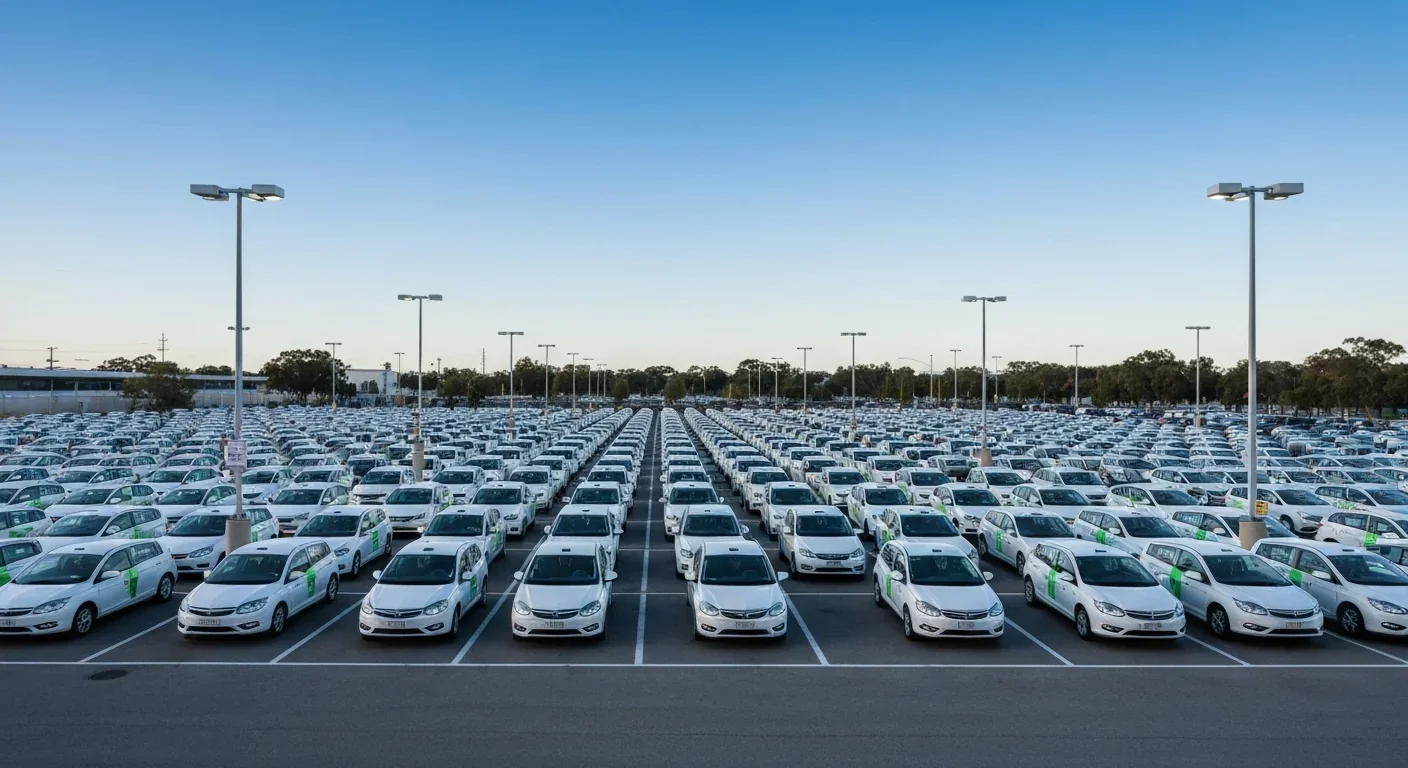
Research shows the sharing economy often increases total resource consumption through the Jevons paradox and rebound effects. Ride-sharing adds billions of vehicle miles, co-working spaces use more energy per worker, and diffused responsibility erodes conservation behavior. Breaking the paradox requires congestion pricing, accountability design, and matching sharing models to appropriate resource types.

Psychological reactance theory explains why banning or restricting things makes people want them more. From Prohibition to the Streisand effect to scarcity marketing, research shows that threatening people's freedom reliably backfires, and autonomy-supportive communication is far more effective.

A carnivorous pitcher plant in Borneo evolved to house bats instead of trapping insects, gaining up to 95% of its nitrogen from bat guano. The plant even built an ultrasonic reflector to help bats find it, revealing that carnivory in plants is a flexible spectrum.
The quantified self movement began as a hacker-ethos pursuit of personal insight, but corporate wearables now funnel biometric data to employers, insurers, and data brokers. With 81% of Americans wrongly believing health apps are HIPAA-protected, a regulatory void enables health data to be sold for pennies while generating anxiety instead of empowerment.

CXL memory pooling lets servers dynamically share DRAM over a cache-coherent interconnect, eliminating the 40% stranded memory waste in data centers. With commercial hardware now shipping and Azure deploying CXL cloud instances, this technology promises to cut memory costs by 50% while enabling composable infrastructure.

Loading featured articles...