Self-Tracking to Surveillance: Quantified Self's Fall

Self-Tracking to Surveillance: Quantified Self's Fall

The Authenticity Tax: How Being Yourself Became Labor

The Vacancy Paradox: Empty Homes and Homelessness

How Engagement Algorithms Turn Social Media Into Outrage

Data Dignity: Should You Own Your Personal Data?

The Great Log-Off: Why Millions Quit Social Media
TL;DR: The $4.5 trillion global wellness industry transforms self-care into luxury products accessible mainly to the affluent, while corporations profit from selling solutions to burnout problems they help create. This analysis examines how wellness commodification creates socioeconomic inequities and shifts focus from systemic change to individual consumption.

The global wellness industry is expected to reach $11 trillion by 2034, transforming personal health into one of the world's fastest-growing economic sectors. Yet as corporations market mindfulness apps, boutique fitness classes, and luxury supplements to burned-out workers, a paradox emerges: the companies selling these solutions often helped create the problems they claim to fix. What started as self-care has become a commodity, accessible primarily to those who can afford it, while systemic issues driving stress and exhaustion remain unaddressed.
This isn't just about expensive yoga studios or overpriced green juice. It's about how late capitalism repackages essential health practices as premium consumer goods, creating a two-tiered wellness system where your income determines your access to basic wellbeing. The wellness industry now operates as both symptom and disease, monetizing the anxiety it helps perpetuate.
The numbers tell a striking story. The United States alone accounts for $1.8 trillion of the global wellness economy, making it the largest wellness market in the world. Corporate wellness programs have grown into a $13.6 billion industry, with companies investing heavily in employee health initiatives that promise impressive returns on investment.
But here's where things get interesting. A pre-2015 Harvard case study found that companies saved $3.27 in medical claims and cut $2.73 in absentee-related costs for every dollar invested in wellness programs - a 6:1 return. More recent data shows 92% of employers added mental health components to their wellness offerings, responding to surveys showing that between 92% and 95% of workers believe employer emotional support is critical to their long-term tenure.
These statistics reveal something uncomfortable: wellness has become a strategic business investment, not an altruistic gesture. Companies aren't investing in employee health because it's the right thing to do - they're doing it because burned-out workers are expensive.
These statistics reveal something uncomfortable: wellness has become a strategic business investment, not an altruistic gesture. Companies aren't investing in employee health because it's the right thing to do - they're doing it because burned-out workers are expensive, and keeping them functional is cheaper than replacing them.
Before wellness became an industry, self-care was simply care. Communities shared healing practices freely. Traditional medicine existed within cultural contexts, passed down through generations without price tags. Yoga was a spiritual practice, meditation a path to enlightenment, and herbal remedies were knowledge shared among neighbors.
The transformation began accelerating in the 1970s and 1980s, as neoliberal economic policies reshaped how we think about health and responsibility. Personal health became individual responsibility rather than collective concern. As wages stagnated and work hours increased, the resulting stress and exhaustion created a market opportunity. Entrepreneurs recognized that overwhelmed workers would pay premium prices for solutions to problems created by the very economic system generating their wealth.
The fitness industry led the way, transforming physical activity from something humans naturally did into something requiring expensive memberships, specialized equipment, and professional instruction. The pattern repeated across sectors: meditation became mindfulness apps with subscription fees, community gardens became meal kit delivery services, and traditional healing practices were repackaged as luxury spa treatments.

What's crucial to understand is that this commodification didn't happen by accident. It required systematically devaluing free or community-based alternatives while elevating commercialized versions as superior, more effective, and worth the investment. Cultural appropriation played a significant role, with Western companies extracting practices from Indigenous and Eastern cultures, stripping them of context, and reselling them at markup to predominantly white, affluent consumers.
Walk into any high-end wellness space and you'll notice something immediately: everyone looks wealthy. That's not coincidental. Wellness has become a form of social capital, a way for affluent individuals to signal their status through perfect bodies, glowing skin, and familiarity with the latest health trends.
The pricing strategies employed by wellness brands deliberately exploit psychological principles to maximize profit. Premium pricing creates perception of quality - if something costs more, consumers assume it works better. Scarcity tactics, like limited availability or exclusive access, increase desirability. Psychological pricing techniques make luxury wellness products feel more accessible than they are, with payment plans and subscription models that obscure total costs.
Consider the economics of boutique fitness. A single class at an upscale studio can cost $40 or more. Specialized wellness retreats run thousands of dollars. Personal trainers, nutritionists, and wellness coaches charge rates accessible only to high earners. One Guardian article profiled five people whose wellness budgets revealed the "incredibly expensive and time-consuming" nature of maintaining wellness routines.
The class divide in wellness access has profound health implications. Income inequality directly correlates with health disparities, creating a situation where those who need health interventions most can afford them least. Low-income workers face higher stress levels, worse working conditions, and less time for self-care, yet lack access to the wellness resources marketed as essential for managing these challenges.
Here's where the paradox becomes most visible. The same corporations driving employee burnout through demanding schedules, insufficient staffing, and productivity metrics are now investing billions in wellness programs to address the resulting health problems.
Research from 2025 shows that 70% of organizations have shifted from healthcare cost focus to a "value on investment" approach, emphasizing holistic employee wellbeing. This sounds progressive until you examine what it means in practice: companies are measuring wellness program success by productivity gains, retention rates, and reduced healthcare costs rather than actual employee wellbeing.
The ROI calculations are revealing. Companies track how much they save when employees take fewer sick days, file fewer insurance claims, and remain with the company longer. One study found that organizations with comprehensive wellness programs saw significant returns through reduced turnover and improved productivity. The focus remains firmly on the company's bottom line, not worker flourishing.

"Companies offer yoga classes and meditation apps while maintaining the demanding work cultures that necessitate these interventions. It's cheaper to provide stress management resources than to address the systemic causes of workplace stress."
- Workplace Wellness Analysis
This creates a strange dynamic where companies offer yoga classes and meditation apps while simultaneously maintaining the demanding work cultures that necessitate these interventions. It's cheaper to provide stress management resources than to address the systemic causes of workplace stress - excessive hours, unrealistic expectations, insufficient autonomy, or inadequate compensation.
Critics argue this represents what's called "cruel optimism" - the idea that if workers just meditated more, exercised regularly, and practiced better self-care, they could thrive within fundamentally exploitative systems. The responsibility for wellbeing gets placed squarely on individual workers rather than on the organizations and economic structures shaping their daily reality.
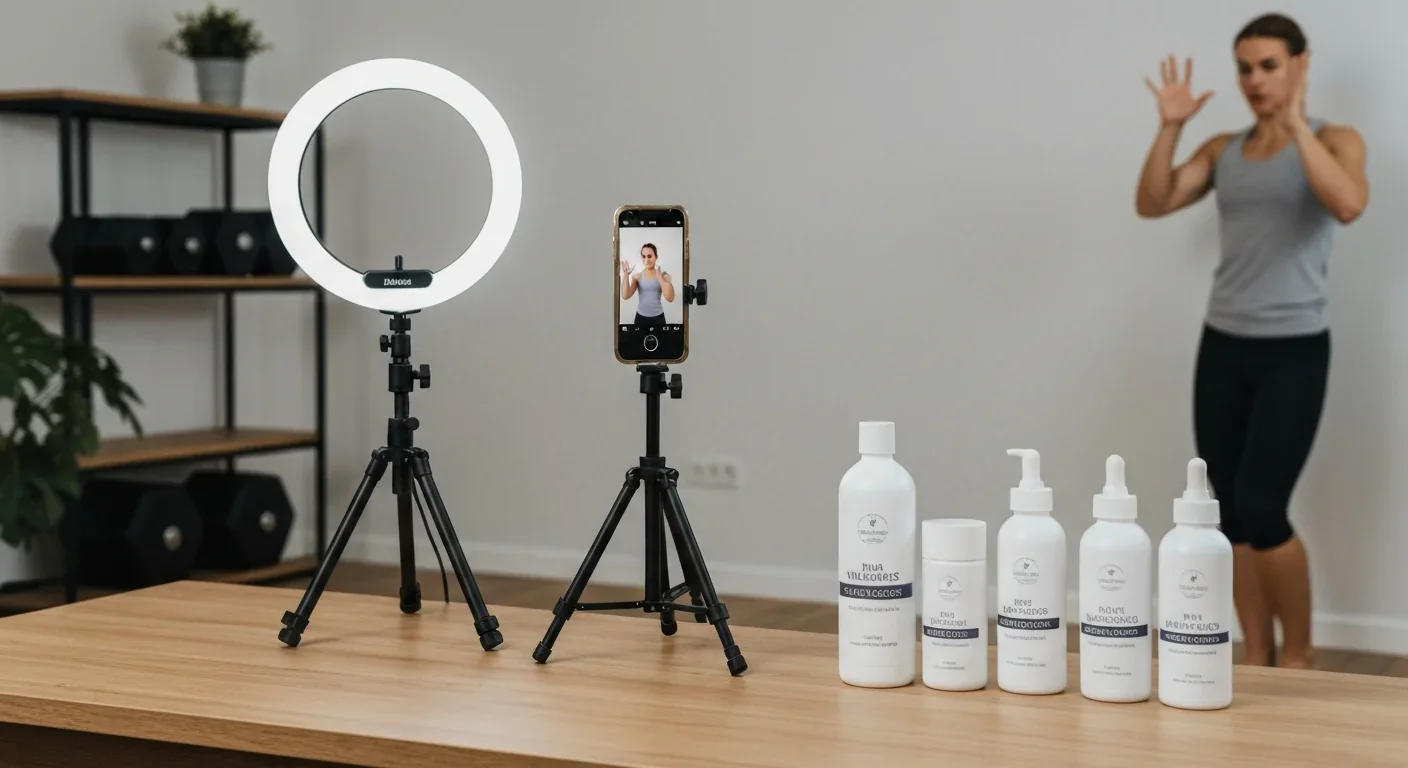
The rise of social media transformed how wellness products and practices reach consumers, creating an entirely new economic model built on personal branding and aspirational lifestyles. Fitness influencers have become particularly adept at monetization, turning their wellness journeys into lucrative businesses.
Influencers can monetize through multiple revenue streams: sponsored content, affiliate marketing, digital products, coaching services, and exclusive membership communities. Some launch paid challenges that promise transformation through intensive programs. Others develop comprehensive monetization strategies combining free content that builds audience with premium offerings generating revenue.
What makes this model particularly effective - and problematic - is how it sells both products and identity. Influencers don't just promote specific supplements or workout programs; they sell the promise of becoming the kind of person who has their life together, who prioritizes self-care, who invests in their wellbeing. The message: you too can achieve this lifestyle, if you're willing to pay for it.
The influencer economy also amplifies wellness trends rapidly, creating boom-and-bust cycles where specific products, diets, or practices surge in popularity before being replaced by the next big thing. This constant churn benefits brands and influencers who profit from novelty but leaves consumers perpetually chasing solutions, spending money on an endless succession of wellness products that promise but rarely deliver lasting change.
Perhaps nowhere is the tension between genuine care and profit motive more visible than in the commodification of mental health. As awareness of mental health issues has increased - a genuinely positive development - a massive industry has emerged to monetize psychological struggle.
Mental health apps represent a particularly lucrative market, with the sector expanding at a 15.3% annual growth rate. These apps promise accessible therapy, meditation guidance, mood tracking, and anxiety relief through subscription services. Many provide genuine value, making mental health resources available to people who might not otherwise access them.
But the market dynamics raise concerns. Digital mental health startups face increasing profitability pressure as investor expectations shift. The investment landscape for mental health innovation shows strong interest, but the focus remains on returns rather than outcomes. This creates incentives to prioritize features that increase engagement and retention - metrics that don't necessarily align with therapeutic effectiveness.
The result is often what critics call "mental health washing" - companies slapping wellness language onto products without meaningful therapeutic benefit. Mindfulness gets reduced to three-minute breathing exercises between meetings while systemic causes remain unexamined.
The result is often what critics call "mental health washing" - companies slapping wellness language onto products without meaningful therapeutic benefit. Mindfulness gets reduced to three-minute breathing exercises between meetings. Complex psychological issues get addressed through cheerful notifications and gamified habit tracking. The systemic causes of mental health struggles - economic precarity, overwork, social isolation, environmental destruction - remain unexamined while individuals are encouraged to manage symptoms through purchased interventions.
The wellness industry's relationship with traditional healing practices reveals uncomfortable truths about cultural appropriation and economic exploitation. Western wellness tourism increasingly targets Indigenous ceremonies and traditional medicines, extracting them from cultural contexts and commodifying them for affluent consumers.
Ayahuasca tourism offers a stark example. What began as a sacred Indigenous Amazonian practice has become a lucrative industry catering to wealthy Westerners seeking spiritual experiences. Retreat centers charge thousands of dollars for ceremonies, often run by non-Indigenous facilitators, with profits rarely benefiting the communities from which these practices originated. The long-term effects of this cultural appropriation include erosion of cultural authenticity, economic displacement, and loss of sacred knowledge.
The pattern repeats across wellness sectors. Yoga, divorced from Hindu philosophy and reduced to exercise classes, becomes a billion-dollar industry primarily benefiting white instructors and studio owners. Traditional Chinese medicine gets repackaged as trendy supplements. Indigenous sweat lodge ceremonies become luxury spa experiences. In each case, cultural practices developed over centuries within specific communities get extracted, commodified, and sold back at premium prices.
The wellness industry has a distinctly gendered character, both in who performs its labor and who consumes its products. Feminist analyses of self-care reveal how wellness commodification disproportionately affects women, who are simultaneously targeted as primary consumers and expected to perform unpaid care work for others.
Women face intense social pressure to invest in their appearance, health, and wellbeing - pressures that wellness marketing exploits and amplifies. The time and money women are encouraged to spend on wellness routines, beauty regimens, and body optimization constitute a significant economic burden that men typically avoid. This creates what some scholars call a "maintenance tax" on women, where meeting basic social expectations requires constant consumption of wellness products and services.

At the same time, women predominate in wellness industry jobs - as yoga instructors, nutritionists, massage therapists, wellness coaches - that are often precarious, low-paid, and lacking benefits. The same women selling wellness to others frequently can't afford the lifestyle they promote, creating cognitive dissonance and economic stress.
"By positioning self-care as individual consumer choice rather than collective struggle for better conditions, wellness culture can actually undermine feminist solidarity and redirect energy away from collective action."
- Feminist Healthcare Analysis
The feminist critique goes deeper. By positioning self-care as individual consumer choice rather than collective struggle for better conditions, wellness culture can actually undermine feminist solidarity. When women are encouraged to solve systemic problems through purchased solutions - buying their way to better health rather than organizing for healthcare access, work-life balance, or economic justice - it redirects energy away from collective action that might actually change conditions.
While this analysis has focused primarily on Western wellness markets, the industry's global expansion reveals important patterns. Inclusive wellness initiatives are gaining attention, acknowledging that wellness looks different across cultural contexts and socioeconomic conditions.
In many non-Western countries, wellness practices never underwent the same degree of separation from daily life and community. Traditional medicine remains integrated into healthcare systems. Physical activity happens naturally through daily routines rather than requiring gym memberships. Food traditions emphasize fresh, locally-sourced ingredients without premium pricing or marketing.
Despite the dominance of commodified wellness, alternatives exist. Community health initiatives, public parks and recreation programs, free mental health resources, and traditional mutual aid networks provide wellbeing support without price tags. These alternatives rarely get the marketing budgets or media attention of commercial wellness products, but they represent genuine paths toward accessible care.
Some practitioners and companies are attempting to decouple wellness from luxury, offering sliding-scale pricing, pay-what-you-can models, or explicitly anti-capitalist approaches to health and healing. Cooperatively-owned wellness spaces, community-supported health initiatives, and skill-sharing networks demonstrate that alternative economic models can support wellbeing without extracting maximum profit.
Research on relational self-care emphasizes collective approaches rather than individualized consumption. This perspective recognizes that genuine wellbeing emerges from supportive relationships, economic security, and community resources rather than from purchased products. It redirects attention toward systemic change - labor protections, universal healthcare, living wages, affordable housing - that would actually improve population health.
The wellness industry's trajectory raises fundamental questions about how we organize care in society. Should health and wellbeing be purchased on the private market or guaranteed as public goods? Can we separate legitimate health interventions from exploitative marketing? How do we address systemic causes of poor health while supporting individuals in their current circumstances?
There are no simple answers, but some principles emerge. First, genuine wellbeing requires more than individual consumer choices - it requires systemic change addressing working conditions, economic inequality, healthcare access, and environmental health. Second, we need to recognize and support community-based care practices that don't depend on profit extraction. Third, critical literacy about wellness marketing helps consumers distinguish between genuine health interventions and exploitative products.
The challenge is that even recognizing these issues doesn't exempt us from the system. Those of us who can afford wellness products and services face genuine health challenges that these resources sometimes genuinely address. The goal isn't to shame individual participation in wellness culture but to maintain critical awareness of the larger dynamics at play.
We might ask what health and wellbeing would look like in a society that prioritized care over profit. Where people had time to rest, cook nourishing meals, exercise, and connect with community without needing to purchase these opportunities. Where traditional healing practices were respected and accessible within their cultural contexts. Where mental health support was universally available. Where work itself was organized around human flourishing rather than extracting maximum productivity.
That vision feels distant from current reality, but understanding how wellness became commodified is the first step toward imagining alternatives. The $4.5 trillion industry didn't emerge naturally - it was built through deliberate choices about how we organize economy and society. Different choices remain possible.
The question facing us now is whether we'll continue treating health as a commodity available primarily to those who can afford it, or begin building systems that treat wellbeing as a fundamental right. The answer will shape not just the wellness industry but the kind of society we become.

Project Orion was a real 1960s program to reach other stars by detonating 800 nuclear bombs behind a spacecraft. The physics worked and the engineering was feasible, but the 1963 nuclear test ban treaty killed it. It remains the most credible interstellar spacecraft ever designed.

The locus coeruleus, a tiny brainstem structure, degenerates decades before Alzheimer's symptoms appear. Its loss cripples the brain's inflammation control, waste clearance, and sleep regulation. New imaging tools and noradrenergic therapies offer hope for early detection and prevention.

Research shows the sharing economy often increases total resource consumption through the Jevons paradox and rebound effects. Ride-sharing adds billions of vehicle miles, co-working spaces use more energy per worker, and diffused responsibility erodes conservation behavior. Breaking the paradox requires congestion pricing, accountability design, and matching sharing models to appropriate resource types.

Psychological reactance theory explains why banning or restricting things makes people want them more. From Prohibition to the Streisand effect to scarcity marketing, research shows that threatening people's freedom reliably backfires, and autonomy-supportive communication is far more effective.

A carnivorous pitcher plant in Borneo evolved to house bats instead of trapping insects, gaining up to 95% of its nitrogen from bat guano. The plant even built an ultrasonic reflector to help bats find it, revealing that carnivory in plants is a flexible spectrum.
The quantified self movement began as a hacker-ethos pursuit of personal insight, but corporate wearables now funnel biometric data to employers, insurers, and data brokers. With 81% of Americans wrongly believing health apps are HIPAA-protected, a regulatory void enables health data to be sold for pennies while generating anxiety instead of empowerment.

CXL memory pooling lets servers dynamically share DRAM over a cache-coherent interconnect, eliminating the 40% stranded memory waste in data centers. With commercial hardware now shipping and Azure deploying CXL cloud instances, this technology promises to cut memory costs by 50% while enabling composable infrastructure.

Loading featured articles...