Self-Tracking to Surveillance: Quantified Self's Fall

Self-Tracking to Surveillance: Quantified Self's Fall

The Authenticity Tax: How Being Yourself Became Labor

The Vacancy Paradox: Empty Homes and Homelessness

How Engagement Algorithms Turn Social Media Into Outrage

Data Dignity: Should You Own Your Personal Data?

The Great Log-Off: Why Millions Quit Social Media
TL;DR: Institutions across healthcare, education, nonprofits, and government now depend on volunteer labor worth over $1.1 trillion annually to maintain services they can't afford to staff, creating an unsustainable model that masks systemic funding failures and raises profound ethical questions about labor, equity, and institutional viability.
When a hospital can't afford nursing staff, it recruits volunteers. When schools lack funding for tutors and support staff, they ask parents to fill the gaps. When fire departments can't hire enough firefighters, they depend on unpaid volunteers to respond to emergencies. Across America and beyond, a quiet transformation is underway: essential services that once employed paid professionals now run on the invisible fuel of unpaid labor.
This isn't supplemental help anymore. It's structural dependency. And it's hiding a profound institutional failure.

The numbers tell a striking story. Unpaid caregiving alone is worth more than $1.1 trillion annually in the United States, according to recent analysis. Add formal volunteering across all sectors, and you're looking at 60.7 million Americans contributing unpaid labor in 2021 alone - each hour valued at $31.80 by standard economic measures. That's not counting the 124.7 million Americans who volunteered informally, helping neighbors, organizing community events, or coaching youth sports.
But here's what makes this different from traditional volunteerism: about one-third of the nonprofit workforce is now made up of volunteers, not supplementing paid staff but replacing positions that organizations simply can't afford to fill. The line between "helping out" and "keeping the doors open" has blurred beyond recognition.
Traditional economic measures miss this entirely. Volunteer work falls outside the production boundary, so it doesn't count in GDP calculations. Millions of volunteer hours power platforms like Wikipedia and contribute to social services, yet they're economically invisible. It's a parallel economy operating in plain sight, one that institutions have learned to depend on when budgets won't stretch.
Consider the healthcare sector, where financial margins have become razor-thin. Nonprofit hospitals and health systems had a median operating margin of just 0.2% in 2022 - essentially breaking even. In this environment, volunteers aren't nice-to-haves. They're load-bearing pillars holding up the structure.
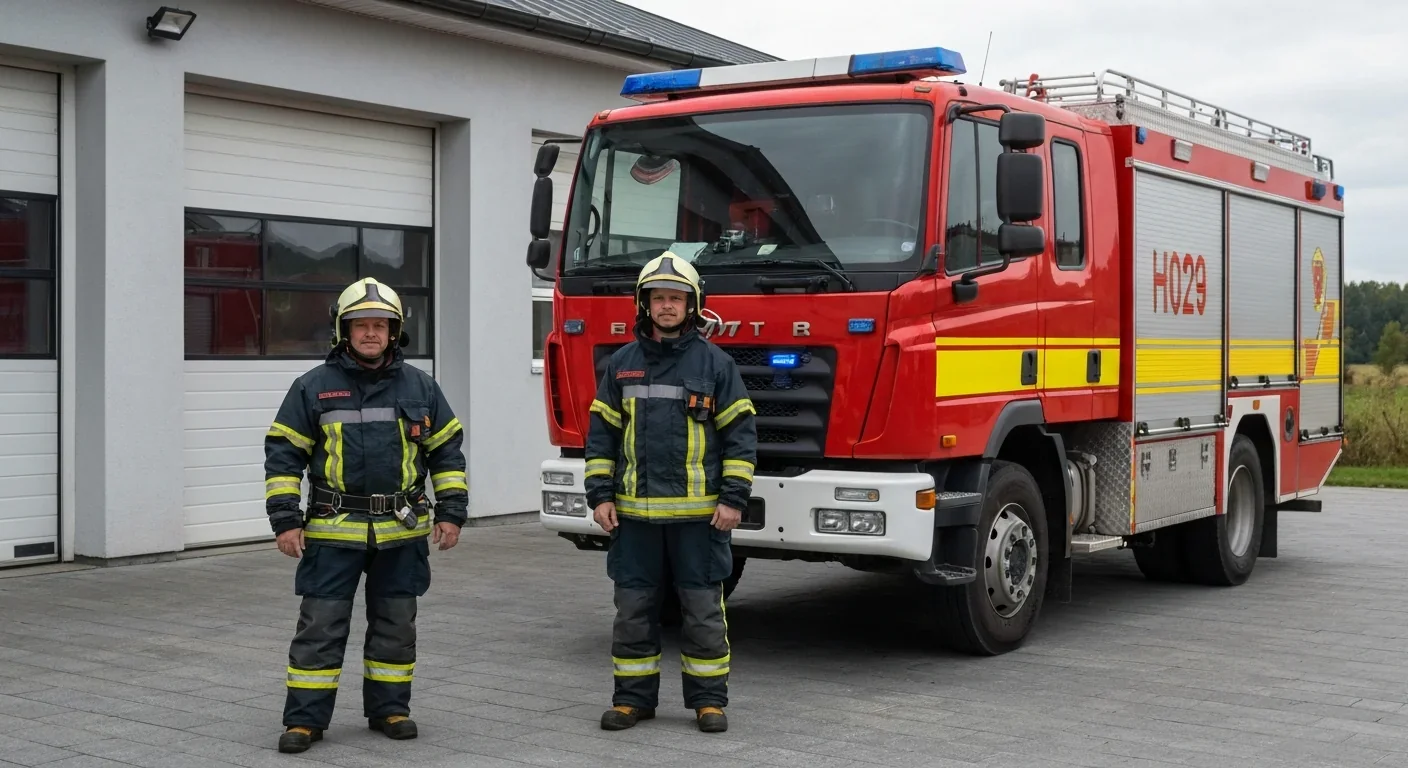
The pattern repeats across sectors. Rural fire departments are facing a nationwide volunteer shortage even as they remain dependent on unpaid firefighters for emergency response. Schools increasingly rely on parent volunteers to staff libraries, supervise playgrounds, and even assist in classrooms - roles that were once paid positions.
What's being masked here isn't just the economic value. It's the fundamental question of whether these institutions are sustainable at all.
The roots of institutional dependency on volunteer labor stretch back decades, but the acceleration has been recent and dramatic. Three forces converged to create today's reality.
First, the steady erosion of public funding. Tax revolts starting in the late 1970s limited revenue for schools, libraries, and public services. These institutions didn't shut down - they adapted, replacing paid positions with volunteer roles. What began as temporary cost-cutting became permanent structure.
Second, the professionalization of nonprofits paradoxically increased their dependence on unpaid labor. As nonprofits grew more sophisticated, they needed more specialized roles: grant writers, data analysts, marketing coordinators. Budgets hadn't grown proportionally, so organizations turned to skilled volunteers to fill expert positions they couldn't afford to staff.
Third, corporate culture shifted to embrace volunteerism as part of employee engagement. 71% of employees say it's imperative or very important to work where the culture supports volunteering. Companies responded by offering volunteer time off - typically around 20 hours annually per employee. This created a new pool of skilled labor that nonprofits could tap into, making it easier to defer hiring.

History offers an uncomfortable parallel. During the Industrial Revolution, child labor allowed factories to maintain artificially low costs while keeping products affordable. Society eventually recognized this as unsustainable and unethical, requiring fundamental restructuring of how production worked. The volunteer-dependency economy may be heading for a similar reckoning.
Who does this unpaid work, and why? The demographics reveal some uncomfortable patterns.
Women volunteer at significantly higher rates than men - 33.8% compared to 26.5% in America. This mirrors the broader pattern of unpaid domestic work, where women complete approximately 70% of all unpaid labor worldwide. The "double burden" phenomenon, where women juggle paid employment and unpaid responsibilities, extends into formal volunteering.
Age patterns show that Gen X has the highest rate of formal volunteering, while Baby Boomers lead in informal volunteering at 59%. These are people in their peak earning and caregiving years, squeezing volunteer commitments around jobs and family obligations.
Research on volunteer motivation reveals a complex picture. Simple interventions like performance feedback increased volunteer output by 36.5%, while giving volunteers a say in fund allocation boosted productivity by 44.6%. These psychological rewards can be powerful, suggesting volunteers aren't purely altruistic - they're seeking autonomy, competence, and meaningful impact.
But there's a sustainability problem lurking here. As institutions increase their dependency on volunteer labor, they also increase demands on those volunteers. Nonprofit burnout is a growing concern, not just among paid staff but among the volunteers who've become essential to operations. When volunteering shifts from occasional service to regular commitment, the psychological calculus changes.
When volunteer roles start requiring weekly shifts, specific skills, and reliability comparable to paid positions, the ethical line becomes harder to defend.
The pandemic intensified these tensions. While formal volunteering rates declined from 2017 to 2021, institutional needs didn't decrease - they often intensified. Organizations that had structured themselves around volunteer labor found themselves dangerously understaffed, revealing just how dependent they'd become.
Walk into many hospitals today and you'll encounter volunteers at every turn. They staff information desks, transport patients, deliver meals, comfort families in waiting rooms, and assist with administrative tasks that once employed paid staff.
For healthcare systems operating on those 0.2% margins, this volunteer labor isn't supplemental - it's structural. The economic value these volunteers provide allows hospitals to maintain service levels they couldn't otherwise afford.
But healthcare volunteering extends far beyond hospitals. Unpaid caregiving for elderly, disabled, and chronically ill family members represents over $1.1 trillion in economic value - work that would otherwise require professional home health aides, nursing care, and medical support services that families and health systems can't afford.
This creates a cascade of hidden costs. Family caregivers often reduce work hours or leave jobs entirely, losing income and career progression. They experience higher rates of stress, depression, and their own health problems. These costs don't appear in institutional budgets because they're externalized to individuals and families.
The ethical questions multiply when healthcare volunteering involves skilled work. Pre-med students routinely volunteer in hospitals, gaining experience while providing labor. When does this cross from educational opportunity to exploitation of aspirational workers willing to work free for resume credentials?
The education sector's dependency on volunteer labor has become so normalized that many people don't recognize it as problematic. Parent-teacher associations, classroom volunteers, lunch monitors, field trip chaperones, library assistants - schools have woven unpaid labor into their operational fabric.
This raises immediate equity concerns. Schools in affluent areas can draw on parent volunteers with flexible schedules and professional skills. They get well-stocked libraries, enrichment programs, and technology assistance. Schools in working-class communities, where parents juggle multiple jobs and inflexible schedules, can't access the same volunteer labor pool. The volunteer dependency model thus amplifies existing educational inequalities.
The pandemic exposed these fault lines dramatically. When schools shifted to remote learning, they relied heavily on parent volunteers to serve as de facto teaching assistants at home. The COVID-19 pandemic created massive shortages across sectors, but education's dependency on unpaid parental labor became impossible to ignore.
Beyond K-12 schools, universities have built entire operational structures around unpaid or minimally paid labor. Graduate teaching assistants, unpaid internships, volunteer research assistants - the academic labor model depends on people working for experience, credentials, or the promise of future opportunities rather than immediate compensation.
"The normalization of unpaid educational internships has created a system where career access depends on the ability to work without pay - effectively limiting opportunities to those with family wealth."
- Labor policy researchers studying unpaid internship legality
Legal standards for unpaid internships exist but are often poorly enforced. The key distinction - whether the intern or the employer primarily benefits - becomes murky when both parties gain something, allowing exploitative arrangements to persist under the veneer of volunteerism.
Perhaps no sector is more structurally dependent on volunteers than nonprofits themselves. With one-third of the nonprofit workforce consisting of volunteers, many organizations would cease operations without unpaid labor.
Food banks offer a clear example. Organizations like United Food Bank, Atlanta Community Food Bank, and LA Food Bank explicitly structure their operations around volunteer shifts. Sorting donations, packing boxes, distributing food - these are labor-intensive tasks that paid staff couldn't handle alone given typical nonprofit budgets.

The volunteer model allows these organizations to serve more people with limited budgets. But it also creates vulnerability. Volunteer reliability is a persistent concern for nonprofit operations, with organizations struggling to maintain consistent service when volunteers cancel or don't show up.
This dependency also constrains what nonprofits can do. They must design programs around what volunteers can handle rather than what would be most effective. Complex tasks requiring training and continuity get simplified or avoided. Strategic initiatives get delayed because volunteer coordination absorbs staff time.
The pandemic created an existential crisis for volunteer-dependent nonprofits. When volunteering declined sharply, many organizations faced a stark choice: dramatically reduce services or find alternative funding to hire paid staff. Most chose reduced services, revealing that their operational model had no backup plan.
Government increasingly relies on volunteers to provide services that citizens expect public funding to cover. The most dramatic example is emergency response.
Volunteer firefighter shortages have reached crisis levels across rural America. Small communities depend on volunteer fire departments because they can't afford professional firefighters, but younger generations are less willing or able to commit to the demanding training and unpredictable schedule. As volunteer recruitment drops and overtime soars for existing volunteers, response times lengthen and some areas face gaps in coverage.
Some departments are getting creative with recruitment, offering incentives like tax breaks or college tuition assistance. But these halfway measures acknowledge the fundamental problem: we're asking people to risk their lives regularly for free.
Libraries represent another area where volunteer dependency has grown. Faced with budget cuts, many public libraries now rely on volunteers to staff desks, shelve books, and run programs that professional librarians once handled. This saves money but reduces service quality and professional expertise available to patrons.
Parks and recreation departments similarly lean on volunteer groups to maintain trails, clean parks, and lead programs. While volunteer stewardship can build community connection, it also allows governments to cut park budgets while maintaining a facade of service.
When government agencies structure operations around volunteer labor, they're essentially privatizing public services - just without the profit motive or the paychecks.
Corporate volunteering has grown substantially, with companies viewing it as part of employee engagement strategy. A well-managed corporate responsibility program can increase revenue by up to 20% and productivity by 13%, according to industry research.
But this corporate enthusiasm creates its own dynamics. Companies typically offer around 20 hours of volunteer time off per employee annually, creating a steady stream of volunteers with professional skills that nonprofits eagerly tap into. Marketing professionals help with campaigns, accountants assist with bookkeeping, tech workers build websites - all unpaid.
This seems like a win-win, and in many cases it is. But it also allows nonprofits to defer investing in these capabilities themselves. Why hire a marketing director when corporations send volunteers with those skills? The dependency deepens, and the nonprofit's capacity remains tied to external generosity rather than internal capability.
Corporate volunteering also tends to favor certain causes over others. Companies prefer high-visibility projects that photograph well and align with brand values. Less glamorous but equally important work - administrative support, policy advocacy, long-term relationship building - gets less volunteer attention because it doesn't generate the same employee engagement metrics.
Here's the uncomfortable truth: the current model isn't sustainable. Volunteer rates have been declining, particularly formal volunteering, even as institutional dependency on volunteer labor has increased. The gap between volunteer supply and institutional demand is widening.
Multiple factors drive this decline. Economic pressure means more people work multiple jobs or longer hours, leaving less time for volunteering. Geographic differences show rural areas experiencing steeper declines, exactly where volunteer-dependent services like fire departments are most critical.
Demographic shifts compound the problem. Baby Boomers, who volunteer at high rates, are aging out of physically demanding roles. Younger generations show interest in volunteering but prefer episodic, project-based opportunities rather than ongoing commitments. This mismatches with institutional needs for reliable, regular volunteers.
Volunteer burnout is accelerating as demands increase. When volunteers feel overextended, taken for granted, or see their contributions as enabling institutional dysfunction rather than supplementing healthy organizations, their motivation erodes. Churches have experienced significant volunteering shortages since the COVID pandemic, with many struggling to fill positions that once had waiting lists.
The research on volunteer reliability underscores these concerns. Organizations face persistent challenges maintaining consistent volunteer commitments, with cancellations and no-shows disrupting operations. As institutional dependency increases, this unreliability becomes more consequential.
The volunteer-dependency economy raises ethical issues that deserve more scrutiny than they're getting.
First, there's the question of whether using volunteer labor to maintain services is just delaying necessary conversations about adequate funding. If a hospital genuinely can't afford enough staff, that's a healthcare system failure that volunteers are masking, not solving. Their presence makes the situation seem acceptable when it's not.
Second, the equity implications extend beyond those who can't volunteer. Unpaid work perpetuates gender inequality because women disproportionately provide it. Economic value gets transferred without compensation, and the people providing it - disproportionately women, often juggling paid work and caregiving - bear costs that aren't measured or addressed.
Third, there's the problem of voluntourism and potentially harmful volunteer practices. When volunteering becomes a credential-building exercise or a feel-good experience for the volunteer rather than genuinely serving community needs, the ethics become questionable. Skilled volunteers displacing local workers or inappropriate volunteer placements can do more harm than good.
Fourth, the legal gray area around when volunteering crosses into illegal unpaid work needs attention. Laws exist to protect workers from exploitation, but they're difficult to enforce when labor is framed as volunteering. The distinction between interns and volunteers can be fuzzy, allowing exploitative arrangements to hide behind volunteerism language.
"Organizations must create environments that acknowledge volunteer contributions and promote self-care, or risk burning out the very people they depend on."
- Nonprofit management researchers on volunteer sustainability
Finally, there's the matter of ethical volunteer leadership. Organizations have responsibilities to volunteers - providing meaningful work, ensuring safety, offering training, and not exploiting their goodwill. When dependency increases, so does the temptation to treat volunteers like unpaid employees without corresponding protections or support.
The volunteer-dependency phenomenon isn't unique to the United States. International data from the International Labour Organization shows volunteer work contributing significant but unmeasured economic value worldwide, with patterns varying by country and culture.
Some nations have formalized their volunteer sectors more extensively. Countries with robust social safety nets tend to have volunteerism that genuinely supplements rather than replaces public services. In contrast, countries with shrinking public sectors show American-style patterns of structural volunteer dependency.
Recent research on declining volunteering rates identifies economic factors as key drivers. When economic security declines, people have less capacity for unpaid labor, even as institutions' financial pressures increase their need for volunteers. This creates a dangerous feedback loop.
Cultural attitudes toward volunteering also vary. Some societies view volunteer work as civic duty or religious obligation, making recruitment easier but potentially masking coercion. Others treat it as purely optional, making dependency riskier. The question of how much societies should rely on voluntary action versus guaranteed public provision has no universal answer, but the conversation is happening globally.
If the current volunteer-dependency model isn't sustainable, what are the alternatives? Several approaches deserve consideration.
Funding fundamentals: The most direct solution is adequate funding for institutions to hire paid staff. This requires political will to raise revenue through taxes or fees, honest conversations about what services cost, and prioritization of public goods. It's not the easy path, but it's the honest one.
Hybrid models: Alternative funding models for nonprofits include social enterprise revenue, membership fees, and service contracts that provide more stable income than grants or donations alone. These can reduce volunteer dependency by funding paid positions while still incorporating volunteers for supplemental roles.
Reimagined volunteering: Instead of replacing paid positions, volunteering could focus on work that genuinely benefits from community involvement - participatory decision-making, community organizing, specialized expertise that organizations couldn't afford at market rates. This shifts volunteering from cost-saving to value-adding.
Volunteer support systems: If institutions continue relying on volunteers, they need robust support infrastructure. Training, supervision, appreciation, boundaries, and burnout prevention shouldn't be nice-to-haves - they should be minimum standards. The future of volunteering may involve more professionalized volunteer management.
Technology and efficiency: Some volunteer needs could be reduced through better technology and process design. If volunteers are compensating for administrative inefficiency rather than insufficient funding, fixing the inefficiency is the right solution.
Stipends and benefits: The line between volunteers and low-paid workers might need blurring. Small stipends, benefits, or other forms of compensation acknowledge the value provided without requiring full salaries. AmeriCorps and other service programs model this approach.
The volunteer-dependency economy is approaching an inflection point. Declining volunteer rates, increasing burnout, pandemic disruptions, and growing awareness of the ethical issues suggest the current model can't continue unchanged.
Three scenarios seem possible.
Scenario one: Crisis and collapse. Volunteer shortages force service reductions or institutional failures. Fire departments can't respond to all calls. Food banks reduce distribution days. Schools eliminate programs. The hidden dysfunction becomes visible crisis, forcing reactive restructuring.
Scenario two: Incremental professionalization. Organizations gradually shift from volunteer-dependent to paid-staff models as funding allows. This happens unevenly - well-funded organizations transition while others struggle. Inequality increases, but the most sustainable models eventually spread.
Scenario three: Renewed social compact. Society has a broader conversation about what services should be publicly funded, what role volunteering should play, and how to support both adequately. This leads to funding increases, volunteer role redesign, and more sustainable models.
The path we take depends on choices made now. Do we continue pretending volunteer labor can indefinitely substitute for adequate institutional funding? Do we acknowledge the unsustainability and start restructuring before crisis forces it?
If you've volunteered recently, you're part of this system. Your well-meaning contributions are simultaneously helping people in need and potentially enabling institutional dysfunction.
That's not a reason to stop volunteering - community service has genuine value. But it might be reason to ask some questions. Is your volunteer work supplementing a healthy organization or substituting for positions that should be paid? Does the organization have a plan to reduce volunteer dependency or is it increasing? Are volunteers treated with respect and support or simply exploited for free labor?
As workers, consider whether your employer's volunteer program is actually serving community needs or just generating employee engagement metrics. As taxpayers and citizens, recognize when budget cuts are being masked by volunteer labor rather than resulting in service reductions that might spur proper funding conversations.
As donors, look for organizations building sustainable models rather than those running permanently on the edge, held together by volunteer goodwill. Restricted grants that only fund programs but never staffing can perpetuate the problem.
The hidden trillion-dollar economy of volunteer labor isn't sustainable, isn't equitable, and isn't ethical in its current form. Recognizing that is the first step toward building something better - a model where volunteering enhances thriving institutions rather than propping up failing ones, where community service is chosen freely rather than extracted by necessity, and where the economic value of unpaid work is made visible and appropriately accounted for.
We've built an economic system that depends on people working for free. The question isn't whether that's sustainable - it clearly isn't. The question is what we do about it before the system collapses.

Project Orion was a real 1960s program to reach other stars by detonating 800 nuclear bombs behind a spacecraft. The physics worked and the engineering was feasible, but the 1963 nuclear test ban treaty killed it. It remains the most credible interstellar spacecraft ever designed.

The locus coeruleus, a tiny brainstem structure, degenerates decades before Alzheimer's symptoms appear. Its loss cripples the brain's inflammation control, waste clearance, and sleep regulation. New imaging tools and noradrenergic therapies offer hope for early detection and prevention.
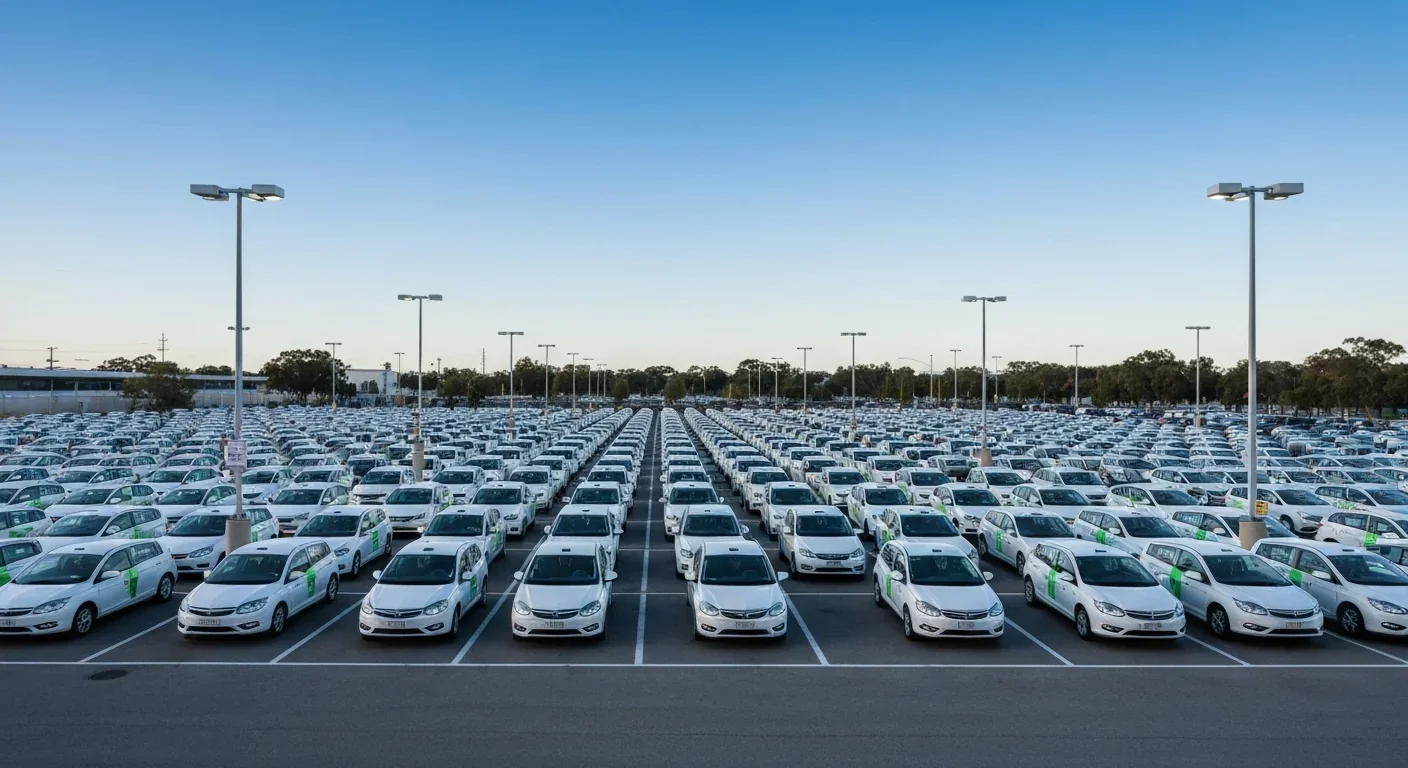
Research shows the sharing economy often increases total resource consumption through the Jevons paradox and rebound effects. Ride-sharing adds billions of vehicle miles, co-working spaces use more energy per worker, and diffused responsibility erodes conservation behavior. Breaking the paradox requires congestion pricing, accountability design, and matching sharing models to appropriate resource types.

Psychological reactance theory explains why banning or restricting things makes people want them more. From Prohibition to the Streisand effect to scarcity marketing, research shows that threatening people's freedom reliably backfires, and autonomy-supportive communication is far more effective.

A carnivorous pitcher plant in Borneo evolved to house bats instead of trapping insects, gaining up to 95% of its nitrogen from bat guano. The plant even built an ultrasonic reflector to help bats find it, revealing that carnivory in plants is a flexible spectrum.
The quantified self movement began as a hacker-ethos pursuit of personal insight, but corporate wearables now funnel biometric data to employers, insurers, and data brokers. With 81% of Americans wrongly believing health apps are HIPAA-protected, a regulatory void enables health data to be sold for pennies while generating anxiety instead of empowerment.

CXL memory pooling lets servers dynamically share DRAM over a cache-coherent interconnect, eliminating the 40% stranded memory waste in data centers. With commercial hardware now shipping and Azure deploying CXL cloud instances, this technology promises to cut memory costs by 50% while enabling composable infrastructure.

Loading featured articles...