Self-Tracking to Surveillance: Quantified Self's Fall

Self-Tracking to Surveillance: Quantified Self's Fall

The Authenticity Tax: How Being Yourself Became Labor
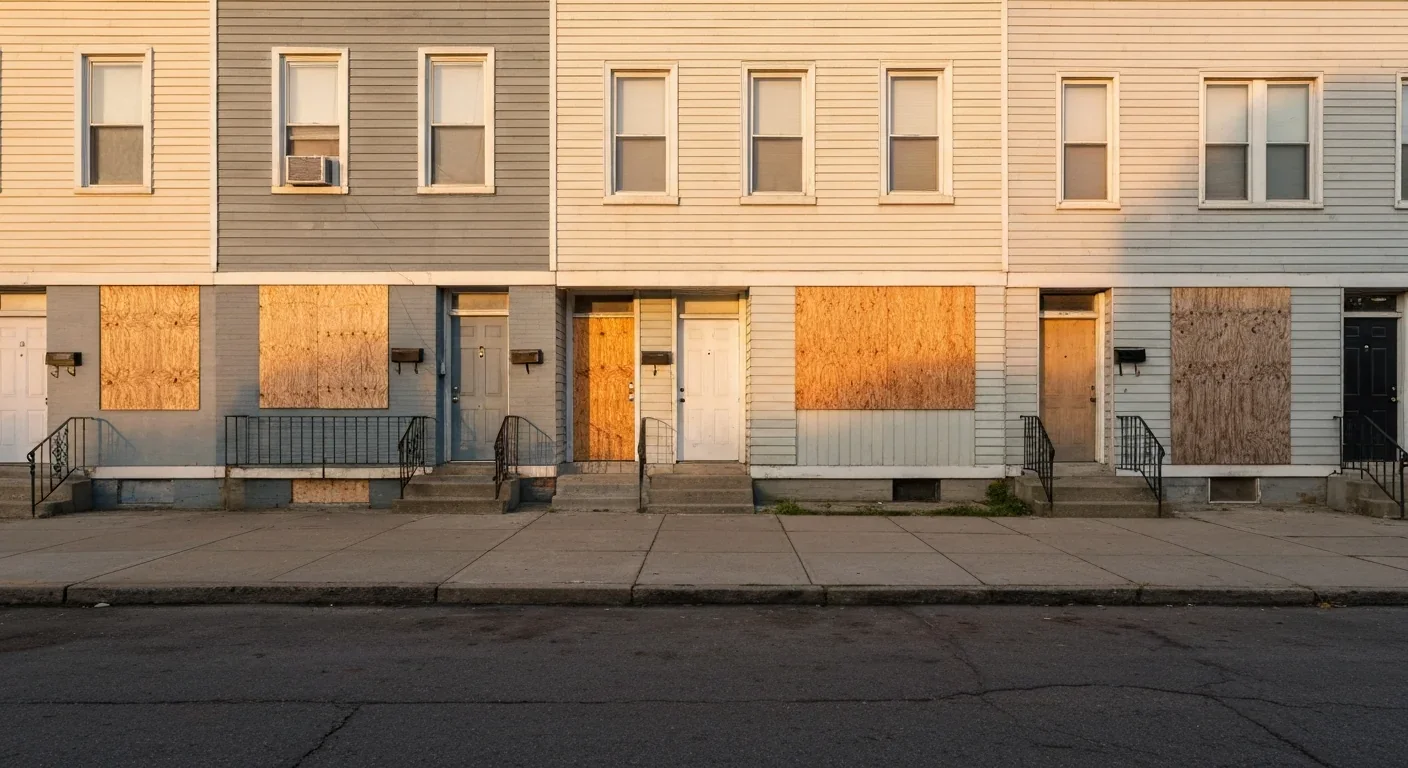
The Vacancy Paradox: Empty Homes and Homelessness

How Engagement Algorithms Turn Social Media Into Outrage

Data Dignity: Should You Own Your Personal Data?

The Great Log-Off: Why Millions Quit Social Media
TL;DR: Housing cooperatives use collective ownership and capped resale prices to maintain permanent affordability. With 99% success rates and proven models worldwide, co-ops offer a viable alternative to traditional homeownership - if policy frameworks can catch up.
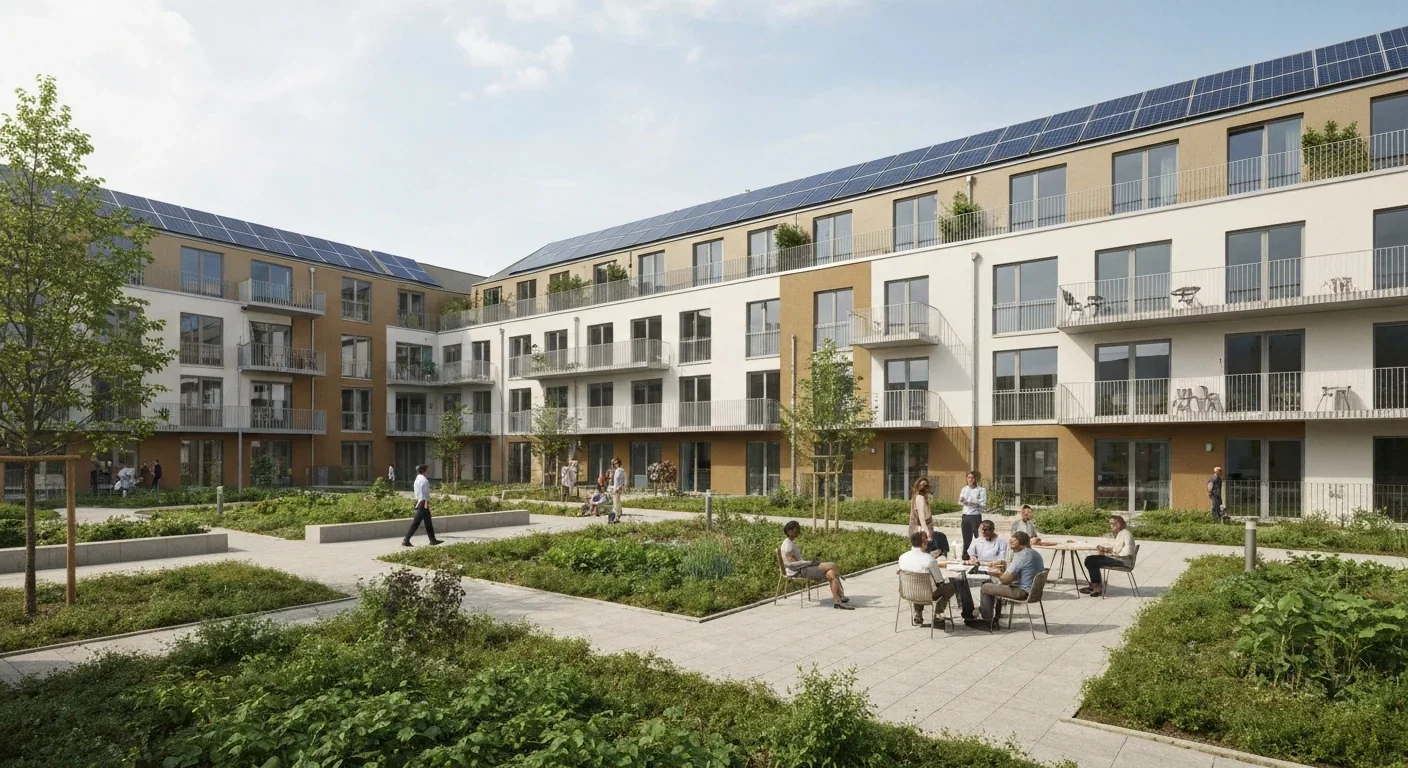
Affordable housing feels like something our grandparents had. Today, the average American home costs $676,000, and homeownership rates have dropped from 69% to 65.5% in just a decade. But what if the problem isn't just price - what if it's the entire model of individual ownership?
A different approach is gaining momentum: housing cooperatives that remove homes from speculative markets entirely. Through collective ownership and legally capped resale prices, these communities maintain affordability not for years, but across generations. Over 2,000 housing cooperatives in Germany house more than 3 million people. New York City has over 100,000 co-op units. Seattle, San Francisco, and Washington D.C. are all expanding their co-op infrastructure right now.
This isn't utopian thinking. It's a proven model with a 99% success rate in converting struggling rental buildings into thriving communities. The question isn't whether cooperatives work - it's why we're not building more of them.
Traditional housing operates on a simple premise: buy low, sell high. Homeowners profit when prices rise, which means affordability inevitably erodes. Limited-equity cooperatives flip that logic. Members purchase shares in a corporation that owns the building, not individual units. When someone leaves, they can only sell their share at a price capped by formula - typically 3% annual appreciation plus the cost of improvements they made.
This creates something rare in American housing: prices that stay tethered to incomes rather than speculation. While market-rate homes in Seattle jumped from $1,901 to $2,737 monthly rent between 2011 and 2016, Peace Village cooperative in Eugene, Oregon maintains monthly costs between $450 and $750 - utilities, mortgage, maintenance, insurance, everything included.
Peace Village costs just $450-$750 per month including all utilities, mortgage, maintenance, insurance, and operating costs - while Seattle rents hit $2,737.
The financial structure differs fundamentally from both renting and traditional ownership. Instead of individual mortgages that require 20% down payments, cooperatives carry a single blanket mortgage. Members typically pay just 5-10% of the unit's total cost for their initial share - roughly equivalent to a rental damage deposit. Monthly fees cover the mortgage payment, building maintenance, reserves, and operating costs, but because expenses are shared collectively, they stay significantly below market rates.
Here's what makes that sustainable: co-ops don't extract profit. Any surplus revenue gets reinvested into the property rather than distributed to shareholders. When a furnace breaks or appliances need replacing, the cooperative covers those costs from reserves - no individual homeowner suddenly scrambling for $8,000 they don't have.

Limited-equity caps prevent price inflation from inside the cooperative. Community land trusts prevent it from outside.
In a CLT-LEC partnership, a nonprofit organization owns the land under a 99-year ground lease while the cooperative owns the buildings. This dual structure creates what housing advocates call a "double layer of affordability protection." Even if a co-op wanted to convert to market-rate housing after paying off its mortgage - a common fate for older cooperatives - the land trust prevents it.
Peace Village in Eugene demonstrates the model's potential. The project cost $11.4 million for 70 units, or $160,000 per unit. Compare that to the $370,000 average cost for Low-Income Housing Tax Credit developments in the same region. That's a 57% cost reduction, achieved through alternative financing: $4.3 million from the American Rescue Plan Act, $2 million from the state legislature, and $1.6 million from private donors and foundations.
"The double-layer affordability strategy (CLT + LEC) removes two of the most common pathways for market-rate conversion - resale price inflation and individual mortgage qualification - ensuring permanent affordability."
- SquareOne Villages, Peace Village project
The CLT structure also solves a problem that has plagued land-lease cooperatives. In New York City, residents of 167 East 61st Street (formerly Trump Plaza) had to pool $183 million to buy the land beneath their building when the lease came up for renewal. Community land trusts eliminate that vulnerability by permanently removing land from the speculative market.
Governance distinguishes cooperatives from every other housing model. "Democracy is your landlord," as Tim Ross of the Co-operative Housing Federation of Canada puts it.
Every member gets one vote regardless of share size - the foundational Rochdale Principle that defines cooperatives worldwide. Members elect a board of directors from their own ranks. That board oversees property management, approves budgets, plans renovations, and makes decisions about admitting new members.
At Peace Village, residents created committees for gardening, accessibility, communication, and emergency preparedness before the paint dried. They organized a Discord channel for daily coordination and started planning their first board elections. This isn't imposed structure - it's emergent organization from people who understand they're building something together.
The governance model balances individual autonomy with collective responsibility. Members live in their own units, make their own household decisions, but participate in managing shared resources. Larger cooperatives beyond 20 units typically hire professional property managers, but the board remains member-controlled.
This creates accountability impossible in traditional landlord-tenant relationships. You can't ignore your neighbors when they're also your co-board members. Research shows neighborhoods with cooperatives see measurable improvements in community well-being metrics, because residents have both the authority and incentive to maintain and improve their homes.

If cooperatives are so effective, why aren't there more of them? The answer comes down to financing barriers and policy gaps that favor conventional development.
Traditional banks often refuse to provide blanket mortgages to groups of lower-income people, viewing them as high-risk borrowers despite evidence that cooperatives have lower default rates than individual mortgages. This forces co-op developers to seek alternative financing from specialized lenders, community development financial institutions, and government programs - all of which require significantly more effort to secure.
Subsidy programs create additional obstacles. Most affordable housing incentives are designed for either rental properties or individual homeownership. Limited-equity cooperatives fall into a gray zone. The LIFT program in Oregon, for example, excludes LECs because they don't fit the rental category but also don't qualify as traditional homeownership.
Traditional banks refuse blanket mortgages to co-ops despite evidence that cooperatives have lower default rates than individual mortgages.
Historical context helps explain this gap. In the 1960s and 70s, federal programs provided low-interest financing that enabled explosive growth of limited-equity cooperatives in New York, Washington D.C., and San Francisco. The government funded 642 low-income housing cooperative projects, creating over 59,000 homes before 1973. Then the spigot turned off. Many co-ops converted to market-rate housing after paying off their mortgages, erasing decades of affordability.
New York's approach offers a different path. The state's 1926 Limited Dividend Housing Companies Act provided tax exemptions and eminent domain rights for cooperatives. The Urban Homesteading Assistance Board used the city's foreclosure authority to convert abandoned rental buildings, preserving over 30,000 units of affordable housing through 1,600 cooperatives.
More recently, Los Angeles voters passed Measure ULA in 2023 specifically to fund alternative housing models including cooperatives. Washington D.C.'s City First Enterprises supports low-income tenants exercising their right of first refusal when buildings come up for sale, helping them convert rentals into cooperatives.
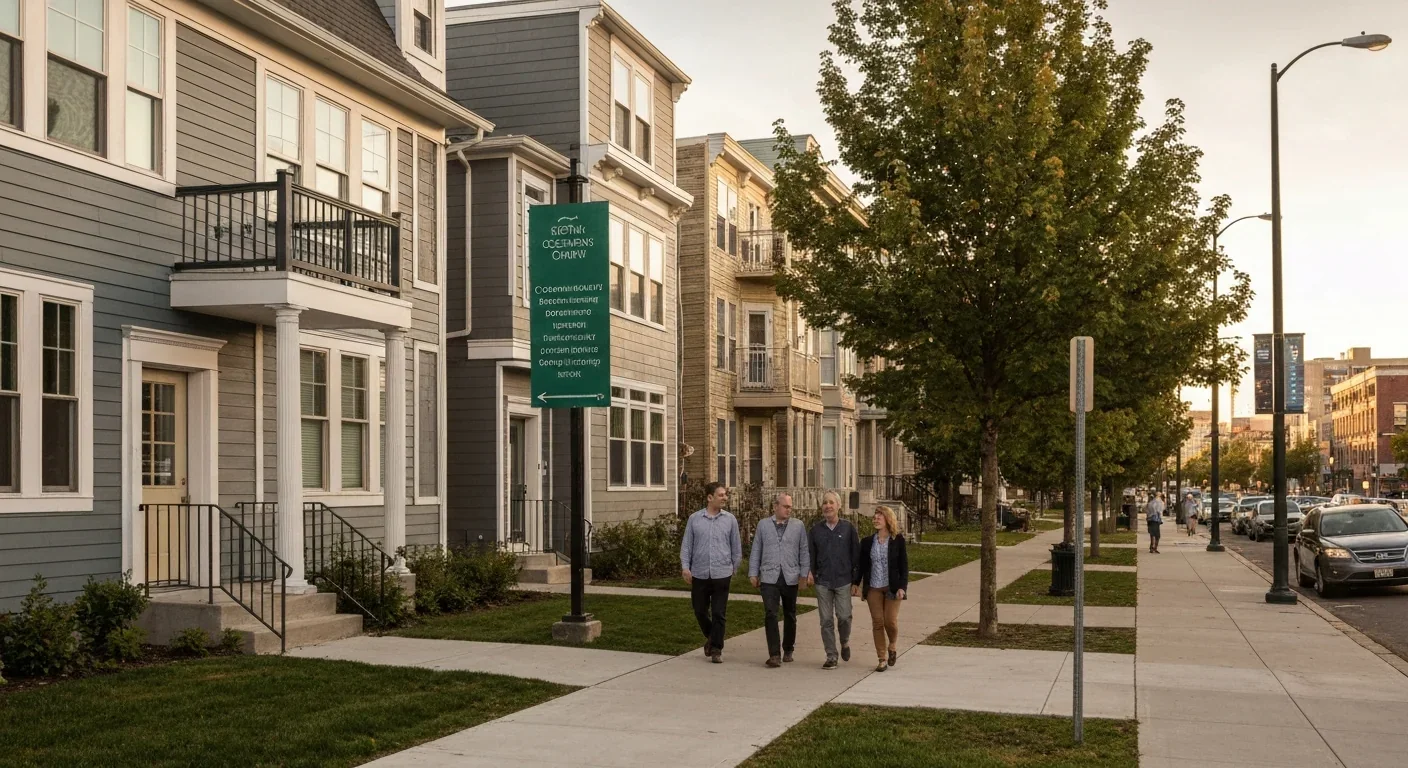
The financial case for cooperatives extends beyond monthly housing costs. Shared maintenance responsibilities and bulk purchasing of supplies reduce operating expenses. When 70 households negotiate together for landscaping services or building materials, they get better rates than individual homeowners.
Energy efficiency multiplies savings. Peace Village homes use half the energy of similar code-compliant buildings, cutting utility costs that already get shared across the community. These efficiencies make the $450-$750 monthly fees even more remarkable.
For residents, cooperatives offer flexibility that traditional homeownership doesn't. Want to move? You don't need to find a buyer, wait for inspections, and gamble on market timing. Submit your intent to leave, and the cooperative buys back your share at the formula price. You recover your initial investment without the burden of selling property.
That flexibility combines with permanence. Pay your monthly fees, follow the cooperative's rules, and you can stay indefinitely. No landlord can evict you when the building sells. No market crash threatens foreclosure because you're not carrying individual debt. The stability resembles homeownership but without the financial precarity.
Research on Australian cooperatives found residents pay 14% less than market rates while experiencing lower debt levels and vacancy rates. Those savings accumulate over decades, representing substantial wealth preservation for low and moderate-income households.
Demographics tell an important story. In New York City, roughly two-thirds of limited-equity cooperative residents are Black or Latinx. That racial composition reflects both the affordability crisis's disparate impact and cooperatives' accessibility.
Traditional homeownership remains out of reach for many communities of color due to wealth gaps created by historical discrimination. The 20% down payment requirement alone excludes millions of households. Cooperatives' 5-10% entry cost and collective mortgage structure open pathways that individual ownership models close.
The model also serves populations that don't fit conventional housing categories. In Lakewood, Washington, residents of a 63-unit mobile home park learned their landlord planned to sell. Instead of facing displacement, they organized through ROC USA to form Bob's and Jamestown Homeownership Cooperative, securing $5.25 million in financing to buy the land themselves.
"Democracy is your landlord. Housing co-ops practice democracy by giving all members equal voting rights - one member, one vote."
- Tim Ross, Executive Director, Co-operative Housing Federation of Canada
Limited-equity cooperatives can apply to apartment buildings, townhomes, single-family home clusters, and mobile home parks. This flexibility lets the model adapt to local housing needs and existing building stock rather than requiring new construction.
Seniors benefit from cooperatives' shared maintenance model - no more climbing ladders to clean gutters or hiring contractors for every repair. Young families gain stability during children's formative years without betting their life savings on market timing. Working-class households maintain housing costs at 30-35% of income through sliding-scale fees tied to earnings.

Most new cooperatives don't start from scratch. They convert existing buildings - usually distressed rental properties that offer what housing advocates call "naturally occurring affordable housing."
San Francisco's Chinatown provides a case study. In 2005, a building slated for demolition became the center of a community fight. The San Francisco Community Land Trust partnered with the Asian Law Caucus and Chinatown Community Development Center to buy the building and transform it into a limited-equity cooperative, allowing existing tenants to avoid eviction and become owner-residents.
UHAB's model in New York took advantage of the city's foreclosure crisis. Local Law #45 accelerated foreclosure proceedings for abandoned buildings, allowing the city to take control then offer them to residents for cooperative conversion. The organization provided technical assistance, helped secure financing, and trained resident boards - creating a 99% success rate across thousands of conversions.
This conversion approach serves multiple purposes. It preserves affordable housing that might otherwise gentrify. It stabilizes neighborhoods by preventing displacement. It builds community wealth by transforming renters into stakeholders. And it costs less than new construction while utilizing existing infrastructure.
The technical assistance component proves crucial. Resident groups need help navigating financing, legal structures, building codes, and governance design. Organizations like UHAB, ROC USA, and SquareOne provide that support, but most cities lack equivalent capacity. That gap limits scaling even where political will exists.
Germany's cooperative sector demonstrates maturity at scale. Over 2,000 housing cooperatives manage more than 2 million apartments for 3 million members. This isn't a niche experiment - it's a mainstream housing option integrated into the country's financial and regulatory systems.
The German model emphasizes long-term wealth building through retained equity. Members don't profit from resale, but the cooperative accumulates capital that funds renovations, expansions, and new development. This creates institutional permanence beyond any individual member's tenure.
Nordic countries take different approaches. Norway and Sweden developed ownership cooperatives where members build modest equity while resale caps maintain relative affordability. These models occupy a middle ground between limited-equity and market-rate structures, reflecting different cultural attitudes toward housing as investment versus housing as shelter.
Canada's 92,000 cooperative housing units represent about 0.7% of national housing stock, mostly built during 1970s and 80s government programs. Like the U.S., Canadian co-op growth stalled when federal support ended, showing how policy frameworks enable or constrain the model's expansion.
The scale difference between German cooperatives and North American ones reflects regulatory environments and financing access more than fundamental viability. Where governments treat cooperatives as legitimate housing providers - through targeted financing, tax benefits, and land-use policies - they flourish. Where cooperatives must navigate systems designed for conventional ownership, they struggle to scale despite proven success at the project level.
Cooperatives face distinct challenges that traditional housing models avoid. Governance requires active participation. Boards need continuous training on financial management, building systems, and conflict resolution. Resident turnover means constantly onboarding new members to cooperative principles and expectations.
Professional management helps but adds cost. The consensus among practitioners suggests cooperatives beyond 20 units need dedicated staff. Finding management companies that understand cooperative governance - where residents are both clients and bosses - isn't always easy.
Many 1970s cooperatives converted to market-rate after paying off mortgages, erasing decades of affordability - modern LECs prevent this with permanent legal restrictions.
Maintenance and capital reserves require discipline that market incentives don't enforce. With limited-equity models, the cooperative can't simply sell to raise capital. Major renovations must come from reserves built slowly through monthly fees. This demands long-term planning and occasional unpopular fee increases that member-boards must approve.
The conversion risk remains real. Once a cooperative pays off its mortgage, members might vote to convert to market-rate to cash out accumulated equity. This happened to many 1970s cooperatives that lacked permanent affordability restrictions. Modern LECs address this through stronger legal frameworks, but the tension between individual gain and collective good persists.
Ongoing technical assistance and stewardship from nonprofit partners prove essential for long-term viability, especially in high-cost markets. This requires funding streams that conventional affordable housing models don't need, adding complexity to already complicated financing.
Scaling cooperatives demands policy changes at multiple levels. Federal housing programs need explicit carve-outs recognizing limited-equity cooperatives as a distinct category eligible for subsidies. The current rental-versus-ownership binary leaves cooperatives fighting for resources designed for other models.
Banks need incentives to provide blanket mortgages to cooperative developers. Federal loan guarantees could reduce perceived risk. Community Development Financial Institutions that specialize in cooperative lending need expanded capital to meet demand. Revolving loan funds like SquareOne's model - covering up to 80% of membership share costs at 6% interest over 5 years - could be replicated with public backing.
State and local governments should follow New York's precedent with tax exemptions and acquisition authority. When buildings come up for sale in neighborhoods facing displacement pressure, right-of-first-refusal laws give residents and cooperatives time to organize purchases. Expedited zoning approvals for cooperative projects remove bureaucratic barriers.
Community land trusts need public land at nominal costs. Cities own surplus properties that could anchor CLT-LEC developments. Ground leases provide revenue while ensuring permanent affordability - a genuine win-win if governments prioritize housing security over maximizing land sales.
Technical assistance infrastructure requires investment. Every city pursuing cooperative development needs an organization like UHAB providing resident training, financial planning, legal support, and ongoing stewardship. This capacity building costs money upfront but prevents failure down the road.
Perhaps most important: changing the cultural narrative around housing. As long as Americans view homes primarily as wealth-building assets, cooperatives will seem like giving up rather than gaining stability. Reframing housing as shelter first, community second, and investment third makes cooperative logic obvious rather than radical.
Cooperatives work. The evidence spans continents and decades. They deliver on promises that market-rate housing can't keep: permanent affordability, community stability, democratic control, and wealth building for low-income households without gentrification.
What's missing isn't proof of concept. It's political will to restructure financing and policy around this proven model. Measure ULA in Los Angeles shows that voters support alternatives when given the choice. Seattle's growth in cooperative development demonstrates latent demand. Peace Village's rapid transformation from plan to thriving community reveals how quickly good models can deploy with proper support.
The question facing cities drowning in housing crises: Will we keep subsidizing the same approaches that created the problem, or embrace models that actually solve it?
Traditional homeownership isn't disappearing. But for millions locked out of that market, cooperatives offer something better than resignation to permanent renting. They offer a genuine third way - collective ownership that builds community wealth while maintaining affordability not just today but for generations who haven't been born yet.
The infrastructure exists. The financing mechanisms work. The legal frameworks have been tested. What comes next depends on whether we're serious about housing as a human right or content with housing as a speculative commodity. Cooperatives force that choice into focus by proving an alternative is possible.
Housing doesn't have to be a trap where affordability and ownership are mutually exclusive. Cooperatives break that false dichotomy by reimagining what ownership means. Not individual extraction of maximum profit, but collective stewardship of permanent shelter.
That's not a radical idea. It's just one our grandparents might have recognized - before we forgot that housing serves people, not the other way around.

Project Orion was a real 1960s program to reach other stars by detonating 800 nuclear bombs behind a spacecraft. The physics worked and the engineering was feasible, but the 1963 nuclear test ban treaty killed it. It remains the most credible interstellar spacecraft ever designed.

The locus coeruleus, a tiny brainstem structure, degenerates decades before Alzheimer's symptoms appear. Its loss cripples the brain's inflammation control, waste clearance, and sleep regulation. New imaging tools and noradrenergic therapies offer hope for early detection and prevention.

Research shows the sharing economy often increases total resource consumption through the Jevons paradox and rebound effects. Ride-sharing adds billions of vehicle miles, co-working spaces use more energy per worker, and diffused responsibility erodes conservation behavior. Breaking the paradox requires congestion pricing, accountability design, and matching sharing models to appropriate resource types.

Psychological reactance theory explains why banning or restricting things makes people want them more. From Prohibition to the Streisand effect to scarcity marketing, research shows that threatening people's freedom reliably backfires, and autonomy-supportive communication is far more effective.

A carnivorous pitcher plant in Borneo evolved to house bats instead of trapping insects, gaining up to 95% of its nitrogen from bat guano. The plant even built an ultrasonic reflector to help bats find it, revealing that carnivory in plants is a flexible spectrum.
The quantified self movement began as a hacker-ethos pursuit of personal insight, but corporate wearables now funnel biometric data to employers, insurers, and data brokers. With 81% of Americans wrongly believing health apps are HIPAA-protected, a regulatory void enables health data to be sold for pennies while generating anxiety instead of empowerment.

CXL memory pooling lets servers dynamically share DRAM over a cache-coherent interconnect, eliminating the 40% stranded memory waste in data centers. With commercial hardware now shipping and Azure deploying CXL cloud instances, this technology promises to cut memory costs by 50% while enabling composable infrastructure.

Loading featured articles...