Self-Tracking to Surveillance: Quantified Self's Fall

Self-Tracking to Surveillance: Quantified Self's Fall

The Authenticity Tax: How Being Yourself Became Labor

The Vacancy Paradox: Empty Homes and Homelessness

How Engagement Algorithms Turn Social Media Into Outrage

Data Dignity: Should You Own Your Personal Data?

The Great Log-Off: Why Millions Quit Social Media
TL;DR: Tenant unions are transforming American housing by organizing renters into collective bargaining units that use rent strikes, direct action, and cross-portfolio campaigns to win concrete concessions from corporate landlords and reshape housing policy.

Rent strikes used to be relics of 1920s New York tenements. Now they're back, and winning.
In Kansas City, over 200 families stopped paying rent for 247 days. Not because they couldn't afford it, but because they refused to. When it ended, they'd secured something most renters only dream about: frozen rent hikes, a 5% annual cap on future increases, and a $50 flat late fee with a three-week grace period. "We refused to pay for our own misery," declared KC Tenants leader Anna Heetmann. "We won't pay one dime in back-rent, and we won't pay with our lives ever again."
That victory wasn't isolated. Across America, tenant unions are emerging as a counterforce to a rental market increasingly dominated by corporate landlords and private equity firms. In 2024, local unions from coast to coast formed the Tenant Union Federation, creating the first national network capable of coordinating campaigns across an entire landlord's portfolio. Their inaugural target: Capital Realty Group's 22,000 units spanning multiple states.
This isn't your grandmother's tenant association worried about noisy neighbors. Modern tenant unions are bargaining units with demands, strategies, and the collective power to make landlords sweat. And they're fundamentally changing what it means to rent in America.
Walk into any apartment building and you'll likely find a tenant association. They organize holiday parties, coordinate maintenance requests, maybe advocate for better recycling. Tenant unions do something entirely different: they collectively bargain with landlords as equals.
The distinction matters. A tenant association operates within the existing power structure, appealing to landlord goodwill. A tenant union assumes landlords won't act unless forced to, and uses direct action to force them.
Here's what that looks like in practice. When Boston's CLVU tenant association faced 33-66% rent increases while living with illegal mold and rodent infestations, they didn't file complaints. They staged a partial rent strike that lasted seven years. When Advanced Property Management still wouldn't negotiate, tenants marched to the owner's affluent Back Bay neighborhood and protested outside his home. "After we did that, he was a little more flexible and agreed we should meet," organizer Ronel Remy told Shelterforce.
Tenant unions don't ask landlords nicely. They identify collective leverage, apply coordinated pressure, and refuse to back down until they win concrete concessions.
That's tenant union strategy in a nutshell: identify collective leverage, apply coordinated pressure, refuse to back down until you win concrete concessions. The tactics range from rent strikes to pickets to occupations, whatever forces landlords to the bargaining table.
The legal framework for all this? Surprisingly unclear. "Tenant unions operate in the shadow of the law," explains Greg Baltz, a Rutgers Law professor. "Unlike for labor unions, there is no extensive federal, state, or local legislative scheme that defines the rights, responsibilities, structure, or acceptable strategies tenant unions can employ." That ambiguity cuts both ways. Landlords can't claim unions violate labor law, but tenants also lack the legal protections that shield workplace organizing.
To understand why tenant unions are exploding now, you need to understand what happened to rental housing over the past two decades. Private equity discovered apartments.
The old model: local landlords owned a building or two, knew their tenants, had some stake in community relationships. The new model: investment firms buy thousands of units across multiple cities, optimize for maximum short-term returns, treat tenants as interchangeable revenue streams. Fannie Mae-backed loans helped finance this transformation, effectively subsidizing the commodification of housing.
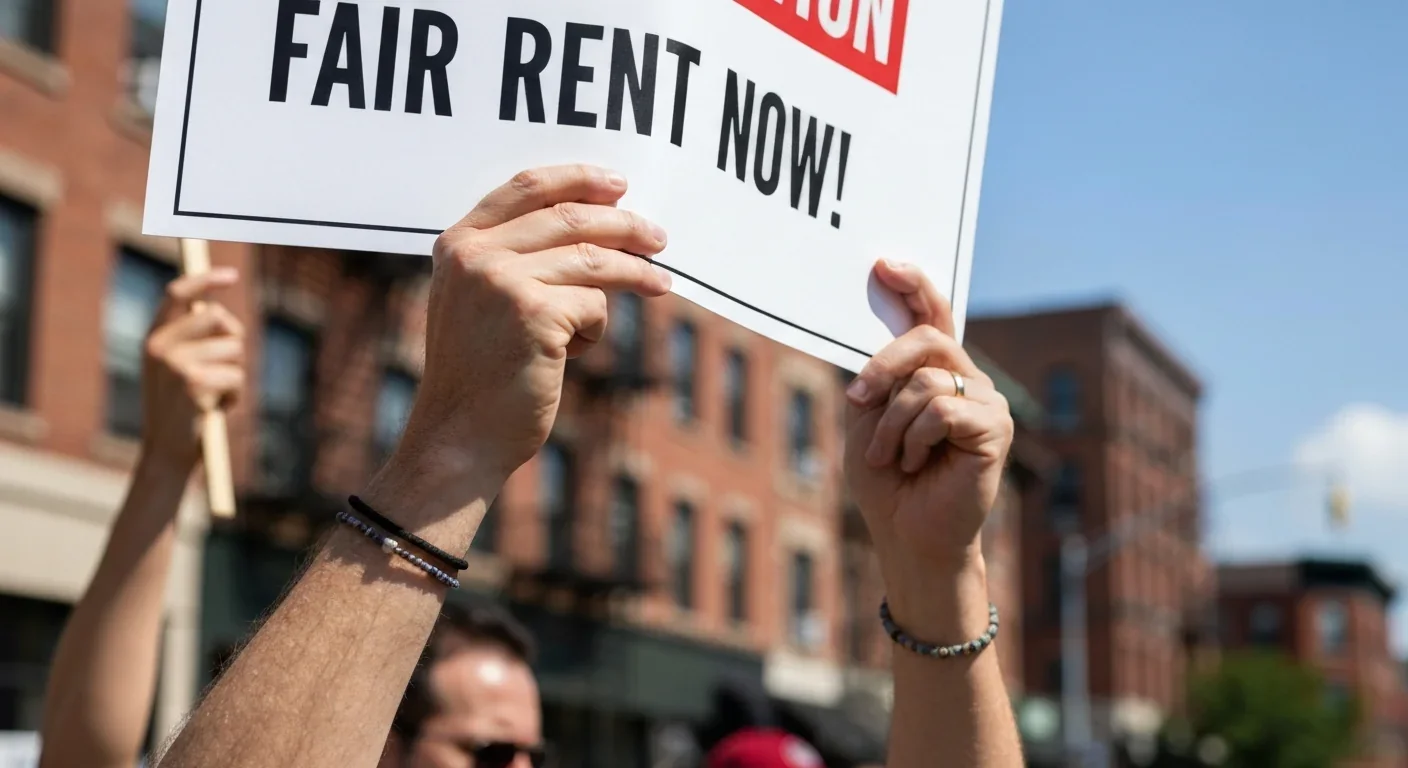
When your landlord is a spreadsheet, appeals to humanity don't work. But collective action does, because it threatens the one thing these entities actually care about: returns. Los Angeles Tenants Union co-founder Tracy Jeanne Rosenthal saw this firsthand when 90 households at the Burlington Apartments faced 20-35% rent hikes. They withheld $120,000 per month in collective rent. Nine months later, the landlord's investment trust came to the table. The result: a 3.5-year agreement with 5% annual increases and required repairs. "They won protections that are equal to rent control," Rosenthal noted.
"They won protections that are equal to rent control through a nine-month rent strike."
- Tracy Jeanne Rosenthal, LA Tenants Union Co-Founder
That success revealed something crucial: when organizing crosses property lines within a single corporate portfolio, leverage multiplies. A rent strike at one building is a problem. A coordinated campaign across every property in a city? That's a systemic threat to profitability.
The Tenant Union Federation's campaign against Capital Realty Group is testing whether local tactics scale nationally. More than 1,000 tenants across Capital Realty's 22,000-unit portfolio are organizing for collective bargaining rights. It's unprecedented in scope.
The strategy borrows from labor organizing: identify a single employer (landlord) with operations in multiple locations, then organize workers (tenants) across all those locations simultaneously. "If they're collectively organizing against one particular landlord at multiple properties, their leverage is greater," Legal Aid Society lawyer Andrew Chandler explained. "If they take collective action, if they go on rent strike, if they go to the media, it has an amplified effect because it's all against the same landlord at these same properties."
Early signs suggest this cross-portfolio approach works. In Louisville, tenant organizers faced immediate retaliation from OSPM, a Capital Realty subsidiary. But because organizing was happening simultaneously across the state, advocates secured a statewide restraining order preventing further retaliation under Kentucky's anti-retaliation law. A single building couldn't have achieved that.
The federation model also enables resource sharing. Experienced organizers from established unions can train new chapters, successful tactics get documented and replicated, legal strategies developed in one jurisdiction inform fights in others. KC Tenants didn't invent the rent strike, but their detailed documentation of their 247-day campaign now serves as a blueprint for unions nationwide.
Tenant unions aren't just fighting landlords. They're reshaping housing policy.
After KC Tenants' successful rent strike, the local government passed an ordinance codifying tenant protections the union had won through direct action. In Nashville, when Park at Hillside residents organized to stop displacement during redevelopment, they didn't just negotiate with the new owners. They got their agreement written into the zoning plan itself, protecting 290 units for households earning 40-60% of area median income even after future sales. That's a 1.5-year organizing campaign creating permanent affordability.
In Sonoma County, the North Bay Organizing Project helped tenants sue builders for substandard conditions. The $2.75 million settlement was the largest in county history. More importantly, it established legal precedent that collective tenant action can pierce the corporate veil surrounding property management.
Individual victories aggregate into systemic change: building-level concessions become the baseline for citywide organizing, which pushes municipal policy, which creates templates for state legislation.
Los Angeles Tenants Union has pushed the city to consider eviction moratoriums, testifying at Board of Supervisors meetings and mobilizing hundreds of members for public comment. Whether or not specific policies pass, the union has made tenant voices impossible to ignore in policy discussions that used to exclude them entirely.
The pattern repeats across cities: individual victories aggregate into systemic change. A rent strike wins building-level concessions. Those concessions become the baseline for citywide organizing. Citywide organizing pushes municipal policy. Municipal policies create templates for state legislation. It's how 1920s New York tenant agitation led to America's first rent control laws.
Starting a tenant union isn't complicated, but it requires commitment. Massachusetts Legal Help outlines the basic process:
First, talk to your neighbors. You need at least a core group of committed people. Start with folks you already know, then expand systematically. Door-knocking works. So does leaving flyers with your contact info. The goal is identifying who's willing to organize, not convincing everyone immediately.
Second, document everything. Take photos of maintenance issues, keep copies of all communications with landlords, record dates and details of rent increases. This creates the factual foundation for your demands and protects against landlord retaliation claims.
Third, hold a tenant meeting. Pick a neutral location if you can. Lay out the problems everyone's facing and ask what people want to change. The key is finding common ground. Not everyone cares about the same issues equally, but there's usually overlap: repairs, rent increases, lease terms, maintenance responsiveness.
Fourth, democratically agree on priorities and tactics. Will you petition first, or go straight to direct action? What are your non-negotiables versus what you'd compromise on? Who speaks for the group? How do you make decisions? The Los Angeles Tenants Union operates on member-led, directly democratic principles, meaning major decisions require member votes.
Fifth, make your first demand. In writing, signed by as many tenants as possible, delivered formally. The demand itself matters less than demonstrating you're organized and serious. Many unions start with something achievable: a resident meeting with management, formation of a recognized tenant committee, or specific repairs.

Sixth, escalate if ignored. This is where tenant unions diverge from tenant associations. If the landlord refuses to engage, you don't give up. You escalate. That might mean contacting local media, filing collective complaints with housing inspectors, organizing a public demonstration, or ultimately withholding rent.
Rent strikes are the nuclear option, and they work precisely because they're economically disruptive. But they're also risky without legal guidance. Consult tenant rights attorneys before withholding rent, understand your state's laws, and ensure your union is solid enough to sustain collective action for months if necessary.
"We refused to pay for our own misery. We won't pay one dime in back-rent, and we won't pay with our lives ever again."
- Anna Heetmann, KC Tenants Leader
Finally, connect to the broader movement. The Autonomous Tenant Union Network links local unions nationwide. The Tenant Union Federation coordinates campaigns against corporate landlords. Established unions like LA Tenants Union offer organizing guides and mentorship. You don't have to reinvent every strategy.
Organizing works, which is why landlords fight it aggressively.
Retaliation is the most common response. Suddenly your long-ignored maintenance requests trigger eviction proceedings for lease violations. Your rent increases "coincidentally" exceed what neighbors pay. You receive noise complaints you never got before. Corporate landlords are sophisticated enough to avoid obviously illegal retaliation, but patterns emerge when you compare treatment of union organizers versus other tenants.
That's why documentation is critical. New York tenant organizing rights provide some protection against retaliation, but you need evidence to prove it. Many states prohibit landlords from retaliating against tenants who organize, complain to authorities, or exercise legal rights, but enforcement depends on documentation.
Some landlords try to pick off leaders with individual settlements. They'll offer one vocal organizer a rent reduction or early lease termination with conditions that effectively remove them from the union. It fractures solidarity and removes experienced voices. Strong unions anticipate this and agree upfront: no individual deals without collective approval.
Legal intimidation is another tactic. Landlords threaten lawsuits for everything from defamation (for publicizing building conditions) to interference with business (for organizing rent strikes). Most threats are empty, but they work if tenants don't know their rights. Many unions partner with legal aid organizations to provide members with pro bono representation.
Landlords negotiate when not negotiating becomes more costly than negotiating. That's why escalation tactics matter.
The most effective landlord strategy, though, is simply refusing to negotiate. Property management companies know that tenant organizing is hard and that most groups fall apart without visible progress. By ignoring demands indefinitely, landlords bet that frustration will dissolve unity. This is why escalation tactics matter. Landlords negotiate when not negotiating becomes more costly than negotiating.
Tenant unions won't solve the housing crisis alone. America needs more housing, denser zoning, and serious public investment. But unions are changing the immediate reality for the 44 million households who rent.
They're creating a countervailing force against financialization. When Fannie Mae finances private equity's acquisition of affordable housing, tenant unions can make those investments less profitable through organized resistance. When corporate landlords standardize rent-maximization algorithms across portfolios, cross-portfolio organizing can challenge those algorithms at scale.
More fundamentally, unions are restoring bargaining power to a relationship that became entirely one-sided. Take-it-or-leave-it leases, unilateral rent increases, selective enforcement of maintenance obligations - that's not how functional markets work. That's monopoly power. Collective bargaining doesn't eliminate that power, but it forces actual negotiation.
The movement is still small. Established tenant unions exist in maybe two dozen cities, covering tens of thousands of units in a nation of 44 million renting households. But growth is accelerating. Every visible victory inspires organizing elsewhere. The Tenant Union Federation provides infrastructure for scaling successful models. And the structural conditions driving tenant organizing - corporate landlord consolidation, rising rents, declining affordability - aren't going away.
There's also a generational shift happening. Millennials and Gen Z rent at higher rates than previous generations did at the same age, have less wealth, face worse housing cost burdens, and came of age seeing labor movements revitalize through militant organizing. The tenant union model fits their political sensibilities better than traditional advocacy organizations.
Property management companies coordinate through industry associations, share best practices, lobby collectively for favorable laws, and increasingly operate as part of national or global corporate structures. They're organized.
Tenants historically weren't. That's changing. When KC Tenants decided to stop paying rent, they didn't just win frozen rent hikes. They proved collective action works. When LA Tenants Union withheld $120,000 monthly, they demonstrated financial leverage. When Nashville organizers got affordability requirements written into zoning plans, they showed that building-level campaigns can reshape policy.
The question facing renters isn't whether organizing works - the evidence is clear it does. The question is whether enough renters will organize quickly enough to counterbalance the corporate consolidation already reshaping rental housing.
Tenant unions operate "in the shadow of the law," as Professor Baltz put it. No federal framework protects them, no established playbook guarantees success. They exist because renters decided their collective power outweighed the risks of organizing.
That decision is spreading. In Louisville and Los Angeles, Kansas City and Boston, Nashville and beyond, renters are learning the same lesson: individually, you're powerless against corporate landlords. Collectively, you're the only force they have to reckon with.
Your lease says you're a tenant. But that doesn't mean you can't also be a union member.

Project Orion was a real 1960s program to reach other stars by detonating 800 nuclear bombs behind a spacecraft. The physics worked and the engineering was feasible, but the 1963 nuclear test ban treaty killed it. It remains the most credible interstellar spacecraft ever designed.

The locus coeruleus, a tiny brainstem structure, degenerates decades before Alzheimer's symptoms appear. Its loss cripples the brain's inflammation control, waste clearance, and sleep regulation. New imaging tools and noradrenergic therapies offer hope for early detection and prevention.

Research shows the sharing economy often increases total resource consumption through the Jevons paradox and rebound effects. Ride-sharing adds billions of vehicle miles, co-working spaces use more energy per worker, and diffused responsibility erodes conservation behavior. Breaking the paradox requires congestion pricing, accountability design, and matching sharing models to appropriate resource types.

Psychological reactance theory explains why banning or restricting things makes people want them more. From Prohibition to the Streisand effect to scarcity marketing, research shows that threatening people's freedom reliably backfires, and autonomy-supportive communication is far more effective.

A carnivorous pitcher plant in Borneo evolved to house bats instead of trapping insects, gaining up to 95% of its nitrogen from bat guano. The plant even built an ultrasonic reflector to help bats find it, revealing that carnivory in plants is a flexible spectrum.
The quantified self movement began as a hacker-ethos pursuit of personal insight, but corporate wearables now funnel biometric data to employers, insurers, and data brokers. With 81% of Americans wrongly believing health apps are HIPAA-protected, a regulatory void enables health data to be sold for pennies while generating anxiety instead of empowerment.

CXL memory pooling lets servers dynamically share DRAM over a cache-coherent interconnect, eliminating the 40% stranded memory waste in data centers. With commercial hardware now shipping and Azure deploying CXL cloud instances, this technology promises to cut memory costs by 50% while enabling composable infrastructure.

Loading featured articles...