Self-Tracking to Surveillance: Quantified Self's Fall

Self-Tracking to Surveillance: Quantified Self's Fall

The Authenticity Tax: How Being Yourself Became Labor

How Engagement Algorithms Turn Social Media Into Outrage

Data Dignity: Should You Own Your Personal Data?

The Great Log-Off: Why Millions Quit Social Media

Platform Cooperativism: Workers Buying Back the Gig Economy
TL;DR: America has 28 vacant homes for every homeless person, yet homelessness hit record highs in 2024. Speculative investment, geographic mismatches, and political barriers explain the paradox, while Finland and Vienna show that Housing First and social housing models can work when the political will exists.
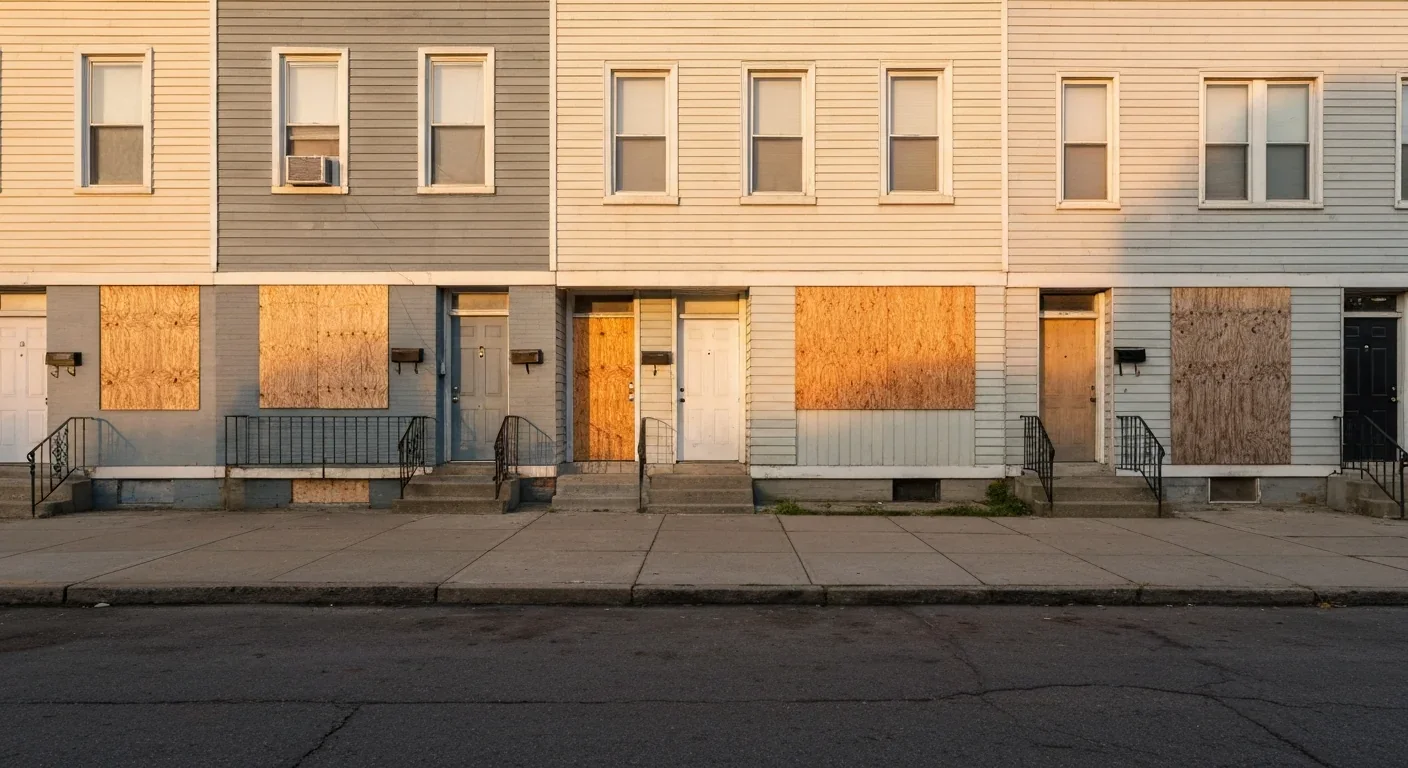
Imagine a country with enough empty bedrooms to give every homeless person not just a roof, but an entire house, and still have millions of spares left over. That country is the United States. In 2024, roughly 15.1 million residential units sat vacant while a record 771,480 people slept in shelters, cars, tents, or on bare pavement. That's about 28 empty homes for every single homeless person. If the math sounds too simple to be real, that's because it is. The vacancy paradox isn't a math problem. It's a power problem. And understanding why those 15 million doors stay locked while hundreds of thousands of people sleep outside reveals something uncomfortable about how modern economies actually work.
The scale is staggering and getting worse. Homelessness in America hit an all-time high in 2024, jumping 18 percent over the previous year. More than half of those counted were living completely unsheltered, meaning no tent program, no emergency bed, nothing between them and the weather. Over half of all renter households are now cost-burdened, paying 30 percent or more of their income just on rent and utilities. Meanwhile, the nation's vacant housing stock, while down from its 2008 peak of nearly 19 million units, still represents about 10.3 percent of the entire housing inventory.
But averages hide the real story. The vacancy-to-homeless ratio swings wildly depending on where you look. Detroit sits on 116 empty homes per unhoused person. Syracuse has 110. Mississippi's statewide ratio reaches a surreal 204 to one. In California, where tents line freeway overpasses and the crisis dominates nightly news, the ratio is far thinner because demand for housing of any kind outstrips supply at every price point. Homelessness increased 12.4 percent between 2022 and 2023 alone, even as the total number of vacant units continued a slow decline. The paradox isn't uniform. It's a patchwork of local failures, each with its own logic and its own villains.
There are 28 empty homes for every homeless person in America, yet homelessness hit record highs in 2024. The gap between these two facts is where policy, profit, and politics collide.
The idea that shelter is primarily an investment vehicle, not a human necessity, didn't emerge overnight. For most of the 20th century, American housing policy balanced homeownership incentives with public housing construction. The federal government built over a million units of public housing between the 1930s and 1970s, treating affordable shelter as infrastructure, similar to roads or schools.
That consensus fractured in the Reagan era. Public housing budgets were slashed. The assumption shifted: private markets would sort it out. And for a while, rising homeownership rates made that bet look smart. Then came 2008.

The financial crisis didn't just crash the economy. It rewired who owns American homes. As millions of families faced foreclosure, institutional investors swept in. Private equity firms, real estate investment trusts, and hedge funds purchased distressed properties at scale, converting owner-occupied neighborhoods into corporate rental portfolios. Today, private equity firms control over 1.6 million housing units in the United States, including nearly 240,000 single-family rental homes. Research shows these institutional investors disproportionately target neighborhoods with declining incomes and high minority shares, raising rents and worsening living conditions in communities that can least afford it.
This wasn't just a transfer of ownership. It was a transformation of incentives. A family living in a home wants it occupied and maintained. A financial firm holding a portfolio wants maximum return on equity. Sometimes that means renting. Sometimes it means keeping units strategically vacant to maintain scarcity and drive up values in the surrounding market. In New York City, landlords were warehousing over 60,000 rent-stabilized apartments in 2021, deliberately keeping them off the market while the official vacancy rate hovered near historic lows. Speculators refinance buildings not to fix them up, but to extract cash they then use to speculate on additional properties. Tenants in these speculatively traded buildings were 1.5 times more likely to face eviction and experienced 2.7 times the number of housing code violations.
The 2026 executive order from the White House, aimed at stopping Wall Street from competing with Main Street homebuyers, acknowledged the problem at the highest level. But research from Brookings suggests banning institutional purchases would only shift about 1 to 2 percent of owner-occupied stock into the rental market, a modest change in a system where the structural incentives remain intact.
"Speculative buyers often refinance their buildings not to fix them up, but to extract cash they then use to speculate on other buildings."
- Shelterforce, Breaking NYC's Housing Speculation Cycle
Here's the part that makes "just give them the empty houses" fall apart as a bumper-sticker solution. Vacant homes and homeless people aren't in the same places, and the empty units often aren't livable.

Seasonal vacation homes make up more than half of vacant units in many counties. A shuttered cabin in rural Maine doesn't help someone sleeping under an overpass in Los Angeles. Many vacant properties in cities like Detroit are structurally deteriorated beyond reasonable repair, relics of decades of population loss and disinvestment. Detroit's land bank has acquired 115,000 properties and demolished 27,000 structures, but rehabilitation costs for remaining stock often exceed new construction. When you strip away vacation homes, properties in litigation, units being renovated, and those in uninhabitable condition, the number of actually available vacant homes drops to roughly 8.6 per homeless person. Still more than enough, theoretically, but the real number that matters is how many of those sit in the right cities, in habitable condition, at accessible price points. That number is far smaller.
Even when vacant units are habitable and located in high-need areas, bureaucratic barriers block access. In Portland, approximately 1,863 of the city's 25,409 affordable apartments sat empty even as thousands waited for housing. The culprit wasn't greed. It was income verification, recertification paperwork, and administrative delays that made getting into a subsidized unit harder than it needed to be. The people these apartments were built for couldn't navigate the systems designed to help them.
And then there's the Airbnb factor. Short-term rental platforms have converted long-term housing into effectively hotel inventory in high-demand cities, tightening rental markets further. The cumulative impact is a measurable loss of residential housing and potentially an increase in housing costs, though some researchers caution against overemphasizing short-term rentals when deeper structural issues drive the crisis.
When cities realize they have a vacancy problem, the first tool they reach for is usually a tax. The logic is straightforward: make it expensive to leave a unit empty, and owners will either rent it out or sell. Revenue from the tax funds affordable housing programs. Everyone wins. Or so the theory goes.
Vancouver became the global test case when it introduced its Empty Homes Tax in 2017. The results look impressive on paper. Declared vacancies fell 67 percent by 2024, and the vacancy rate dropped from 0.9 percent to 0.49 percent. The tax has generated $194.3 million earmarked for affordable housing initiatives. Vancouver's program even inspired a layered approach, with the province adding its own Speculation and Vacancy Tax on top of the municipal levy.
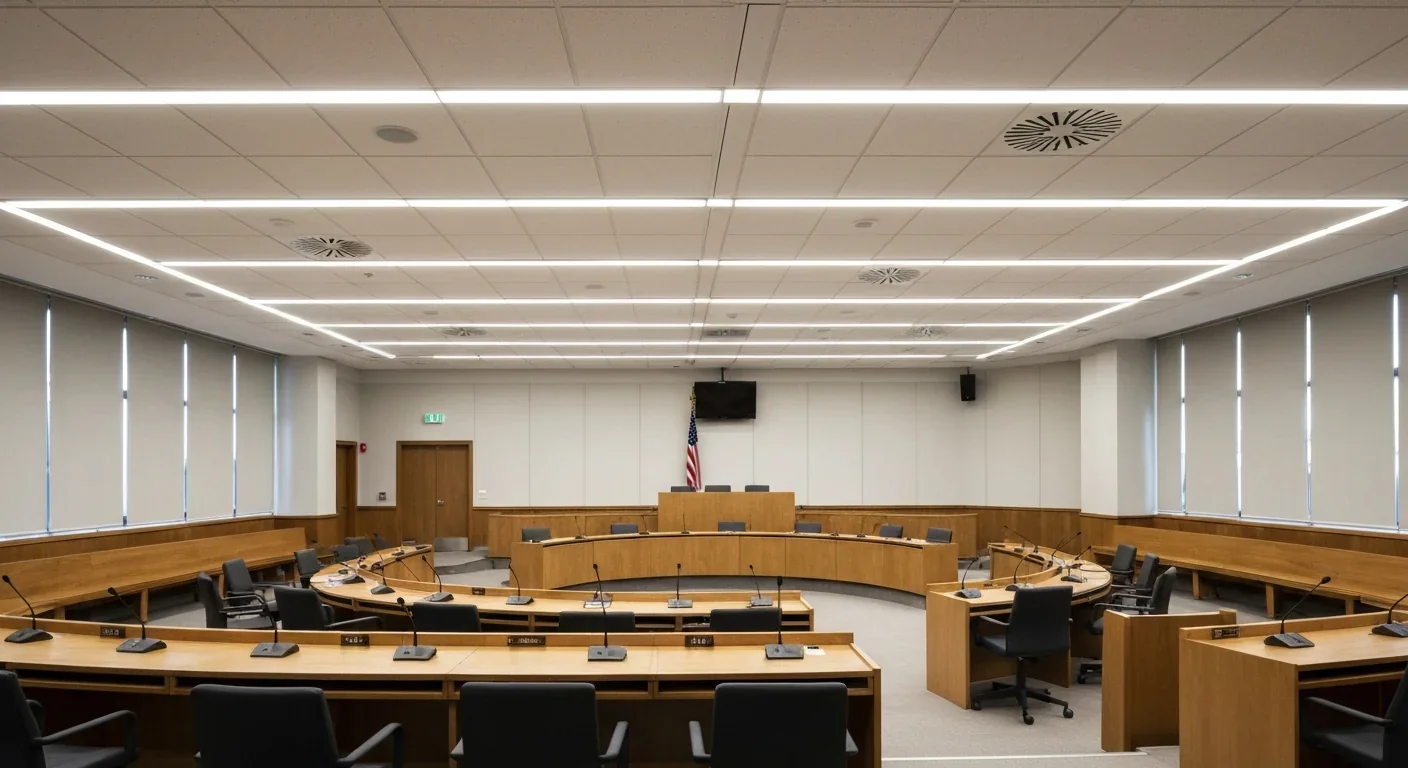
But peer-reviewed analysis tells a more sobering story. Researchers found the tax had zero statistically significant effect on average rents or new construction. Oakland's Measure W tells a similar tale: $29 million collected between 2019 and 2023, all directed at fighting homelessness, yet the crisis continued to worsen. Vacancy taxes are politically palatable and generate useful revenue, but they address utilization of existing housing, not production of new supply. In cities where the fundamental problem is too few units, nudging a few thousand empties back onto the market barely moves the needle.
Enforcement remains the Achilles' heel. Most vacancy tax systems rely on self-reporting by property owners, creating obvious incentives to misrepresent occupancy status. Without robust auditing and penalties for false reporting, the tax becomes a voluntary contribution.
Vancouver's vacancy tax cut declared vacancies by 67 percent and raised $194 million for affordable housing, but peer-reviewed research found zero statistically significant effect on rents or new construction.
If vacancy taxes are a band-aid, Finland's approach is surgery. Starting in 2008, the Finnish government made a national commitment to Housing First, the principle that stable housing should come before, not after, addressing addiction, mental health, or employment. The idea is counterintuitive to many policymakers raised on the "treatment first" model, but the evidence has been overwhelming.
Finland invested 250 million euros in building new homes and hiring support workers. They converted emergency shelters into permanent apartments, repurposing existing infrastructure rather than starting from scratch. Long-term homelessness dropped by more than 35 percent, with the number of people living in hostels falling 76 percent between 2008 and 2017. Homelessness now affects about 0.06 percent of Finland's population, and the country is on track to effectively eliminate it by 2027. The program even saves money: reduced hospital visits, jail stays, and emergency services more than offset the housing costs.
Vienna takes a different but equally instructive path. Roughly 50 percent of the city's residents live in subsidized housing, with rents capped at 25 percent of income. The model creates economically diverse neighborhoods where lawyers live next to bus drivers, and has virtually eliminated homelessness. Critics call it costly, but supporters point out that the cost of not providing housing, measured in emergency services, policing, and lost economic productivity, is higher.
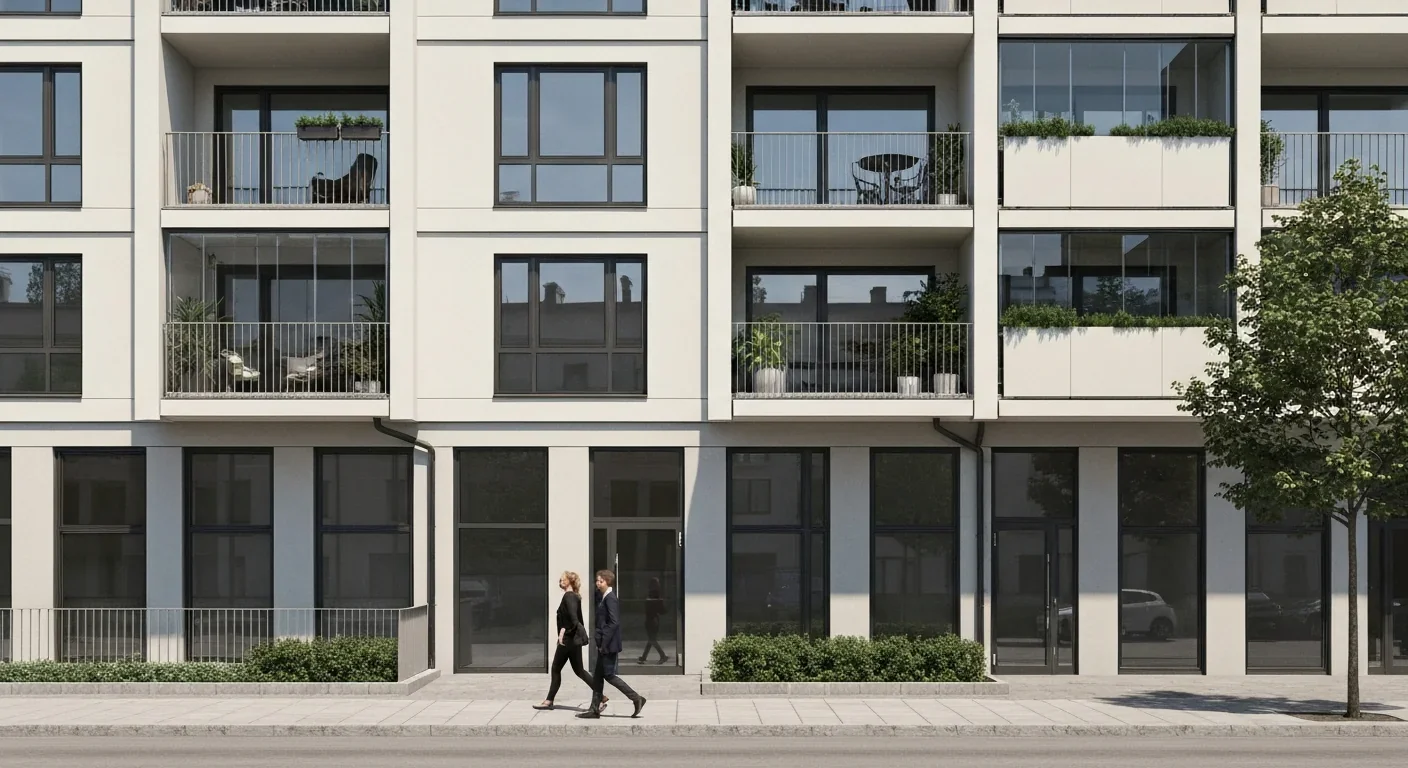
"Permanent housing with housing assistance and supportive services consistently keeps over 90 percent of its residents housed."
- National Alliance to End Homelessness
Even within the U.S., targeted programs prove the concept. Veteran homelessness declined 55 percent since 2009 thanks to the HUD-VASH program, which pairs housing vouchers with VA support services. That progress continued even as overall homelessness surged, demonstrating that well-funded, targeted housing interventions work when the political will exists. Permanent supportive housing keeps over 90 percent of its residents housed, yet the system added just 17,877 new units in 2024 while nearly 1.5 million people cycled through shelters over the course of the year.
So why doesn't the United States just do what Finland did? The barriers are more political than practical.
NIMBY opposition blocks affordable housing construction with predictable regularity. Neighbors fear declining property values, increased traffic, and changes to "neighborhood character," fears that research consistently shows are unfounded. A 2022 case study in Alexandria, Virginia, found affordable housing developments had a net zero or positive impact on surrounding property values. The data doesn't matter when the fear is louder.
Constitutional property rights create uniquely American legal hurdles. Takings clause challenges make compulsory acquisition or aggressive vacancy penalties politically radioactive in ways they simply aren't in Canada or Europe. Washington state recently passed legislation to drop barriers for homeless shelters and permanent supportive housing, but such moves remain the exception rather than the rule.
And underneath it all sits a deeper ideological divide. The vacancy paradox persists because American housing policy treats housing as a commodity rather than a right. As long as empty units generate better returns than occupied ones, and as long as the political system prioritizes property owners over the unhoused, the paradox will endure. The racial dimension makes it even more stubborn: Black Americans experience homelessness at four times the rate of white Americans, at 48 per 10,000 versus 11, meaning the communities most affected have historically had the least political power to demand change.
The vacancy paradox won't be solved by any single policy. Vacancy taxes generate revenue but don't build homes. Housing First programs work but require sustained political commitment and funding. Banning institutional investors sounds satisfying but shifts too little supply to matter.
What might actually move the needle is a layered approach: vacancy taxes paired with affordable housing development and zoning reform, Housing First programs scaled nationally with federal funding, community land trusts that permanently remove land from speculative markets, and streamlined bureaucratic processes so that existing affordable units like Portland's 1,863 empty apartments don't sit idle while people sleep outside.
Within the next decade, you'll likely see more cities follow Portland's lead in considering vacancy taxes and more states passing laws like Washington's to fast-track supportive housing. The question isn't whether we know how to reduce homelessness. Finland proved we do. The question is whether we're willing to treat housing as what it fundamentally is: not a portfolio asset, but the foundation on which everything else in a person's life gets built. The data is clear. The solutions exist. The only thing truly vacant is the political will to use them.

Project Orion was a real 1960s program to reach other stars by detonating 800 nuclear bombs behind a spacecraft. The physics worked and the engineering was feasible, but the 1963 nuclear test ban treaty killed it. It remains the most credible interstellar spacecraft ever designed.

The locus coeruleus, a tiny brainstem structure, degenerates decades before Alzheimer's symptoms appear. Its loss cripples the brain's inflammation control, waste clearance, and sleep regulation. New imaging tools and noradrenergic therapies offer hope for early detection and prevention.
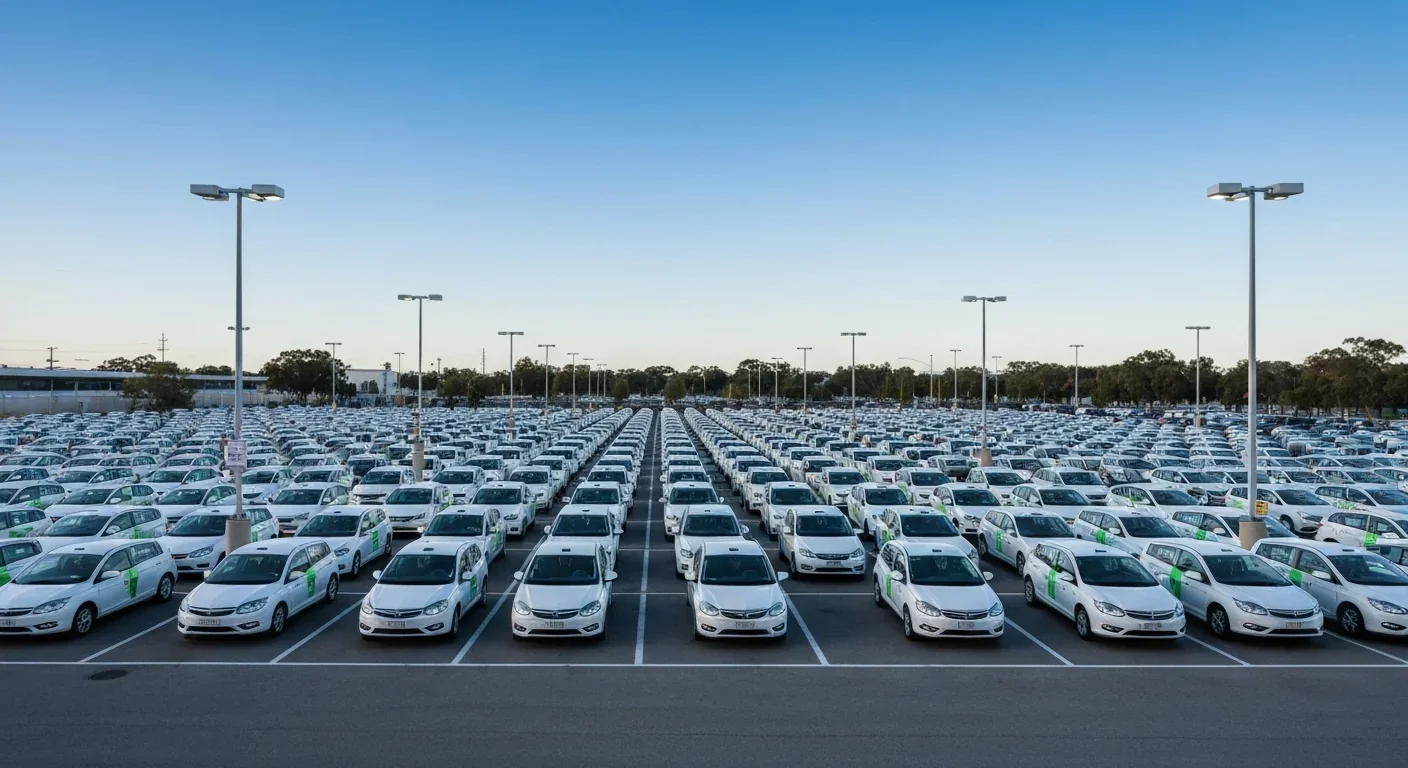
Research shows the sharing economy often increases total resource consumption through the Jevons paradox and rebound effects. Ride-sharing adds billions of vehicle miles, co-working spaces use more energy per worker, and diffused responsibility erodes conservation behavior. Breaking the paradox requires congestion pricing, accountability design, and matching sharing models to appropriate resource types.

Psychological reactance theory explains why banning or restricting things makes people want them more. From Prohibition to the Streisand effect to scarcity marketing, research shows that threatening people's freedom reliably backfires, and autonomy-supportive communication is far more effective.

A carnivorous pitcher plant in Borneo evolved to house bats instead of trapping insects, gaining up to 95% of its nitrogen from bat guano. The plant even built an ultrasonic reflector to help bats find it, revealing that carnivory in plants is a flexible spectrum.
The quantified self movement began as a hacker-ethos pursuit of personal insight, but corporate wearables now funnel biometric data to employers, insurers, and data brokers. With 81% of Americans wrongly believing health apps are HIPAA-protected, a regulatory void enables health data to be sold for pennies while generating anxiety instead of empowerment.

CXL memory pooling lets servers dynamically share DRAM over a cache-coherent interconnect, eliminating the 40% stranded memory waste in data centers. With commercial hardware now shipping and Azure deploying CXL cloud instances, this technology promises to cut memory costs by 50% while enabling composable infrastructure.

Loading featured articles...