Self-Tracking to Surveillance: Quantified Self's Fall

Self-Tracking to Surveillance: Quantified Self's Fall

The Authenticity Tax: How Being Yourself Became Labor

The Vacancy Paradox: Empty Homes and Homelessness

Data Dignity: Should You Own Your Personal Data?

The Great Log-Off: Why Millions Quit Social Media

Platform Cooperativism: Workers Buying Back the Gig Economy
TL;DR: Social media algorithms systematically amplify outrage because angry content drives more engagement, which means more ad revenue. Leaked documents prove platforms knew this caused polarization, radicalization, and mental health crises, yet chose profit over reform.

The future of democracy depends on solving a problem we just identified, and it lives inside the phone in your pocket. Every time you open Facebook, scroll TikTok, or watch YouTube, an invisible system is reading your emotions and making a bet: that anger will keep you watching longer than calm ever could. That bet is paying off spectacularly for shareholders. For the rest of us, it's quietly reshaping how we think, what we believe, and how we treat each other.
Here's what researchers have now proven with hard data: social media algorithms don't just reflect your preferences. They actively reshape your political attitudes without you even noticing. A 2025 study published in Science gave 1,256 Americans a browser extension that reranked their X feeds for just one week. The result was a two-point swing in how warmly participants felt toward the opposing political party, an effect that normally takes three years to develop through organic exposure. And 74% of participants reported noticing absolutely nothing different about their feed.
That finding should stop you cold. An algorithm, tweaking the order of posts you already follow, can compress three years of political attitude change into seven days. And the people it happens to can't tell it's happening.
An algorithm compressed three years of political attitude change into one week, and 74% of users didn't notice anything different about their feed.
This isn't a bug. A systematic review of 78 studies published in Frontiers in Communication found that outrage-laden content generates three to five times higher engagement than neutral posts. When your business model depends on keeping eyeballs glued to screens, outrage isn't a side effect. It's the product.
Every major communications technology has reshaped society in ways its creators didn't fully anticipate. The printing press democratized knowledge but also supercharged propaganda. Radio brought fireside chats and Nazi broadcasts. Television created shared cultural experiences and turned politics into performance.
But social media introduced something genuinely new: a feedback loop that learns what makes each individual tick and then exploits it at scale. Previous media broadcast to everyone equally. These platforms serve personalized emotional triggers to billions of people simultaneously, each person getting a slightly different cocktail of content optimized to maximize their specific engagement patterns.
The early internet promised a marketplace of ideas where the best arguments would rise to the top. What we got instead was a marketplace of emotions where the most provocative content wins, not because people prefer it, but because algorithms meticulously record user interactions, encompassing likes, dislikes, and watch time, to generate an endless stream of media designed to sustain engagement.

The shift happened gradually. Facebook's original News Feed in 2006 was chronological. You saw what your friends posted, in order. By 2018, the company had switched to algorithmic ranking that prioritized "meaningful social interactions." The irony is almost too perfect: internal research showed this change actually increased the amplification of divisive content by 3.5 times and bumped division scores up by 17%. Meaningful, it turns out, often means enraging.
The mechanics are surprisingly straightforward. Every platform tracks engagement signals such as likes, shares, comments, watch time, and even how long you pause before scrolling past something. TikTok's algorithm actually prioritizes hesitation signals over likes, tracking pause duration before scrolling, because that moment of internal conflict is a stronger predictor of continued engagement than a simple thumbs-up.
These signals feed into machine learning models that predict which content will generate the most interaction. Content that triggers strong emotional responses, particularly anger, moral indignation, and tribal identity, reliably outperforms calm, nuanced material. A study of 1.2 million posts on X found that morally outraged language dramatically increased likes and reposts, even though it didn't translate into real-world action like petition signing.
"Enragement equals engagement, equals more ads, equals more shareholder value."
- Scott Galloway, marketing professor and tech analyst
The result is a self-reinforcing cycle. Outrage content gets engagement. Engagement tells the algorithm to show it to more people. More people engage. The algorithm learns that outrage works and serves more of it. As Scott Galloway put it bluntly: "Enragement equals engagement, equals more ads, equals more shareholder value."
A preregistered study of 806 Twitter users confirmed this dynamic with precision. Compared to a simple chronological feed, Twitter's engagement-based algorithm amplified tweets exhibiting greater partisanship by 0.24 standard deviations, increased expressions of anger by 0.47 standard deviations, and boosted out-group animosity by 0.24 standard deviations. Users reported feeling angrier, sadder, and more anxious after reading algorithmically ranked content compared to the same posts in chronological order.
In 2021, Facebook data scientist Frances Haugen walked out of the company with tens of thousands of pages of internal documents and handed them to the Securities and Exchange Commission, Congress, and the Wall Street Journal. What those documents revealed was damning.

An internal memo from August 2019, leaked in 2021, stated plainly that "the mechanics of our platforms are not neutral" and that "hate, misinformation, and politics are instrumental for app activity." Facebook knew. They had the data. A 2018 internal presentation found that the company's algorithms "exploit the human brain's attraction to divisiveness", and that the shift to "meaningful interactions" actually made the problem worse.
The mental health findings were equally stark. Facebook's own research showed that among UK teen girls, 13.5% reported increased suicidal thoughts, 17% reported worse eating disorders, and 32% reported worsening body dissatisfaction after using Instagram. Meta's internal data confirmed that one third of teen girls say Instagram worsens body image. And what did Facebook do? They disbanded their civics integrity team in December 2020 and continued pursuing engagement growth.
As Haugen testified before Congress: Facebook "over and over again, has shown it chooses profit over safety."
Google generated $307.4 billion in revenue in 2023, with 91% coming from advertising. YouTube alone brought in $31.5 billion. Meta's North American average revenue per user reached $68 in fiscal year 2024, with a 39% increase in average daily time spent on the platform that same year. Mark Zuckerberg himself touted a 5% increase in time spent on Facebook and 6% on Instagram during a single quarter's earnings call.
Every additional minute of scrolling means more ads displayed, more data collected, and more chances to convert attention into revenue. When anger keeps people scrolling and calm lets them put the phone down, the financial incentive is unmistakable.
Every additional minute of scrolling means more ads displayed, more data collected, and more chances to convert attention into revenue. When anger keeps people scrolling and calm content lets them put their phone down, the financial incentive is clear. Platforms aren't going to voluntarily reduce engagement. That would be like asking a casino to install clocks.
The consequences extend far beyond angry comment sections. YouTube's recommendation algorithm accounts for roughly 70% of what users watch, and researchers have documented how it can steer viewers from mainstream content toward increasingly extreme material. Zeynep Tufekci's classic observation still holds: videos about jogging lead to ultramarathon videos, videos about vaccines lead to conspiracy theories, and videos about politics lead to Holocaust denial.

An experimental study in Turkey demonstrated this pipeline in action. Researchers created clean YouTube accounts and began with neutral religious searches. Within a week, following only algorithmic recommendations, the viewing histories had progressed to content about weapon-making and violent extremism. The algorithm had learned from initial engagement and kept pushing toward more intense material.
TikTok has its own version of this problem. A UCL study found that misogynistic content on TikTok's For You page increased from 13% to 56% within just five days of algorithmic exposure. ByteDance's own internal research identified that 260 videos, consumable in under 35 minutes, is the threshold for forming an addictive usage pattern.
The real-world impact is documented. The Combating Terrorism Center at West Point traced how TikTok's algorithm served as the entry point for radicalization among European lone attackers, with users progressing from emotionally charged but mainstream content to extremist propaganda, then migrating to encrypted platforms for operational planning.
An MIT study analyzing 126,000 news cascades on Twitter over a decade found that falsehoods are 70% more likely to be retweeted than true news and reach their first 1,500 people six times faster. Crucially, this wasn't driven by bots. The researchers removed automated accounts and found the same pattern. Humans, not machines, are the primary spreaders, but they're being nudged by algorithms that reward novelty and emotional intensity.
"Platforms are calibrated to capture attention by amplifying moralized and emotional content."
- Dr. Stefan Leach, Social Psychological and Personality Science
False news triggers stronger reactions of surprise, fear, and disgust, which is exactly the emotional cocktail that algorithms interpret as high engagement. The system doesn't distinguish between viral truth and viral lies. It only sees the numbers.
If the problem is so well documented, why hasn't it been fixed? The answer is structural. Policy attention gravitates toward solutions that fit existing narratives about external threats, require minimal structural change, and avoid examining the algorithmic architectures that actually drive polarization. When X introduced location labels on accounts, politicians celebrated it as progress, while ignoring the peer-reviewed evidence that most polarizing content is domestically produced and algorithmically amplified.
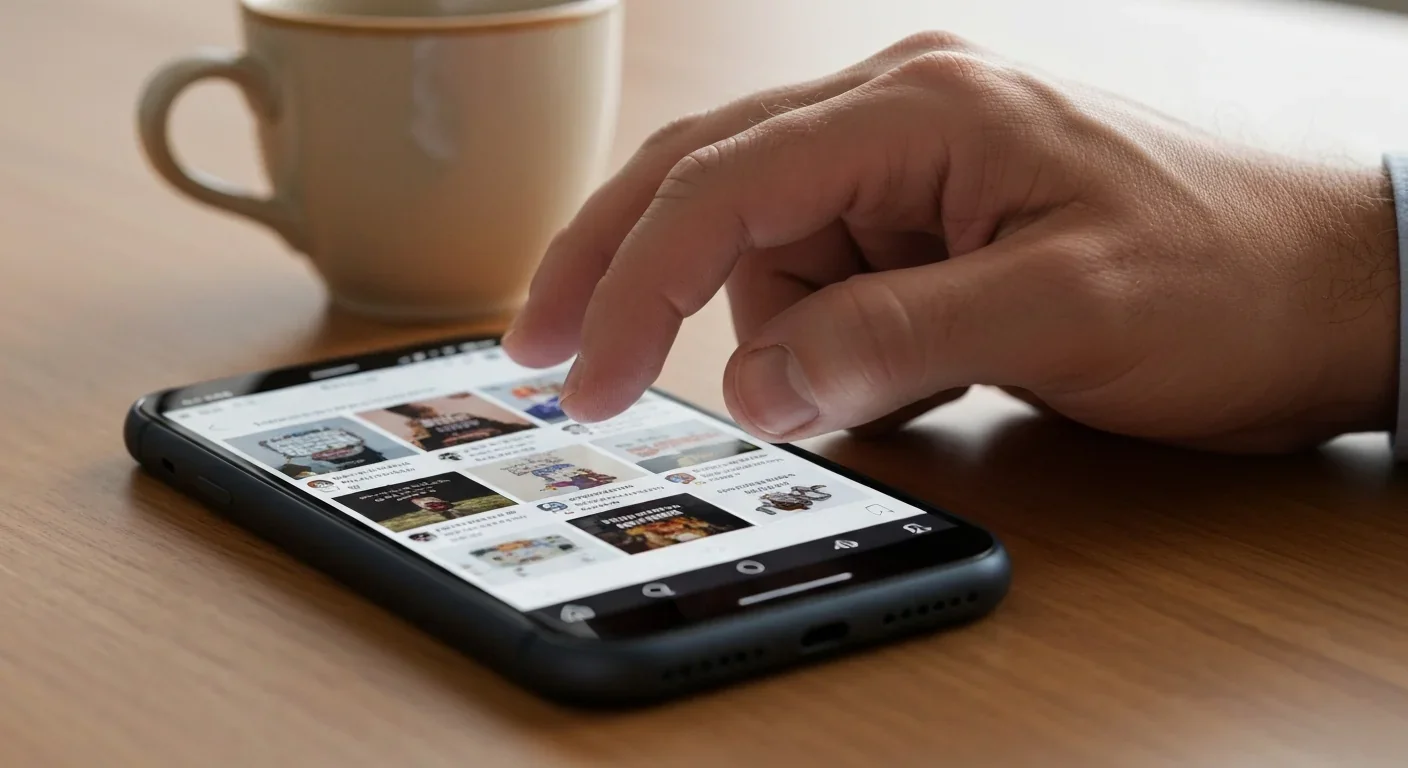
Facebook's own attempt at reform backfired spectacularly. The 2018 "meaningful interactions" redesign, intended to prioritize content from friends and family, actually amplified divisive content because the posts that generated the most comments and reactions were the most inflammatory ones. The metric meant to measure quality was hijacked by outrage.
Some states are now trying warning-label legislation. California enacted a 2025 law requiring escalating, time-based warnings, and similar measures are advancing in Minnesota, New York, and Texas. But regulation faces a fundamental tension: giving governments direct control over algorithms risks political capture, while leaving platforms to self-regulate has produced the current crisis.
Even researchers face obstacles. Without access to platform ranking systems, independent auditing remains nearly impossible. The very opacity that makes these algorithms dangerous also makes them difficult to study and regulate.
There's a paradox at the heart of algorithmic awareness. A Harvard study of 348 young adults found that people who understand how algorithms work are actually less likely to take corrective action, a phenomenon researchers call "algorithmic cynicism." Knowing you're being manipulated doesn't automatically make you fight back. Often, it makes you give up.
But the Science study offers a hopeful counter-narrative. If algorithms can compress three years of polarization into one week, they can also work in reverse. Reducing exposure to hostile partisan content produced measurable warming toward political opponents. The tool, as Stanford's Michael Bernstein noted, "could open ways to create interventions that not only mitigate partisan animosity, but also promote greater social trust."
If algorithms can compress three years of polarization into one week, they can also work in reverse. The same technology that divides us could, with different optimization targets, bring us closer together.
The question isn't whether engagement-maximizing algorithms cause harm. That debate is over. The question is whether we'll demand platforms optimize for something other than our worst impulses, or whether we'll keep scrolling while the outrage machine hums along, turning our attention into someone else's profit. Within the next decade, the answer to that question will shape not just our feeds, but the fabric of democratic society itself.

Project Orion was a real 1960s program to reach other stars by detonating 800 nuclear bombs behind a spacecraft. The physics worked and the engineering was feasible, but the 1963 nuclear test ban treaty killed it. It remains the most credible interstellar spacecraft ever designed.

The locus coeruleus, a tiny brainstem structure, degenerates decades before Alzheimer's symptoms appear. Its loss cripples the brain's inflammation control, waste clearance, and sleep regulation. New imaging tools and noradrenergic therapies offer hope for early detection and prevention.
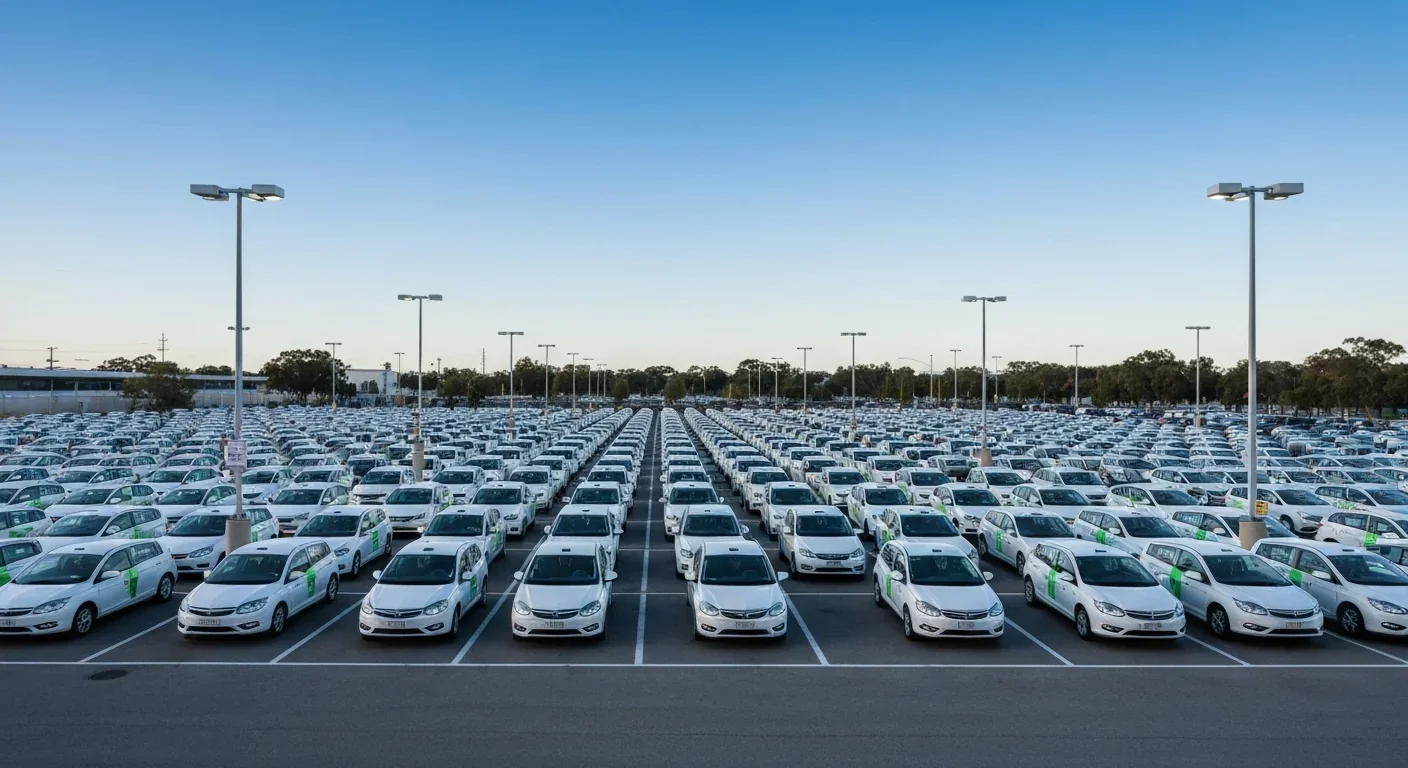
Research shows the sharing economy often increases total resource consumption through the Jevons paradox and rebound effects. Ride-sharing adds billions of vehicle miles, co-working spaces use more energy per worker, and diffused responsibility erodes conservation behavior. Breaking the paradox requires congestion pricing, accountability design, and matching sharing models to appropriate resource types.

Psychological reactance theory explains why banning or restricting things makes people want them more. From Prohibition to the Streisand effect to scarcity marketing, research shows that threatening people's freedom reliably backfires, and autonomy-supportive communication is far more effective.

A carnivorous pitcher plant in Borneo evolved to house bats instead of trapping insects, gaining up to 95% of its nitrogen from bat guano. The plant even built an ultrasonic reflector to help bats find it, revealing that carnivory in plants is a flexible spectrum.
The quantified self movement began as a hacker-ethos pursuit of personal insight, but corporate wearables now funnel biometric data to employers, insurers, and data brokers. With 81% of Americans wrongly believing health apps are HIPAA-protected, a regulatory void enables health data to be sold for pennies while generating anxiety instead of empowerment.

CXL memory pooling lets servers dynamically share DRAM over a cache-coherent interconnect, eliminating the 40% stranded memory waste in data centers. With commercial hardware now shipping and Azure deploying CXL cloud instances, this technology promises to cut memory costs by 50% while enabling composable infrastructure.

Loading featured articles...