Self-Tracking to Surveillance: Quantified Self's Fall

Self-Tracking to Surveillance: Quantified Self's Fall

The Vacancy Paradox: Empty Homes and Homelessness

How Engagement Algorithms Turn Social Media Into Outrage

Data Dignity: Should You Own Your Personal Data?

The Great Log-Off: Why Millions Quit Social Media

Platform Cooperativism: Workers Buying Back the Gig Economy
TL;DR: The demand to 'be authentic' has evolved from a countercultural ideal into an exhausting, uncompensated performance demanded by employers and platforms. With 52% of creators reporting burnout and algorithms rewarding vulnerability over substance, authenticity has become labor that disproportionately burdens women and minorities while corporations capture the profits.

The way we work, create, and connect online is fundamentally changing because of a single, deceptively simple demand: just be yourself. What started as a countercultural rallying cry in the 1960s has been quietly co-opted into a corporate mandate, a platform incentive, and for millions of workers and creators, an exhausting second shift no one signed up for. The pressure to perform authenticity now permeates everything from LinkedIn profiles to team standup meetings to TikTok confessionals, and the people paying the highest price are rarely the ones profiting from it.
Here's what makes the modern authenticity demand so insidious: it disguises labor as liberation. Sociologist Arlie Russell Hochschild identified this dynamic in 1983 when she coined the term "emotional labor" to describe "the management of feeling to create a publicly observable facial and bodily display that is sold for a wage." She estimated that close to one-third of all US jobs contained elements of emotional labor, with women disproportionately affected.
Four decades later, that fraction has exploded. The phrase "bring your whole self to work" was popularized by author Mike Robbins and adopted by Google, Facebook, Deloitte, and countless other organizations. Harvard Business Review recently put it bluntly: "Few corporate mantras have spread more widely, and aged worse."
The problem isn't vulnerability itself. It's that vulnerability has been repackaged as a workplace expectation with real psychological costs but zero corresponding compensation. Research published in Frontiers in Psychology found that "surface acting," the performance of emotions you don't actually feel, is strongly linked to emotional exhaustion, depersonalization, and lower job satisfaction. Deep acting, where workers genuinely try to feel the expected emotions, fares better psychologically but still extracts a toll. Either way, someone is performing.
Emotional labor was first identified in 1983 as a workplace phenomenon affecting one-third of US jobs. Today, through corporate "whole self" mandates and social media platforms, it has expanded into a universal, uncompensated demand placed on virtually everyone.

Authenticity wasn't always a corporate buzzword. The concept has deep philosophical roots, stretching from Rousseau's belief that civilization corrupts our natural selves, through Kierkegaard's insistence on personal commitment, to Sartre and Heidegger's existentialist frameworks. For these thinkers, authenticity was a confrontation with freedom, not a brand strategy.
The shift happened gradually. In the mid-20th century, authenticity migrated from philosophy departments into popular culture through the counterculture movement. Being "real" became a political act, a rejection of conformity. But as philosopher Laurent Bialystok has argued, the concept was always unstable: "True authenticity is nearly impossible to identify because the notion of a 'true self' cannot be objectively verified," making authenticity "an epistemic and metaphysical mystery."
The self-help industry spotted the opportunity. By the 1990s, Oprah-era talk shows and bestselling books were offering audiences tools to locate their "authentic selves," transforming a philosophical puzzle into a personal development product. Consumer culture followed. The rise of consumer society brought what one analysis calls "an unprecedented freedom to acquire products with no functional value whatsoever, sold under the premise of helping us define who we are."
The corporate world wasn't far behind. By the 2010s, tech companies were embedding authenticity into employee handbooks. Google's 2015 handbook reportedly included the directive: "Bring your whole self to work, your voice matters." What began as existential liberation had become an HR talking point.
Erving Goffman predicted all of this in 1959. His dramaturgical theory compared social interactions to theatrical performances, where people constantly manage impressions through "front stage" and "backstage" behavior. Social media simply moved the theater online and monetized the tickets.
If corporate culture asks employees to perform authenticity for engagement scores, social media platforms have built entire economies around it. Algorithms don't distinguish between genuine vulnerability and strategic disclosure. They simply amplify whatever generates clicks.
A review published in Trends in Cognitive Sciences found that social media algorithms amplify what researchers call PRIME information, content that is Prestigious, Ingroup, Moral, and Emotional, regardless of accuracy. A separate analysis of 12,000 social media posts across Facebook, X, TikTok, and YouTube found that emotionally charged content achieved an average engagement rate of 11.7%, compared to just 4.5% for factual posts. The message to creators is unmistakable: feelings pay better than facts.
This creates what sociologist Brooke Erin Duffy calls "aspirational labor," the unpaid or underpaid work of maintaining an authentic online presence in the hope of future returns. A survey of 5,000 consumers across the US, UK, Europe, and Australia found that 81% value content that is "authentic, personal, and original" over AI-generated material. Platforms have built their reward structures around this preference, creating financial incentives to commodify private experience.
"What began as a supposed rebellion against traditional media is now increasingly modeled after it, complete with middlemen, agency layers, and bundled tech stacks promising growth, monetization, and brand safety."
- Digiday, analysis of the creator economy industrial complex
The result is a trap. The more authenticity is rewarded, the more calculated it becomes. And the more calculated it becomes, the more labor it requires to maintain the illusion of spontaneity. Ninety percent of consumers now say authenticity influences their purchasing decisions, creating a feedback loop where brands and creators alike feel compelled to manufacture sincerity at industrial scale.
The numbers paint a stark picture. A survey of 1,000 creators and 1,000 senior marketers across the US and UK found that 52% of creators have experienced burnout as a direct result of their career, and 37% are actively considering leaving the profession. The top triggers? Creative fatigue (40%), demanding workloads (31%), and constant screen time (27%). When ranked by severity, financial instability emerged as the number one factor, cited by 55% of burned-out creators.

The scale of the industry makes this alarming. The creator economy is projected to reach $480 billion by 2027. More than 200 million people worldwide now identify as creators, with about 27 million in the US alone. But according to Goldman Sachs, only about 4% earn over $100,000 a year. The vast majority are performing authenticity for an audience that may never pay them back.
Revenue instability compounds everything. Analysis of over 3,500 Reddit threads and 28,000 comments across creator communities found that 69% of creators report financial instability linked to their work, with revenue swings of 50-70% common after algorithm changes. As one researcher put it: "Burnout is not a time-management issue. It is a byproduct of algorithmic dependency."
And there's a perception gap that makes things worse. While only about half of creators feel they receive adequate support from brands (48%), agencies (49%), or platforms (49%), between 60-63% of marketers believe they're providing enough. The people profiting from authenticity labor consistently overestimate how well they're caring for the people doing it.
In a $480 billion industry with 200 million creators worldwide, only 4% earn over $100,000 a year. The rest shoulder the emotional and financial costs of authenticity performance with little structural support.
The costs of performed authenticity fall unevenly. Women are disproportionately assigned to roles requiring high emotional labor, in hospitality, healthcare, education, and family caregiving. This pattern extends into the corporate workplace, where women, especially women of color, shoulder what Psychology Today calls the "emotional labor tax": conflict mediation, team morale, cultural maintenance, all performed without recognition or compensation.

"Being the emotional glue of your team is not your job unless it's actually your job," one researcher argues. But corporate authenticity culture makes it everyone's job, and the burden doesn't distribute equally.
In the creator economy, the inequity is measurable. Creators of color consistently earn less than their white peers despite driving cultural trends. Susan LaMotte, founder of Exaqueo, captures the dynamic: "Companies expect people to bring their whole selves to the workplace because they're not giving them reasonable time to live a whole life outside of it."
For marginalized groups, the mandate to "be authentic" can actively undermine psychological safety. As one diversity executive noted, Black professionals often feel "the need to calibrate their public image to avoid being seen as too aggressive or too intense, especially at higher levels." Authenticity demands, filtered through power dynamics, become another form of code-switching rather than the liberation they promise.
"Companies expect people to bring their whole selves to the workplace because they're not giving them reasonable time to live a whole life outside of it."
- Susan LaMotte, Founder of Exaqueo
Psychologist Brene Brown coined the term "vulnerability hangover" to describe the anxiety, shame, and regret that follow moments of deep personal sharing. It's the emotional backlash of doing exactly what authenticity culture demands.
These hangovers aren't just emotional. Research suggests they can trigger physiological responses including rapid heartbeat, sweating, and nausea. People who are introverted or highly sensitive are particularly susceptible. Neuroscience research shows that feelings of embarrassment after disclosure may be linked to specific neural pathways, suggesting the costs of performed authenticity are biological, not just cultural.
When this pressure is sustained over time, the results are predictable. Hochschild found that workers who "clearly segregate themselves from their jobs are less likely to suffer burnout, but risk estrangement from themselves." The catch-22 is structural: perform your feelings and risk exhaustion, or withhold them and risk alienation.
The good news is that counter-movements are already emerging. The deinfluencing movement, where creators actively discourage unnecessary purchasing, represents consumer pushback against performed authenticity. Digital minimalism, reducing online engagement to what's genuinely valuable, offers another model.
In workplaces, the shift is from "whole self" to "best self." Instead of demanding total transparency, some organizations are recognizing that strategic self-presentation, choosing what to share and what to keep private, is both healthier and more realistic. Research shows that empowering leadership can reduce surface acting and increase genuine emotional engagement by fostering what researchers call "harmonious passion."
For individuals, the framework is simple if not easy. Name the emotional labor you're doing. Set boundaries around self-disclosure. Recognize that you don't owe anyone your trauma or your personal story as a condition of employment. Community-driven support is sprouting too: platforms like FiveTwoNine, launched to provide peer-to-peer networking for creators, has grown to 1,800 members across 18 countries in its first year.
Replacing the word "authenticity" with "integrity," as some marketing thinkers have proposed, may sound like semantics. But the distinction matters. Authenticity asks you to expose yourself. Integrity asks you to be consistent between your promises and your practices. One is extractive; the other is sustainable.
The authenticity imperative won't disappear overnight. But recognizing it as labor, as something with real costs that deserves real compensation or at minimum real boundaries, is the first step toward reclaiming what authenticity was supposed to mean in the first place: the freedom to decide for yourself who you want to be.

Project Orion was a real 1960s program to reach other stars by detonating 800 nuclear bombs behind a spacecraft. The physics worked and the engineering was feasible, but the 1963 nuclear test ban treaty killed it. It remains the most credible interstellar spacecraft ever designed.

The locus coeruleus, a tiny brainstem structure, degenerates decades before Alzheimer's symptoms appear. Its loss cripples the brain's inflammation control, waste clearance, and sleep regulation. New imaging tools and noradrenergic therapies offer hope for early detection and prevention.
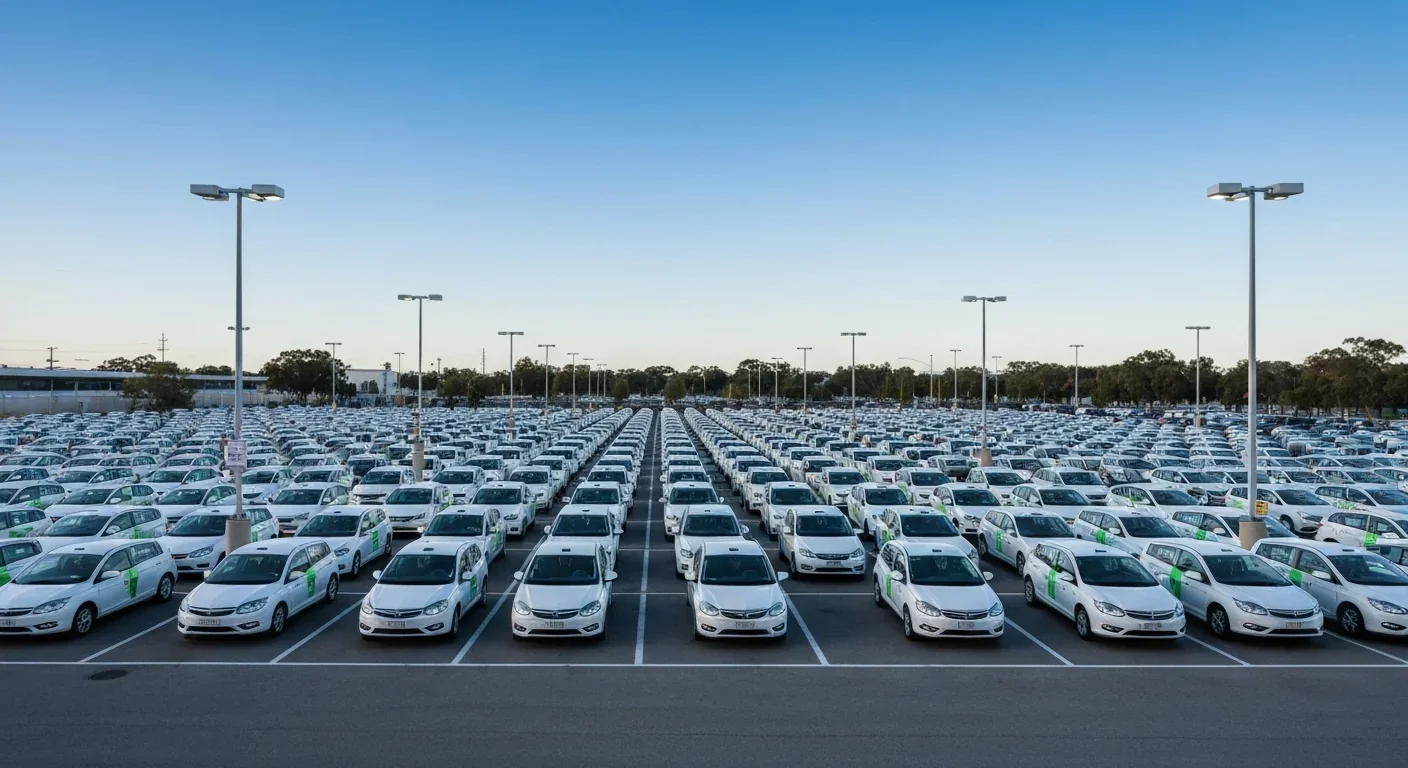
Research shows the sharing economy often increases total resource consumption through the Jevons paradox and rebound effects. Ride-sharing adds billions of vehicle miles, co-working spaces use more energy per worker, and diffused responsibility erodes conservation behavior. Breaking the paradox requires congestion pricing, accountability design, and matching sharing models to appropriate resource types.

Psychological reactance theory explains why banning or restricting things makes people want them more. From Prohibition to the Streisand effect to scarcity marketing, research shows that threatening people's freedom reliably backfires, and autonomy-supportive communication is far more effective.

A carnivorous pitcher plant in Borneo evolved to house bats instead of trapping insects, gaining up to 95% of its nitrogen from bat guano. The plant even built an ultrasonic reflector to help bats find it, revealing that carnivory in plants is a flexible spectrum.
The quantified self movement began as a hacker-ethos pursuit of personal insight, but corporate wearables now funnel biometric data to employers, insurers, and data brokers. With 81% of Americans wrongly believing health apps are HIPAA-protected, a regulatory void enables health data to be sold for pennies while generating anxiety instead of empowerment.

CXL memory pooling lets servers dynamically share DRAM over a cache-coherent interconnect, eliminating the 40% stranded memory waste in data centers. With commercial hardware now shipping and Azure deploying CXL cloud instances, this technology promises to cut memory costs by 50% while enabling composable infrastructure.

Loading featured articles...