Self-Tracking to Surveillance: Quantified Self's Fall

Self-Tracking to Surveillance: Quantified Self's Fall

The Authenticity Tax: How Being Yourself Became Labor

The Vacancy Paradox: Empty Homes and Homelessness

How Engagement Algorithms Turn Social Media Into Outrage

Data Dignity: Should You Own Your Personal Data?

The Great Log-Off: Why Millions Quit Social Media
TL;DR: Zombie companies - firms that can only cover debt interest, not principal - have surged from 2% to 12% of public companies since the 1980s due to ultra-low interest rates. As rates normalize, these businesses face a reckoning that could reshape economies.

Right now, across every major economy, hundreds of thousands of businesses are technically alive but economically dead. They generate revenue, employ workers, and occupy market share, but they're trapped in a financial purgatory - earning just enough to service debt interest, never enough to pay down principal or invest in growth. Economists call them zombie companies, and after 15 years of rock-bottom interest rates, they've multiplied from a curiosity to a crisis that threatens to reshape capitalism itself.
The numbers tell a startling story. In the 1980s, zombie firms represented about 2% of listed companies in advanced economies. By 2016, that figure had jumped to 12%. Today, as interest rates have climbed from pandemic-era lows to levels not seen in decades, 639 U.S. companies meet the zombie criteria - the highest count since early 2022. What began as a Japanese phenomenon in the 1990s has become a global structural problem, one that explains puzzling productivity stagnation, wage disappointments, and market fragility in countries that thought they'd learned from Japan's mistakes.
The question isn't just how we got here. It's what happens when the life support gets turned off.
Understanding zombie companies requires understanding what they actually are. The technical definition is deceptively simple: a business unable to cover debt servicing costs from current profits over an extended period, typically three consecutive years. These aren't startups burning through venture capital in pursuit of growth. They're established firms that would have defaulted and disappeared in a normal interest rate environment, but instead survive through continuous refinancing.
The mechanism keeping them alive is elegant and insidious. When central banks drove interest rates to near zero after the 2008 financial crisis - and then repeated the exercise during COVID-19 - they made debt remarkably cheap. A company barely covering its interest payments at 2% could refinance that debt at 0.5%, suddenly creating breathing room. Creditors, desperate for any yield in a zero-rate world, willingly extended new loans to replace maturing ones. The zombie never improved its underlying business, but it didn't need to. It just needed to keep refinancing.
A zombie company is one that can cover interest payments but never pays down principal or invests in growth - surviving solely through continuous refinancing in a low-rate environment.
This dynamic didn't happen by accident. After 2008, policymakers faced a choice: let failing firms collapse and risk a deflationary spiral, or provide cheap credit to keep them operating until economic growth returned. They chose the latter. The problem is, for many companies, growth never returned. The cheap credit that was supposed to be a temporary bridge became a permanent dependency.
Research from the Bank for International Settlements quantified the relationship: for every 10-percentage-point drop in nominal interest rates since the mid-1980s, the share of zombie firms increased by approximately 17%. It's a direct, measurable link between monetary policy and corporate decay.

To understand how we arrived at this moment, we need to rewind to Japan in the 1990s. After its asset bubble burst in 1990, Japan's economy entered what became known as the Lost Decades - a period of stagnation lasting over 20 years. Banks, saddled with bad loans, kept lending to insolvent companies rather than write off losses. Regulators, fearing bank collapses, let them. The result was an economy clogged with zombie firms that absorbed capital and labor without producing growth.
Western economists studied Japan's experience with a mixture of sympathy and confidence. This couldn't happen to us, they thought, because we understood the problem. Then 2008 happened.
The global financial crisis forced central banks into uncharted territory. The Federal Reserve slashed rates to near zero. The European Central Bank followed. The Bank of England did the same. Quantitative easing - central banks buying bonds to pump money into the economy - became standard policy rather than emergency measure.
For a few years, it seemed to work. Markets recovered. Employment improved. But beneath the surface, something insidious was happening. Companies that should have failed during the recession instead borrowed their way to survival. Private equity firms loaded up on cheap debt to fund leveraged buyouts, creating highly indebted corporate structures vulnerable to any rate increase.
Then COVID-19 hit, and central banks opened the floodgates even wider. Emergency lending programs, forgivable loans, and even more aggressive rate cuts gave struggling firms access to unprecedented amounts of capital. Canadian researchers found that pandemic support programs, while preventing immediate failures, also sustained marginal firms that would otherwise have exited the market. The same pattern appeared globally.
"For every 10-percentage-point drop in nominal interest rates since the mid-1980s, the share of zombie firms increased by approximately 17%."
- Bank for International Settlements researchers
By 2021, the world had spent more than a decade telling companies that debt was essentially free and failure was optional. Many believed it.
The zombie company phenomenon isn't confined to struggling startups or obvious basket cases. A 2025 analysis found these firms span industries from manufacturing to retail to technology. Some are well-known brands that employees and customers would be shocked to learn are technically insolvent. Others operate quietly in capital-intensive sectors where high debt is normalized.
In the United States, the retail sector has proven particularly vulnerable. A study published in the Research Archive of Rising Scholars examined how zombie firms in retail threaten broader economic health by occupying valuable commercial real estate, suppressing wages, and crowding out innovative competitors. When a zombie retailer stays in business, it prevents that capital - both physical stores and human talent - from being reallocated to more productive uses.

Japan's experience offers a preview of what happens when zombie companies become structural. A 2025 analysis identified zombie corporations, alongside "cash dragons" (ultra-conservative firms hoarding cash), as major threats to Japanese economic dynamism. These firms don't just stagnate themselves; they create a gravitational pull that makes it harder for healthy firms to grow.
The challenge of identifying zombies has spawned new analytical approaches. Researchers at IMD developed frameworks to spot zombie firms at risk of default, looking beyond simple interest coverage ratios to examine cash flow patterns, debt maturity schedules, and industry dynamics. The goal isn't just academic; investors need to know which companies face existential risk as rates normalize.
Statistics Canada's research revealed something counterintuitive: pandemic-era zombie firms were sometimes younger and in different sectors than traditional zombies. The COVID crisis created a new generation of dependent companies, distinct from the 2008-era survivors.
The damage zombie companies inflict goes far beyond their own balance sheets. When unprofitable firms survive, they create what economists call negative externalities - costs borne by everyone else.
First, there's the productivity problem. Healthy firms grow by investing in equipment, technology, and workforce training. Zombie firms, barely treading water, make none of these investments. They operate with outdated technology, underpaid workers, and crumbling infrastructure. When zombies represent 12% of public companies, that's a significant drag on aggregate productivity growth.
A Goldman Sachs study quantified part of this impact: each dollar of incremental interest expense reduces capital expenditures by 10 cents and labor costs by 20 cents. As zombie firms struggle under higher debt burdens, they cut exactly the investments that would make them - and the broader economy - more productive.
When zombie companies represent 12% of public firms, they create a massive drag on productivity, innovation, and wage growth across the entire economy.
Second, zombie firms misallocate capital. Banks and bondholders lending to zombies are, by definition, not lending that money to growing firms. In Japan during the Lost Decades, this became a vicious cycle: banks with bad loans on their books became "zombie banks," reluctant to write off losses but equally reluctant to make new loans to risky but promising ventures. The economy stagnated because capital couldn't flow to its most productive uses.
Third, zombies distort labor markets. They employ workers who could be more productive elsewhere, but those workers stay because switching costs are high and zombie firms, subsidized by cheap debt, can match market wages even while losing money. Meanwhile, innovative competitors struggle to hire because talent is locked up in unproductive employment.

The concept of creative destruction - economist Joseph Schumpeter's theory that capitalism advances by replacing inefficient firms with better ones - requires that inefficient firms actually fail. Zombie companies break this cycle. They're the economic equivalent of a traffic jam: everyone stuck behind them goes slower, even if their own vehicle is perfectly functional.
For years, zombie companies survived by extending and pretending. Debt due in 2020 got refinanced to 2023. Debt due in 2023 got refinanced to 2025. As long as interest rates stayed low and credit stayed loose, the game could continue indefinitely.
Then everything changed. In 2022, the Federal Reserve began the most aggressive interest rate hiking cycle in decades, raising rates from 0.25% to 5.50%. The European Central Bank and Bank of England followed similar paths. Suddenly, refinancing wasn't just rolling over debt at similar rates; it meant replacing 2% debt with 6% debt.
The numbers are staggering. Barclays estimated that the investment-grade universe faced a $745 billion wave of maturing debt in 2024, a 21% increase from the prior year. Not all of that debt belongs to zombies, but a significant portion does. For companies already struggling to cover interest at low rates, refinancing at higher rates is financially impossible.
This is where the "extend and pretend" strategy hits a wall. You can only refinance debt if someone is willing to lend to you. As rates rise and economic conditions tighten, creditors become more selective. Corporate debt defaults rose steeply in 2023, a trend that accelerated into 2024 and 2025.
"Each dollar of incremental interest expense reduces capital expenditures by 10 cents and labor costs by 20 cents."
- Goldman Sachs Research
Private equity, which loaded up on debt during the zero-rate era, faces particularly acute challenges. Many firms are stuck with unsellable zombie companies they can't profitably exit. The strategy of buying mediocre businesses with leverage, making modest improvements, and flipping them at a profit assumes that interest rates stay low and exit multiples stay high. When those assumptions fail, private equity is left holding the bag.
A 2025 forecast on default rates in private debt painted a sobering picture: as refinancing pressures mount, default rates in certain sectors could reach levels not seen since the financial crisis. The firms most at risk are precisely those that survived the last decade only because of exceptionally accommodative credit conditions.

Individual company failures, while painful for employees and investors, are normally manageable. The concern with zombie companies is what happens when they fail en masse.
Start with the employment implications. Zombie firms may be unproductive, but they employ millions of people. If hundreds of these companies fail simultaneously, the resulting job losses could trigger a recession even in an otherwise healthy economy. Workers displaced from zombie firms often need retraining or relocation to find new jobs, creating transition costs that suppress consumption and growth.
Then there's the financial system risk. Banks and bondholders have extended enormous amounts of credit to firms that, in hindsight, shouldn't have received it. As some economists warn, ignoring corporate failures can create a "zombie financial system" where banks are technically solvent but effectively trapped by bad loans they can't acknowledge. This mirrors Japan's experience, and the parallels have some analysts worried that America could be heading toward its own lost decade.
Market dynamics add another layer of complexity. Zombie companies surviving on cheap credit have suppressed returns in many sectors. When they fail, it creates opportunities for healthy competitors to gain market share and raise prices. That's good for innovation and capital allocation but potentially inflationary in the short term. Policymakers walking the tightrope between inflation and recession must factor in these second-order effects.
Warning: Mass zombie company failures could trigger widespread job losses and financial system stress, even in an otherwise healthy economy - the classic systemic risk scenario.
There's also a moral hazard dimension. If governments and central banks have spent 15 years preventing zombie companies from failing, markets have learned to expect bailouts. Every time crisis conditions emerge, the expectation is that authorities will step in with cheap credit and emergency programs. This expectation encourages excessive risk-taking, creating the very conditions that require future interventions. Breaking this cycle requires letting some failures happen, which is politically difficult and economically painful.
An MIT Press book examining unintended consequences of monetary policy explores this dilemma. Policies designed to stabilize economies in crisis can, over time, create dependencies that make the system more fragile. Zombie companies are Exhibit A.
So what happens next? The most likely scenario is a gradual, painful unwinding. Some zombie companies will successfully restructure, cutting costs and improving operations enough to survive in a higher-rate environment. Others will be acquired by competitors or private equity firms willing to take on turnaround challenges. Many will simply fail.
This process is already underway. Corporate restructuring advisors are seeing their busiest period in years. Bankruptcy courts are processing more filings. Distressed debt investors are circling companies they think are salvageable. The question isn't whether zombies will fail but how quickly and how disruptively.
For policymakers, the challenge is managing this transition without triggering a broader crisis. That means avoiding the temptation to slash rates at the first sign of stress, which would simply recreate the zombie problem. It also means providing targeted support for workers displaced by corporate failures while letting the failures themselves happen. The safety net should catch people, not companies.
For investors, the zombie phenomenon creates both risks and opportunities. Companies with strong balance sheets and genuine competitive advantages will gain market share as zombies exit. But identifying which struggling firms are salvageable versus which are truly undead requires rigorous analysis. Simple metrics like debt-to-equity ratios don't capture the full picture when creative accounting and covenant-lite loans obscure true financial health.
For workers and communities, the unwinding of zombie companies requires adaptation. Regions economically dependent on a handful of large employers face particular challenges if those employers prove to be zombies. Economic development strategies focused on attracting any company with jobs need to shift toward cultivating genuinely sustainable businesses.
Japan's experience, while cautionary, also offers some hope. After decades of zombie-propping policies, Japan has slowly begun letting failures happen and reallocating capital more efficiently. Growth remains modest, but productivity has improved. The lesson seems to be that the longer you postpone the reckoning, the harder it becomes - but it's never too late to start.
The zombie company phenomenon reveals an uncomfortable truth about modern capitalism: sometimes the medicine becomes the disease. Ultra-low interest rates were prescribed to prevent economic collapse in 2008 and 2020. They worked, in the sense that they prevented immediate catastrophe. But they also created a dependency that distorted markets, misallocated resources, and suppressed productivity for over a decade.
We're now living through the withdrawal period. As interest rates normalize, the firms that should have failed years ago are finally facing consequences. This process will be messy. Jobs will be lost. Investors will take losses. Communities will struggle. But it's also necessary. An economy clogged with zombie companies can't innovate, can't grow, and can't deliver rising living standards.
The deeper question is whether we've learned anything. The next crisis - and there will be a next crisis - will bring pressure to do exactly what we did before: slash rates, provide emergency credit, and keep failing firms alive. The temptation will be enormous, particularly when jobs are on the line and markets are panicking.
But perhaps this time we'll remember that keeping zombie companies alive doesn't save jobs; it just postpones their loss while making the eventual reckoning worse. Perhaps we'll remember that creative destruction, while painful, is how capitalism generates progress. Perhaps we'll remember that sometimes the kindest thing to do is to let what's dead finally die.
The army of corporate zombies didn't appear overnight, and it won't disappear overnight either. But after 15 years of life support, the machines are finally being turned off. What emerges on the other side - a more dynamic, productive economy or a prolonged period of stagnation - depends on choices being made right now in boardrooms, central banks, and government offices around the world.
The zombies taught us that cheap money comes with hidden costs. The question is whether we're willing to pay the upfront price of letting markets work, or whether we'll keep kicking the can down the road until there's nowhere left to kick it.
Project Orion was a real 1960s program to reach other stars by detonating 800 nuclear bombs behind a spacecraft. The physics worked and the engineering was feasible, but the 1963 nuclear test ban treaty killed it. It remains the most credible interstellar spacecraft ever designed.

The locus coeruleus, a tiny brainstem structure, degenerates decades before Alzheimer's symptoms appear. Its loss cripples the brain's inflammation control, waste clearance, and sleep regulation. New imaging tools and noradrenergic therapies offer hope for early detection and prevention.
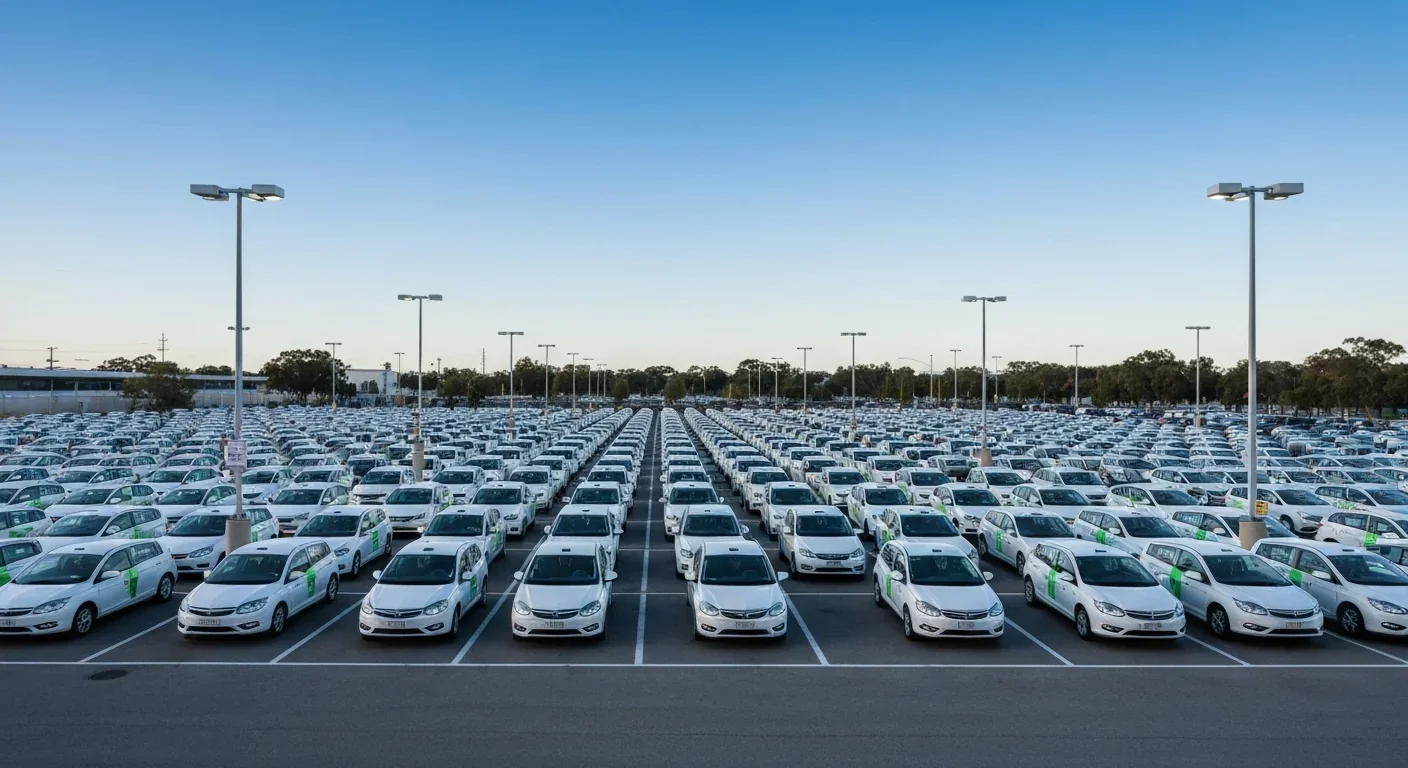
Research shows the sharing economy often increases total resource consumption through the Jevons paradox and rebound effects. Ride-sharing adds billions of vehicle miles, co-working spaces use more energy per worker, and diffused responsibility erodes conservation behavior. Breaking the paradox requires congestion pricing, accountability design, and matching sharing models to appropriate resource types.
Psychological reactance theory explains why banning or restricting things makes people want them more. From Prohibition to the Streisand effect to scarcity marketing, research shows that threatening people's freedom reliably backfires, and autonomy-supportive communication is far more effective.

A carnivorous pitcher plant in Borneo evolved to house bats instead of trapping insects, gaining up to 95% of its nitrogen from bat guano. The plant even built an ultrasonic reflector to help bats find it, revealing that carnivory in plants is a flexible spectrum.
The quantified self movement began as a hacker-ethos pursuit of personal insight, but corporate wearables now funnel biometric data to employers, insurers, and data brokers. With 81% of Americans wrongly believing health apps are HIPAA-protected, a regulatory void enables health data to be sold for pennies while generating anxiety instead of empowerment.

CXL memory pooling lets servers dynamically share DRAM over a cache-coherent interconnect, eliminating the 40% stranded memory waste in data centers. With commercial hardware now shipping and Azure deploying CXL cloud instances, this technology promises to cut memory costs by 50% while enabling composable infrastructure.

Loading featured articles...