Self-Tracking to Surveillance: Quantified Self's Fall

Self-Tracking to Surveillance: Quantified Self's Fall

The Authenticity Tax: How Being Yourself Became Labor

The Vacancy Paradox: Empty Homes and Homelessness

How Engagement Algorithms Turn Social Media Into Outrage

Data Dignity: Should You Own Your Personal Data?

The Great Log-Off: Why Millions Quit Social Media
TL;DR: Workers are losing control of their productivity data to employers who collect, analyze, and profit from it while offering little protection or compensation. New movements and legal frameworks are emerging to give workers ownership rights over their digital labor footprint.
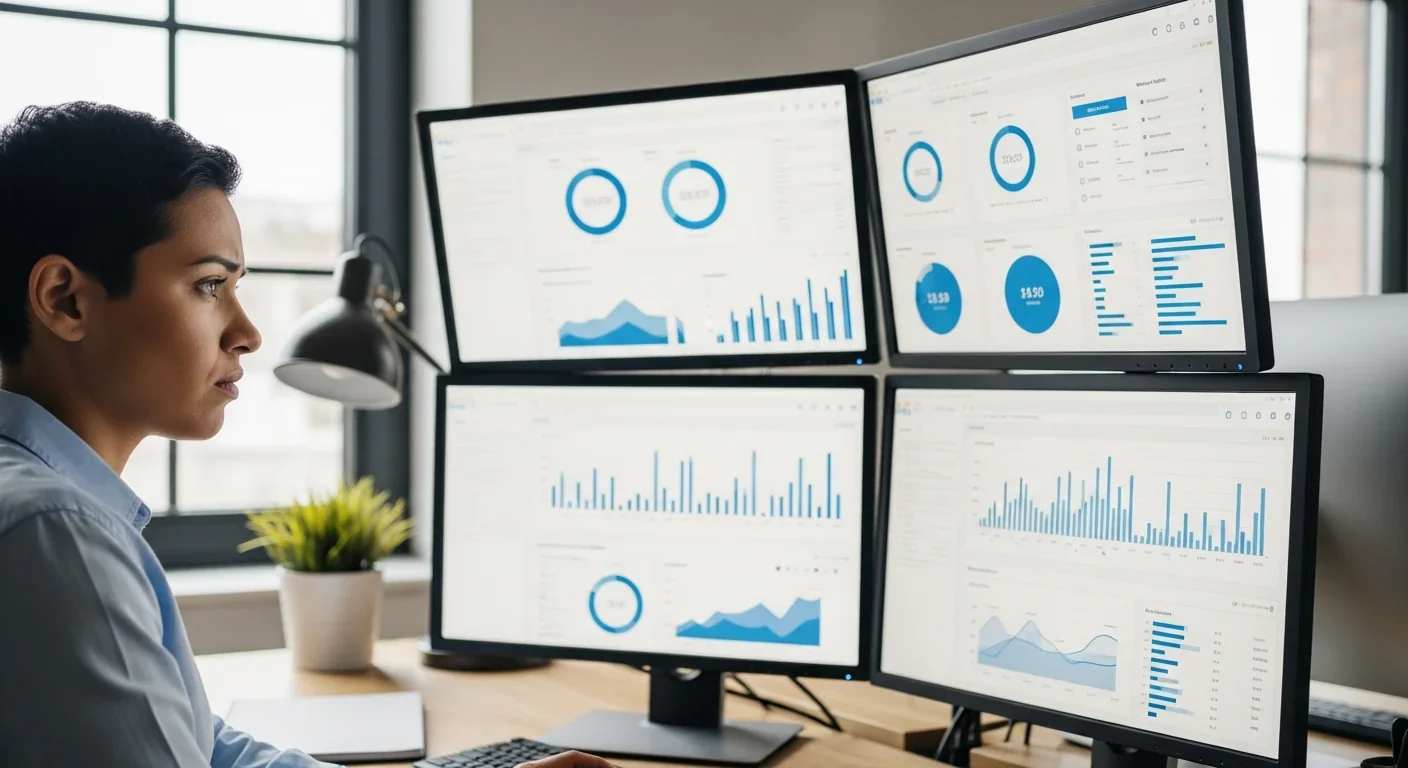
Every keystroke, every click, every second of idle time. If you work for a company that uses modern workplace software, chances are your employer is collecting more data about your work habits than you realize. From the 72% of companies now using employee monitoring software to the algorithmic management systems tracking millions of gig workers, we're witnessing an unprecedented shift in how work is measured, evaluated, and controlled.
The data your employer collects about you isn't just numbers on a dashboard. It's becoming a permanent digital record that follows you throughout your career, influences hiring decisions, and creates economic value you'll never see. Workers are starting to fight back, demanding ownership of their productivity data and challenging the power imbalance that lets companies profit from their digital labor footprint while leaving employees with nothing.
This isn't a distant dystopian future. It's happening right now, in offices and remote workplaces across the globe. The question isn't whether your work data is being collected. It's who owns it, who profits from it, and what rights you have to control it.
The scope of workplace monitoring has exploded beyond what most workers imagine. According to recent industry research, the employee monitoring software market has grown to $1.2 billion globally, with adoption rates jumping from 30% of companies in 2015 to over 70% today. These aren't just basic time-tracking tools anymore.
Modern workplace surveillance captures everything. Microsoft Viva Insights analyzes your email patterns, meeting habits, and collaboration networks. Productivity scoring systems track your active versus idle time, application usage, website visits, and even keystroke dynamics. Some companies use software that takes periodic screenshots, records screen activity, or activates webcams to verify you're at your desk.
The granularity of data collection is staggering. Research from UC Berkeley's Labor Center reveals that algorithmic management systems now track metrics like typing speed, mouse movement patterns, bathroom break duration, tone of voice in customer calls, facial expressions during video meetings, and even biometric data from company-issued wearables. Every interaction becomes a data point.
87% of companies now use productivity data in performance evaluations, with 64% incorporating it into compensation decisions. Your work patterns from years ago could influence whether you get promoted today.
What makes this particularly concerning is how this data persists. Unlike traditional performance reviews that might be forgotten or filed away, digital productivity metrics create an indelible record. Studies show that 87% of companies now use productivity data in performance evaluations, with 64% incorporating it into compensation decisions. Your work patterns from years ago could influence whether you get promoted today.
The shift to remote work during the pandemic accelerated this trend dramatically. Market research indicates that demand for employee monitoring software increased by 300% in 2020 alone. Companies justified expanded surveillance as necessary for managing distributed teams, but workers found themselves under more intense scrutiny than ever before, with 78% reporting increased stress from constant monitoring.

Here's where things get complicated: who actually owns all this data about your work? The answer varies wildly depending on where you work, and in most cases, the law offers workers surprisingly little protection.
In the United States, workplace surveillance laws create a patchwork of partial protections that leave massive gaps. The Electronic Communications Privacy Act (ECPA) allows employers to monitor business communications with few restrictions. Only Connecticut and Delaware require employers to notify workers about electronic monitoring. In most states, your employer can track virtually everything you do on company equipment without even telling you.
California offers slightly stronger protections through the California Consumer Privacy Act (CCPA) and its successor, the California Privacy Rights Act (CPRA). These laws grant California residents rights to access, delete, and opt out of the sale of their personal information. But here's the catch: employment data was initially exempted from these protections. While CPRA removed some exemptions, applying certain rights to employee data starting January 2023, employers still maintain broad control over workplace information.
The European Union's General Data Protection Regulation (GDPR) provides more robust protections, but even there, the situation is complex. GDPR grants workers rights to data portability, meaning they can theoretically take their data with them when changing jobs. Workers can request access to all personal data an employer holds, demand corrections to inaccurate information, and in some cases, request deletion. However, employers can claim legitimate business interests to retain much of this data.
"Current frameworks fail to address the fundamental power imbalance in employment relationships. When your livelihood depends on your job, exercising data rights becomes risky."
- Yale Law Journal, Data Laws at Work
Legal scholars from Yale Law Journal argue that current frameworks fail to address the fundamental power imbalance in employment relationships. When your livelihood depends on your job, exercising data rights becomes risky. How many workers will demand data deletion when it could mark them as troublemakers? The consent model breaks down when consent is coerced by economic necessity.
The enforcement picture is equally troubling. Recent analysis shows that 95% of companies violate at least one aspect of employee monitoring laws, yet enforcement actions remain rare. Even when violations are discovered, penalties are often minimal compared to the value companies extract from worker data. CCPA violations can result in fines up to $7,500 per intentional violation, but proving intentional misuse is difficult and expensive.
Your productivity data isn't just used for managing your performance. It's becoming a valuable commodity that generates billions in economic value, almost none of which flows back to the workers who create it.
Market analysis reveals that the automated employee monitoring solutions market is projected to reach $8.5 billion by 2030. Companies sell aggregated productivity data to consultants, researchers, and other businesses. Your work patterns help train AI systems that automate jobs. Your productivity metrics become benchmarks sold to competitors. The data you generate through your labor becomes a product, but you don't own it or profit from it.

Consider how algorithmic management systems use worker data. These systems don't just monitor; they actively control work through data-driven decisions. They determine optimal productivity rates, set performance targets, assign tasks, and even predict which workers are likely to quit. The algorithms learn from collective worker data to squeeze out maximum efficiency, but workers see none of the value created by these insights.
The implications extend beyond individual companies. Productivity data is increasingly used in hiring decisions across entire industries. Background check companies now offer "productivity verification" services that aggregate performance metrics from multiple employers. Research indicates that 43% of hiring managers now consider productivity scores from previous employers when making hiring decisions. Your data creates a permanent record that affects your future employment prospects.
The automated employee monitoring solutions market is projected to reach $8.5 billion by 2030. Your work patterns help train AI systems, become benchmarks, and generate value you'll never see.
This creates what labor economists call "digital taylorism" - the use of technology to extract maximum value from workers while minimizing their bargaining power. When companies own all the data about how work gets done, workers lose the ability to negotiate based on their unique knowledge and skills. The expertise that once gave workers leverage becomes encoded in databases they don't control.
Some workers are finding creative ways to reclaim value from their data. Gig workers have begun pooling their performance data to negotiate better rates with platforms. Data cooperatives are emerging where workers collectively own and manage their productivity information, using it to demonstrate value to employers while maintaining control. But these efforts remain small-scale exceptions to the rule of corporate data ownership.
Across industries, workers are beginning to organize around data rights, recognizing that control over productivity metrics is becoming as important as traditional labor concerns like wages and working conditions.
Amazon warehouse workers have been at the forefront of this fight. The company's algorithmic management system tracks every second of worker activity, setting pace targets that workers say are unsustainable and lead to injuries. In response, workers have demanded transparency about how productivity algorithms work and input into setting performance standards. During recent unionization efforts in North Carolina, data rights became a central organizing issue.
Tech workers are taking a different approach. At several major technology companies, employees have successfully negotiated for "data portability" clauses that allow them to take certain performance metrics with them when they leave. UC Berkeley's Labor Center research documents how some unions have begun including data governance provisions in collective bargaining agreements, establishing joint labor-management committees to oversee workplace technology deployment.
The concept of data cooperatives is gaining traction as a structural solution. These organizations allow workers to pool their data, creating collective bargaining power. In Denmark, a data cooperative called WeMind gives workers ownership of their workplace data, which they can then choose to share with employers or researchers on their terms. Members receive compensation when their data is used, flipping the traditional model where companies profit from worker information.

Some innovative companies are experimenting with "data trusts" where worker data is managed by an independent third party with fiduciary responsibility to employees. Project Liberty has proposed technical standards for portable work credentials that workers would own and control, similar to educational transcripts. These would document skills and achievements without giving employers permanent ownership of performance data.
Legal challenges are also mounting. Employment law experts report a surge in lawsuits challenging excessive workplace surveillance, with some courts beginning to recognize limits on employer monitoring rights. In Illinois, the Biometric Information Privacy Act has been used to challenge companies collecting biometric data without consent. These cases are establishing precedents that could reshape workplace data rights.
Beyond economic and legal concerns, the constant surveillance of productivity metrics is fundamentally changing what it means to work, with profound psychological consequences that ripple through entire organizations.
Research from Cambridge University found that employees under electronic monitoring reported 43% lower psychological safety compared to non-monitored workers. Psychological safety - the belief that you can speak up, make mistakes, and take risks without punishment - is crucial for innovation and collaboration. When workers know every action is tracked and analyzed, they become risk-averse, focusing on metrics rather than meaningful work.
"Workers under algorithmic management increasingly engage in 'gaming' behaviors - optimizing for what's measured rather than what matters."
- Business Ethics Quarterly, Cambridge University
The phenomenon of "metric fixation" is reshaping workplace behavior in troubling ways. Studies show that workers under algorithmic management increasingly engage in "gaming" behaviors - optimizing for what's measured rather than what matters. Customer service representatives keep calls short to hit time targets, even if problems aren't resolved. Programmers write more lines of code rather than better code. The metrics become the goal, displacing actual productivity.
Remote workers face unique challenges. Recent mental health research reveals that 67% of remote employees report increased anxiety due to productivity monitoring, with many describing a sense of being "always on." The boundaries between work and personal life dissolve when your employer can track whether you're active at any moment. Mental health professionals warn of a growing crisis as workers struggle with the psychological burden of perpetual surveillance.
The damage extends to organizational culture. Teams become less collaborative when individual metrics dominate evaluation. Innovation suffers when employees fear that experimental work that doesn't immediately show productivity gains will count against them. Trust erodes between managers and workers, replaced by algorithmic oversight that treats humans like machines to be optimized.
What's particularly insidious is how productivity metrics can embed and amplify discrimination. Algorithms trained on historical data perpetuate existing biases. Workers with disabilities may be penalized for working differently. Parents juggling childcare might show different productivity patterns. The seeming objectivity of data masks subjective decisions about what to measure and how to interpret it.
So what would meaningful worker data rights actually look like? Experts and advocates are converging on several key principles that could reshape the balance of power in the digital workplace.
First, transparency must become mandatory. Workers should have the right to know what data is being collected, how it's analyzed, and how it affects employment decisions. The International Labour Organization recommends that employers provide "algorithmic transparency," explaining in plain language how automated systems make decisions about workers. This isn't just about privacy policies buried in employee handbooks, but ongoing, accessible information about data practices.
Data portability emerges as a crucial right. Workers should be able to take their productivity data with them when they change jobs, similar to how you can transfer your phone number between carriers. This would prevent employers from holding workers hostage with their data and allow employees to build portable reputation capital. Some propose a "data passport" system where workers own verified credentials about their skills and achievements.

Consent needs to be meaningful, not coerced. Legal scholars argue for strict limits on what employers can require workers to accept. Core job functions might justify certain monitoring, but employers shouldn't have carte blanche to collect any data they want simply because workers need employment. The European model of works councils - where employee representatives have a say in workplace technology decisions - offers one approach to balancing interests.
81% of workers want more control over their workplace data, and 76% would choose employers with stronger data rights policies. Forward-thinking companies are recognizing that respecting worker data rights can become a competitive advantage.
Collective governance of workplace data could transform power dynamics. Rather than individual workers trying to negotiate with employers, worker organizations could establish data governance boards with real decision-making authority. These bodies would oversee what data is collected, how it's used, and ensure that productivity gains from data analysis translate into benefits for workers, not just shareholders.
Some advocate for treating worker data as a form of intellectual property that employees partially own. Just as inventors might retain rights to innovations they create at work, workers could maintain rights to the data they generate. This would entitle them to compensation when their data creates value and give them a say in how it's used.
Regulatory frameworks need updating for the algorithmic age. GDPR compliance experts suggest that existing privacy laws should be amended to specifically address workplace power imbalances. This might include prohibiting certain types of invasive monitoring, requiring human review of algorithmic decisions, and establishing minimum standards for worker data rights that can't be waived by employment contracts.
The battle over workplace data isn't just about privacy or surveillance. It's about who controls the means of production in the information economy. As work becomes increasingly mediated by data and algorithms, control over that data determines who has power in the employment relationship.
We're at a pivotal moment. The frameworks we establish now will shape the future of work for generations. Will we accept a world where employers have total surveillance power over workers, where your every keystroke becomes corporate property, where algorithms make unreviewable decisions about your livelihood? Or will we build systems that recognize worker data as a valuable asset that employees help create and should partially control?
The technology itself is neutral. The same monitoring systems that enable oppressive surveillance could, with different governance, help workers document their achievements, identify areas for growth, and demonstrate their value. The same algorithms that squeeze out maximum productivity could be redesigned to optimize for worker wellbeing and sustainable performance. The same data that creates permanent records of every mistake could build portable credentials that workers own and control.
Recent research from employment law experts suggests that public opinion is shifting. Surveys show that 81% of workers want more control over their workplace data, and 76% would choose employers with stronger data rights policies. Forward-thinking companies are beginning to recognize that respecting worker data rights can become a competitive advantage in attracting talent.
The path forward requires action on multiple fronts. Workers need to organize around data rights as a core labor issue. Lawmakers need to update regulations for the algorithmic age. Companies need to recognize that sustainable productivity comes from empowered workers, not surveilled ones. Technologists need to build systems that enable worker data ownership rather than corporate control.
Your productivity data tells the story of your work life - your achievements, your growth, your contribution to organizational success. That story shouldn't belong to your employer alone. The fight for worker data rights is ultimately about recognizing that in the information economy, data is power. And that power should be shared by those who create it, not monopolized by those who collect it. The question now is whether we'll act before the surveillance machine becomes so entrenched that change becomes impossible. The time to reclaim ownership of our digital labor footprint is now, before these systems become the unchangeable foundation of how work works.

Project Orion was a real 1960s program to reach other stars by detonating 800 nuclear bombs behind a spacecraft. The physics worked and the engineering was feasible, but the 1963 nuclear test ban treaty killed it. It remains the most credible interstellar spacecraft ever designed.

The locus coeruleus, a tiny brainstem structure, degenerates decades before Alzheimer's symptoms appear. Its loss cripples the brain's inflammation control, waste clearance, and sleep regulation. New imaging tools and noradrenergic therapies offer hope for early detection and prevention.

Research shows the sharing economy often increases total resource consumption through the Jevons paradox and rebound effects. Ride-sharing adds billions of vehicle miles, co-working spaces use more energy per worker, and diffused responsibility erodes conservation behavior. Breaking the paradox requires congestion pricing, accountability design, and matching sharing models to appropriate resource types.

Psychological reactance theory explains why banning or restricting things makes people want them more. From Prohibition to the Streisand effect to scarcity marketing, research shows that threatening people's freedom reliably backfires, and autonomy-supportive communication is far more effective.

A carnivorous pitcher plant in Borneo evolved to house bats instead of trapping insects, gaining up to 95% of its nitrogen from bat guano. The plant even built an ultrasonic reflector to help bats find it, revealing that carnivory in plants is a flexible spectrum.
The quantified self movement began as a hacker-ethos pursuit of personal insight, but corporate wearables now funnel biometric data to employers, insurers, and data brokers. With 81% of Americans wrongly believing health apps are HIPAA-protected, a regulatory void enables health data to be sold for pennies while generating anxiety instead of empowerment.

CXL memory pooling lets servers dynamically share DRAM over a cache-coherent interconnect, eliminating the 40% stranded memory waste in data centers. With commercial hardware now shipping and Azure deploying CXL cloud instances, this technology promises to cut memory costs by 50% while enabling composable infrastructure.

Loading featured articles...