Self-Tracking to Surveillance: Quantified Self's Fall

Self-Tracking to Surveillance: Quantified Self's Fall

The Authenticity Tax: How Being Yourself Became Labor

The Vacancy Paradox: Empty Homes and Homelessness

How Engagement Algorithms Turn Social Media Into Outrage

Data Dignity: Should You Own Your Personal Data?

The Great Log-Off: Why Millions Quit Social Media
TL;DR: Despite massive productivity gains, modern workers report unprecedented stress and burnout because efficiency improvements eliminate recovery time, raise expectations, and create always-on work cultures rather than freeing up time.
The data reveals a pattern that sociologists never predicted. Over the past four decades, labor productivity in developed nations has climbed steadily, with workers producing more output per hour than ever before. Technology promised us liberation from drudgery. Instead, workplace stress and burnout have reached epidemic levels, with 77% of workers reporting burnout at their current job. We're more efficient than our grandparents could have imagined, yet we feel more overwhelmed, anxious, and exhausted. The tools designed to save us time have somehow stolen it instead.
This isn't just bad luck or poor implementation. It's a fundamental paradox built into how modern society approaches work, productivity, and human capability.
Something disappeared from our calendars that we didn't notice until it was gone: slack time. Project managers define slack as the buffer between tasks, the breathing room that absorbs unexpected delays without derailing everything downstream. Our ancestors had it in abundance, not because they were lazy but because inefficiency forced it into existence.
When typing a document meant waiting for a secretary, when research required physically visiting a library, when communicating across the country took days, these delays created natural pauses. You couldn't just pile task upon task because the friction of execution prevented it. Those pauses weren't wasted time, they were recovery periods that let your brain reset.
Modern technology eliminated that friction, and with it, every last second of slack. You can send an email at 2 AM and expect a response by breakfast. You can schedule back-to-back video calls across three time zones without leaving your desk. You can access every document, every colleague, every piece of information instantly.
When you remove all the buffer time, you also remove the recovery time. Your brain never gets a chance to decompress between cognitively demanding tasks.
The efficiency is real. The productivity gains are measurable. But here's what the statistics miss: when you remove all the buffer time, you also remove the recovery time. Your brain never gets a chance to decompress between cognitively demanding tasks. The result is what psychologists call cognitive overload, a state where your mental resources are so depleted that even simple decisions become exhausting.
Workers in always-on cultures report that the expectation of constant availability creates a new form of anxiety that persists even during supposed downtime. The efficiency that was meant to buy us free time instead filled every available minute with more demands.
Productivity improvements don't reduce expectations, they raise them. This is the core mechanism that transforms efficiency gains into additional stress rather than relief.
Research on scarcity mindsets reveals a troubling pattern. When resources become more abundant, our perception of what constitutes adequate abundance shifts upward to match. The goalposts move. What felt like plenty yesterday becomes barely enough today.
Think about email response times. Twenty-five years ago, replying to business correspondence within a week was perfectly acceptable because postal mail took days to arrive. When email arrived, response windows compressed to 24 hours. Now, workers feel pressure to respond within minutes, and failure to do so triggers anxiety about appearing unresponsive or uncommitted.
The productivity paradox exists because efficiency improvements never translate into doing the same amount of work faster. They translate into doing substantially more work in the same time. Your employer doesn't look at your doubled productivity and say, "Great, work half as much." They say, "Great, here's twice as much to do."
This isn't necessarily malicious. It's how competitive markets function. When your competitor adopts tools that make them twice as fast, you have to match that pace or lose market share. When industry-wide productivity doubles, customer expectations double too. Everyone runs faster just to stay in the same place.
"While output per worker has increased dramatically, job satisfaction and mental wellbeing have declined in parallel."
- Workplace Productivity Research
The psychological cost is significant. Studies on workplace productivity show that while output per worker has increased dramatically, job satisfaction and mental wellbeing have declined in parallel. The treadmill keeps accelerating, and there's no mechanism to slow it down.
One of efficiency culture's most damaging promises is that you can do more by doing multiple things simultaneously. The research tells a different story.
Cognitive studies on multitasking demonstrate that humans don't actually process multiple complex tasks at once. What we call multitasking is really task-switching, rapidly shifting attention between different activities. Each switch carries a cognitive cost.
When you move from writing a report to checking email to joining a video call and back to the report, your brain doesn't seamlessly transition. It needs time to reload the context, remember where you were, and rebuild your mental model of the task. That switching penalty can reduce productivity by up to 40% compared to focusing on one task at a time.
But here's the paradox: multitasking feels productive. The constant activity, the sense of juggling many balls, the rapid-fire responses create an illusion of efficiency. Research on multitasking and workplace wellbeing found that workers who multitask more report higher stress levels and lower job satisfaction, yet they also report feeling busier and more productive.
We confuse busyness with productivity, motion with progress. The technologies that enable constant task-switching, notifications that interrupt every three minutes, collaboration tools that demand immediate responses, make us feel productive while actually degrading our cognitive performance.
Digital fatigue research shows that the constant switching between apps, platforms, and communication channels creates unique forms of exhaustion. Your brain is working harder, burning more cognitive fuel, while producing less actual output. The efficiency tools made you less efficient, but more stressed.
Perhaps the strangest aspect of the productivity paradox is that time scarcity isn't really about having less time. It's about how you perceive time.
Psychological research on scarcity reveals that when people believe they lack sufficient time, that belief shapes their entire cognitive landscape. Time scarcity creates a mental tunnel vision where you focus intensely on immediate deadlines while neglecting long-term priorities, personal relationships, and self-care.
People in natural settings consistently overestimate walking time, while urban dwellers estimate accurately or underestimate. Nature expands our subjective experience of time, while urban pace compresses it.
Studies comparing time perception in natural versus urban environments found something fascinating. People who spent time walking in nature consistently overestimated how long they'd been walking, while those in urban environments estimated accurately or underestimated. The natural setting expanded their subjective experience of time, while the urban pace compressed it.
This matters because productivity culture creates a permanent state of perceived time scarcity. When your calendar is packed with back-to-back commitments, when every notification signals another demand on your attention, when optimization tools promise to squeeze more into every hour, you internalize the message that time is scarce and you don't have enough of it.
That internalized scarcity becomes self-fulfilling. Research on time pressure shows that when people feel rushed, they actually become less efficient at cognitive tasks. Anxiety about insufficient time impairs working memory, reduces creative problem-solving, and increases errors. The stress of trying to be more efficient makes you less efficient.
Meanwhile, the objective reality is that people in developed nations have more discretionary time now than at any point in human history. We're not working longer hours than previous generations, we just feel like we are because we've eliminated all the buffer time and filled it with more demands.
Technology's role in this paradox is particularly ironic. The tools meant to liberate us have become chains.
Consider Slack, email, project management software, and the dozens of other platforms promising to streamline work. Research on digital work culture finds that these tools create an "always-on" expectation. Because you can theoretically work from anywhere at any time, the boundary between work and life dissolves.
The smartphone in your pocket means you're never truly off duty. The expectation isn't explicit, there's no policy requiring you to check email at 9 PM. But when your colleagues do, when your manager does, when responding quickly becomes the norm, not participating feels like falling behind.
"64% of workers say digital tools increase their stress levels rather than reducing them."
- Technology and Employee Burnout Studies
Studies on technology and employee burnout found that 64% of workers say digital tools increase their stress levels rather than reducing them. The efficiency gains from these platforms get absorbed into higher expectations, while the mental burden of maintaining constant availability accumulates.
What's particularly insidious is that each individual tool seems helpful. Slack really does make communication faster than email. Project management software really does help coordinate complex work. Calendar apps really do optimize scheduling. The problem isn't any single technology, it's the cumulative effect of having every moment accounted for, every interaction logged, every delay visible to everyone.
Research on cognitive load in enterprise systems shows that workers now manage an average of 35 different software tools and platforms. Each requires learning a different interface, remembering different passwords, checking different notification streams. The cognitive overhead of managing the productivity tools themselves becomes a significant drain.
We adopted these technologies to work smarter, but we ended up working harder instead.
Understanding this paradox requires looking back at how we got here.
The Industrial Revolution brought the first major productivity leap, with machinery multiplying human output. Factory owners responded not by reducing work hours but by increasing production targets. Workers produced vastly more goods per day while working the same grueling shifts.
It took decades of labor organizing and political pressure to translate those productivity gains into shorter workweeks and better conditions. The 40-hour workweek wasn't a natural outcome of efficiency; it was fought for and legislated.
The digital revolution brought another massive productivity leap, but this time there was no equivalent social movement to ensure workers benefited. Instead, workplace productivity statistics show that productivity gains went primarily to shareholders and executives while median worker compensation remained relatively flat.
Technology changed the nature of work faster than our institutions and norms could adapt. Previous generations had unions negotiating work conditions, government regulations limiting hours, and cultural expectations that evenings and weekends were personal time.
Modern knowledge workers, especially in fields like tech, consulting, and finance, often lack those protections. The work is cognitive rather than physical, which makes it harder to regulate. You can legislate maximum hours in a factory, but how do you prevent someone from thinking about work problems during their commute?
The result is that efficiency improvements flowed entirely into increased output expectations rather than improved quality of life. We got richer as a society but not happier. We got more productive but not more fulfilled.
All these factors converge into what public health experts now recognize as a workplace burnout crisis.
The statistics are sobering. Seventy-seven percent of workers report experiencing burnout at their current job. Burnout-related healthcare costs exceed $190 billion annually in the United States alone. Employee burnout research shows that chronic workplace stress leads to serious health consequences, including cardiovascular disease, depression, and weakened immune function.
Burnout isn't just feeling tired. It's a state of emotional, physical, and mental exhaustion caused by prolonged stress. The World Health Organization officially recognized it as an occupational phenomenon in 2019. The key characteristics are exhaustion, cynicism about work, and reduced professional efficacy.
Workplace resilience training can actually worsen burnout. When companies teach employees to absorb more pressure rather than addressing root causes, they place responsibility on workers for an unsustainable system.
What's particularly troubling is that research on the resilience paradox reveals that workplace resilience training can actually worsen the problem. When companies respond to burnout by teaching employees to be more resilient rather than addressing the underlying causes, they effectively place responsibility on workers to absorb ever-increasing pressure.
It's like treating the symptom while ignoring the disease. The disease is a work culture that demands unsustainable productivity, enabled by technologies that make that demand seem reasonable.
Productivity and stress research shows a clear relationship between high-pressure, efficiency-focused work environments and stress-related health problems. Chronic stress impairs cognitive function, which reduces actual productivity, creating a vicious cycle where stress makes you less efficient, which creates more pressure to be efficient, which creates more stress.
The productivity paradox isn't inevitable. It's the result of specific choices about how we organize work and measure value.
The largest trial of a four-day workweek found something remarkable. Companies that reduced work hours without reducing pay saw productivity remain stable or even increase, while worker wellbeing improved dramatically. Employees reported less stress, better sleep, more time for relationships and hobbies, and greater job satisfaction.
How is this possible? When time becomes genuinely scarce rather than artificially scarce, people focus on what actually matters. They eliminate pointless meetings, avoid time-wasting activities, and concentrate their energy on high-value work. The artificial sense of unlimited time, where you can always just work longer, actually encourages inefficiency.
Research on rest and productivity demonstrates that recovery time isn't opposed to productivity, it's essential for it. Cognitive performance degrades significantly without adequate rest. Creative problem-solving, strategic thinking, and complex decision-making all require a brain that's had time to recover.
Some companies are experimenting with right-to-disconnect policies that legally protect employees' time outside work hours. France, Spain, and other countries have implemented laws preventing employers from contacting workers during off-hours except in emergencies.
These interventions work because they address the structural issues driving the productivity paradox rather than just treating symptoms. They recognize that efficiency gains should benefit workers, not just employers.
Solving the productivity paradox requires rethinking fundamental assumptions about work, time, and value.
The first shift is recognizing that busyness isn't a virtue. Contemporary psychology research argues that rest should be viewed as a productivity tool, not something you earn through hard work. Just as athletes train in cycles of exertion and recovery, knowledge workers need structured downtime to maintain cognitive performance.
The second shift involves measuring outcomes rather than time. When productivity is measured by hours worked or visible activity, employees optimize for appearing busy rather than achieving results. Organizational effectiveness research shows that companies focusing on outcome metrics rather than time-based metrics see better results and lower burnout rates.
The third shift requires setting boundaries that technology has erased. Just because you can respond to email instantly doesn't mean you should. Just because you can schedule meetings across every time zone doesn't mean the human cost is worth it.
Research on employee wellbeing metrics demonstrates that organizations tracking worker wellbeing alongside productivity find that they're complementary rather than opposed. Happy, rested, psychologically healthy workers are more productive, more creative, and more committed.
For individuals navigating this landscape, understanding the productivity paradox offers perspective if not immediate solutions.
The stress you feel isn't a personal failing. It's a rational response to irrational demands. The fact that you're more efficient than ever yet feel more overwhelmed isn't evidence that you need better time management skills. It's evidence that efficiency gains are being captured as increased expectations rather than improved quality of life.
Research on time scarcity and prosocial behavior found that perceived time pressure reduces empathy and helpfulness. When you feel rushed, you're less likely to help others, less patient with yourself, and less able to maintain meaningful relationships. The cost of constant productivity isn't just stress, it's the erosion of the human connections that make life meaningful.
Resistance to this system looks different for different people. For some, it's deliberately building slack time into calendars. For others, it's refusing to check work communications outside designated hours. For many, it's simply recognizing that the relentless pressure to optimize every minute is not how humans are meant to live.
The research is clear: permission to rest isn't a luxury, it's a necessity for sustained performance and mental health. The productivity tools promising to squeeze more from every moment are selling a fundamentally flawed model of human capability.
We are not machines that can run at 100% capacity indefinitely. We are biological organisms with cognitive limits, emotional needs, and a requirement for recovery time. The technologies that ignore these realities don't make us more productive in any meaningful sense. They just make us more exhausted.
The hidden cost of doing more is the life we're not living while we're busy being efficient. The meetings we attend instead of conversations with friends. The evenings spent catching up on email instead of pursuing hobbies. The weekends spent thinking about Monday's deliverables instead of being present with family.
Time-saving technology saved us time, then filled that time with more demands until we ended up with less time than we started with. That's the productivity paradox. Understanding it won't solve it, but it might help you stop blaming yourself for failing to keep up with expectations that were designed to be impossible to meet.
The question isn't how to be more efficient. The question is what kind of life we want efficiency to buy us, and whether the current arrangement is serving anyone except those who profit from our exhaustion.

Project Orion was a real 1960s program to reach other stars by detonating 800 nuclear bombs behind a spacecraft. The physics worked and the engineering was feasible, but the 1963 nuclear test ban treaty killed it. It remains the most credible interstellar spacecraft ever designed.

The locus coeruleus, a tiny brainstem structure, degenerates decades before Alzheimer's symptoms appear. Its loss cripples the brain's inflammation control, waste clearance, and sleep regulation. New imaging tools and noradrenergic therapies offer hope for early detection and prevention.
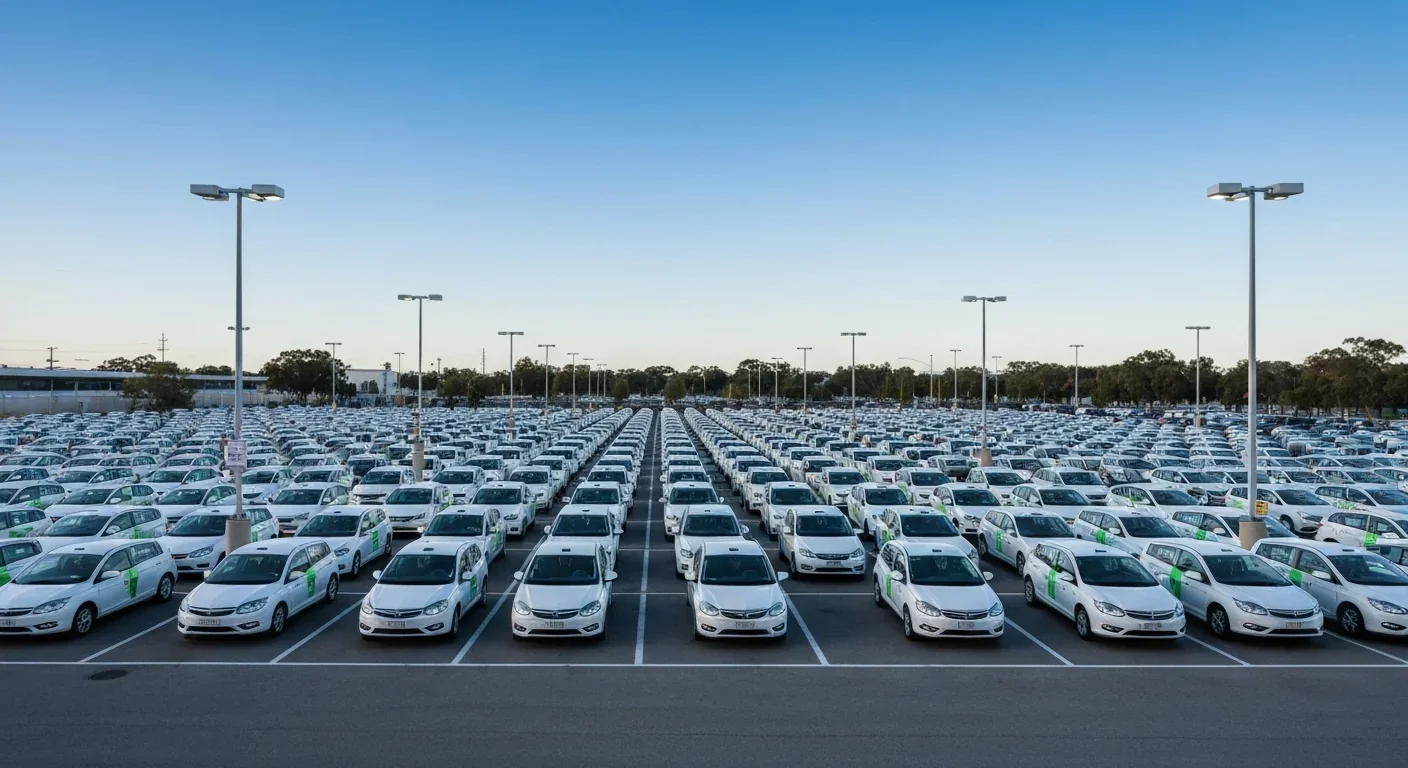
Research shows the sharing economy often increases total resource consumption through the Jevons paradox and rebound effects. Ride-sharing adds billions of vehicle miles, co-working spaces use more energy per worker, and diffused responsibility erodes conservation behavior. Breaking the paradox requires congestion pricing, accountability design, and matching sharing models to appropriate resource types.

Psychological reactance theory explains why banning or restricting things makes people want them more. From Prohibition to the Streisand effect to scarcity marketing, research shows that threatening people's freedom reliably backfires, and autonomy-supportive communication is far more effective.

A carnivorous pitcher plant in Borneo evolved to house bats instead of trapping insects, gaining up to 95% of its nitrogen from bat guano. The plant even built an ultrasonic reflector to help bats find it, revealing that carnivory in plants is a flexible spectrum.
The quantified self movement began as a hacker-ethos pursuit of personal insight, but corporate wearables now funnel biometric data to employers, insurers, and data brokers. With 81% of Americans wrongly believing health apps are HIPAA-protected, a regulatory void enables health data to be sold for pennies while generating anxiety instead of empowerment.

CXL memory pooling lets servers dynamically share DRAM over a cache-coherent interconnect, eliminating the 40% stranded memory waste in data centers. With commercial hardware now shipping and Azure deploying CXL cloud instances, this technology promises to cut memory costs by 50% while enabling composable infrastructure.

Loading featured articles...