Self-Tracking to Surveillance: Quantified Self's Fall

Self-Tracking to Surveillance: Quantified Self's Fall

The Authenticity Tax: How Being Yourself Became Labor
The Vacancy Paradox: Empty Homes and Homelessness

How Engagement Algorithms Turn Social Media Into Outrage

Data Dignity: Should You Own Your Personal Data?

The Great Log-Off: Why Millions Quit Social Media
TL;DR: Mutual aid networks are reimagining community support through horizontal cooperation, demonstrating that neighbors can coordinate resources and meet needs faster than government systems. From community fridges to disaster relief, these grassroots networks complement welfare states while building collective power.
When Hurricane Helene knocked out Asheville's water supply in 2024, government relief took days to arrive. But within hours, neighbors had already mobilized. Be Well AVL mapped every working well in the region, coordinated volunteer drivers, and distributed thousands of gallons to elderly residents and families with infants. No paperwork, no means testing, no waiting for FEMA. Just people helping people because they understood something governments often forget: crises don't wait for bureaucracy.
This wasn't charity. It was mutual aid, and it's quietly rewriting the rules of how communities take care of their own.
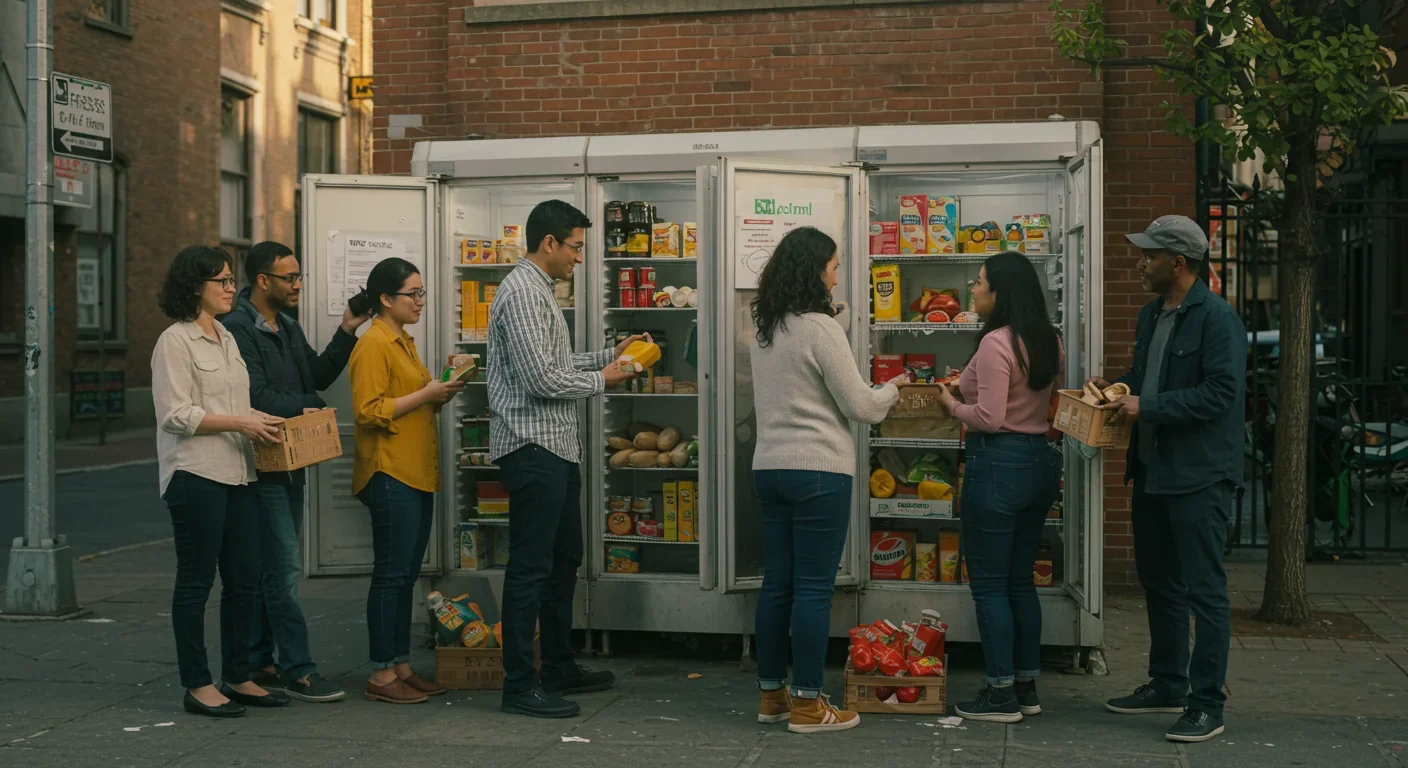
Walk into any community fridge in Brooklyn, Oakland, or Chicago and you won't find donation forms or eligibility requirements. Take what you need, leave what you can. It sounds simple because the philosophy behind it is: mutual aid operates on reciprocity, not hierarchy.
Dean Spade, author of Mutual Aid: Building Solidarity During This Crisis, draws a sharp line between mutual aid and traditional charity. Charity flows downward from those with resources to those deemed deserving. Someone decides who qualifies, what they receive, and often attaches strings. State welfare systems formalize this through bureaucracy, means testing, and surveillance. You prove your poverty to earn help.
Mutual aid rejects that entire framework. It's horizontal cooperation among equals who recognize shared vulnerability. When organizers set up a community fridge, they're not positioning themselves as saviors. They're acknowledging that any of them could need that food next month, and that collective resilience beats individual precarity every time.
Mutual aid operates on reciprocity, not hierarchy. You're not a case file - you're a community member with inherent dignity and something to contribute.
This philosophical distinction matters because it changes outcomes. Research on mutual aid during COVID-19 found that participants reported higher subjective well-being not just from receiving help, but from giving it. Reciprocity dignifies both sides of the exchange in ways charity never can. You're not a case file. You're a community member.
The mechanics of mutual aid are deceptively straightforward, which is part of their power. During the pandemic, thousands of neighborhood mutual aid networks materialized seemingly overnight. But as Spade points out, they didn't come from nowhere. They emerged from pre-existing organizing networks, activated when crisis hit.
Take the Share Food Program model that's spread across North America. Organizers identify a high-traffic location, negotiate with property owners or businesses, install a fridge or pantry shelf, and maintain it through volunteer shifts. Community members stock it with groceries, restaurants donate excess food, and anyone takes what they need. No forms, no oversight, no shame.
The system runs on trust and collective responsibility. Yes, someone occasionally empties a fridge. But organizers report that happens far less often than skeptics predict, and the benefit to hundreds of families outweighs isolated incidents. Traditional food banks, by contrast, require documentation, set pickup times, limit quantities, and serve fewer people with far more infrastructure.
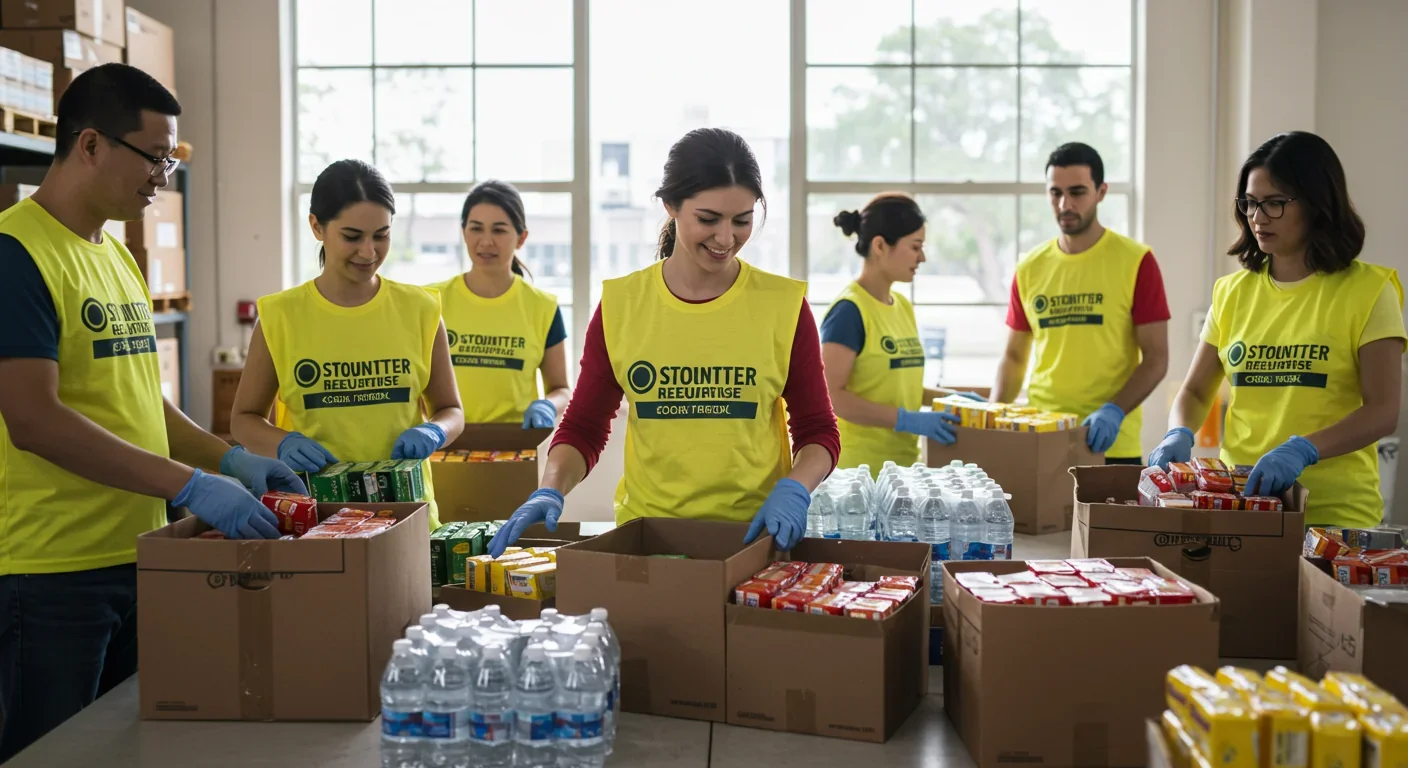
Mutual Aid Disaster Relief demonstrates how these principles scale during emergencies. When hurricanes, wildfires, or floods hit, they deploy horizontal coordination networks instead of top-down command structures. Local residents direct relief efforts because they know their communities. Volunteers report directly to those affected, not distant administrators. Aid flows to whoever needs it, not whoever navigated the paperwork fastest.
The Louisiana mutual aid networks profiled in a 2025 study coordinated communication through overlapping digital and analog systems. When cell towers fail, amateur radio operators relay information. When internet access is spotty, printed neighborhood maps mark resource locations. Redundancy and local knowledge trump centralized efficiency.
Americans act like mutual aid is a radical new concept, but it's actually how most people survived before the mid-20th century. Fraternal societies and benefit associations were everywhere, providing what we now call social insurance through voluntary cooperation.
By 1920, one in three American men belonged to a fraternal lodge that offered sickness benefits, death benefits, and unemployment support. Friendly societies in Britain covered nine million members before the National Health Service existed. Mutualistas in Mexican-American communities provided health care, funeral expenses, and legal aid when public systems excluded them entirely.
These weren't charities - they were insurance pools where members paid dues and received benefits. The model worked because risk was genuinely shared. Everyone contributed, everyone could draw on the fund, and nobody profited from denying claims.
The welfare state that emerged after the Great Depression replaced most of these systems with government programs. The transition brought scale and standardization, but it also broke the reciprocal bonds that made mutual aid sustainable. People became taxpayers funding services for others, not participants in shared risk pools.
Some mutual aid networks never disappeared. Health sharing ministries have operated continuously since the 1980s, using mutual aid principles to pool medical costs outside the insurance system. They now cover over a million Americans, though their religious requirements limit who can participate.
If you want to understand mutual aid's potential, study the Black Panther Party's Survival Programs. Between 1969 and 1980, they ran what effectively functioned as a parallel welfare state in Black communities that government systems had abandoned.
The Free Breakfast for Children Program started in Oakland in 1969 with donations from a local grocery store. Within a year, Panthers were feeding 20,000 children daily across 45 cities. They didn't wait for grants or permission. They commandeered church basements, recruited volunteers, negotiated wholesale food prices, and served hot meals before school every morning.
"The Black Panthers proved mutual aid could operate at scale with minimal resources, forcing the government to create federal programs by demonstrating unmet need so dramatically the state had to respond."
- Analysis from KQED's examination of Panther survival programs
The program forced the government's hand. By 1975, the USDA had created a federal school breakfast program, explicitly citing the Panthers' model. Mutual aid had demonstrated unmet need so dramatically that the state had to respond.
The Panthers ran dozens of other survival programs: free health clinics that served 150,000 patients, free clothing distribution, senior escort services, legal aid clinics, and ambulance services. They created what organizers called "survival pending revolution," meeting immediate needs while building capacity for larger transformation.
The lessons from this era remain relevant. The Panthers proved mutual aid could operate at scale with minimal resources. They showed that parallel systems can pressure governments to expand services. And they demonstrated that mutual aid works best when connected to larger movements for systemic change, not as a permanent substitute for state responsibility.
This is where advocates and skeptics diverge sharply. Can localized, voluntary networks genuinely meet needs that complex welfare states struggle to address? The evidence is mixed but instructive.
Community fridges now operate in over 100 US cities, many serving neighborhoods food banks can't reach. They're open 24/7, require no identification, and offer fresh produce traditional food banks rarely stock. But they depend entirely on volunteer labor and donations, making them vulnerable to burnout and inconsistent supply.
The COVID-19 mutual aid explosion revealed both strengths and limits. Networks mobilized faster than government programs, reaching isolated elderly residents and undocumented immigrants excluded from federal aid. They provided personalized support like prescription pickups and pet care that bureaucracies never would. But they couldn't replace unemployment benefits or eviction moratoriums. Mutual aid excelled at filling gaps, not replacing entire systems.
Research from the Urban Institute identifies infrastructure challenges that limit scaling: groups need fiscal sponsorship to accept donations, insurance for events, legal structures that protect organizers, and accessible coordination tools. Most mutual aid networks operate without these basics, limiting their capacity.
Sustainability presents another challenge. Studies of long-term mutual aid groups find that successful ones either formalize into nonprofits (gaining resources but losing horizontal structure) or remain small and volunteer-run (maintaining philosophy but limiting reach). The middle ground is precarious.
But framing mutual aid as competing with welfare states misses how it works best. The most effective networks operate in relationship to government systems, not in opposition.
Mutual Aid Disaster Relief doesn't try to replace FEMA. They move faster, reach isolated communities, and center affected residents' priorities in ways government agencies can't. Then they connect people to federal programs, advocate for policy changes based on field observations, and pressure officials to improve response systems. They complement and critique simultaneously.
Community fridges demonstrate how mutual aid addresses problems welfare systems create. Food banks require transportation, operate limited hours, and often provide nutritionally poor options. Fridges eliminate these barriers through distributed access and community-sourced fresh food. They don't replace food banks - they fill the gaps food banks leave by design.
The most effective mutual aid networks don't compete with government systems - they complement them, fill their gaps, and use on-the-ground credibility to demand better policies.
The Louisiana networks pioneered an integration model where mutual aid coordinates immediate relief while advocating for long-term infrastructure investment. After hurricanes, they distribute supplies, then leverage their on-the-ground credibility to demand levee improvements and equitable rebuilding. The disaster response funds the organizing that changes systems.
Political philosopher Peter Kropotkin, whose 1902 book Mutual Aid influenced contemporary organizers, argued that cooperation and mutual aid are as fundamental to evolution as competition. Modern networks apply this insight: they demonstrate that another way of meeting needs is possible, which itself becomes political.
Technology shapes mutual aid's future in contradictory ways. During COVID, spreadsheets and Signal groups enabled rapid coordination at unprecedented scale. But digital organizing also created new exclusions.
The elderly residents most needing pandemic support often lacked smartphones or internet access. Networks developed hybrid systems: phone trees backed up digital tools, physical bulletin boards supplemented online forms, and designated tech-savvy volunteers bridged gaps. Louisiana organizers found that the most resilient networks maintained both digital and analog infrastructure.
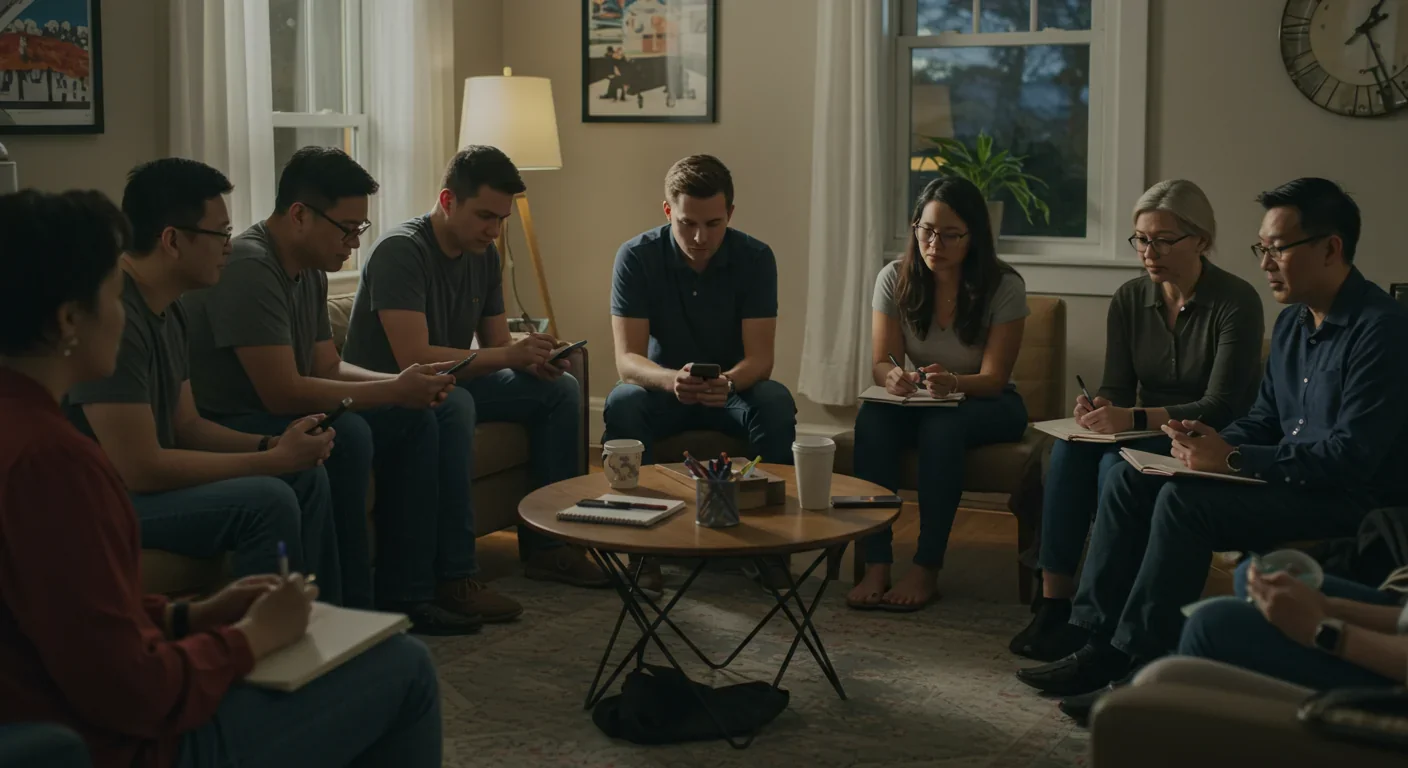
Platform dependence presents another risk. When mutual aid groups organize through corporate social media, they're vulnerable to algorithmic suppression, account deactivation, and terms-of-service changes. Some networks are building independent communication infrastructure, but that requires technical capacity most groups lack.
The research on community fridges shows how digital tools can document impact without bureaucratizing operations. Coordinators use simple shared calendars for maintenance shifts, local social media to announce restocking, and group chats for troubleshooting. The technology facilitates rather than replaces in-person relationships.
Romanticizing mutual aid ignores real reasons the welfare state emerged. Pre-New Deal fraternal societies often excluded women, people of color, and those with pre-existing conditions. Voluntary systems proved inadequate during the Great Depression when mass unemployment overwhelmed mutual insurance pools. Government programs brought universality and scale that voluntary networks couldn't match.
Contemporary mutual aid faces similar constraints. Networks in affluent neighborhoods can mobilize more resources than those in poor communities, potentially reinforcing inequality. Relying on volunteer labor exploits (often unpaid, often women's) work that might deserve compensation. And focusing on local mutual aid can deflect pressure for universal public programs.
"Mutual aid can become 'survival capitalism,' where communities are forced to self-organize because states have abandoned responsibility. The neoliberal state loves volunteers doing work it should fund."
- Critique from social work scholarship on abolition and care systems
Critics from social work scholarship argue that mutual aid, while valuable, can become what they call "survival capitalism," where communities are forced to self-organize because states have abandoned responsibility. The neoliberal state loves volunteers doing work it should fund.
The counterargument, articulated by organizers like Dean Spade, is that mutual aid builds power while meeting needs. It's not either/or. Communities can organize mutual aid networks and demand robust public systems. The organizing itself creates constituencies that fight for better policy.
The deeper question isn't whether mutual aid can replace welfare states. It's what mutual aid reveals about how we want to organize care.
Abolition scholars see mutual aid as prefigurative - it models the caring relationships they want to build while dismantling punitive systems. When people organize bail funds through mutual aid, they're not just freeing individuals from jail. They're demonstrating that communities can ensure court appearance without caging people, challenging the premise of the entire cash bail system.
Degrowth advocates point to mutual aid as essential infrastructure for societies learning to thrive within ecological limits. If endless economic growth becomes impossible, communities will need robust systems for sharing resources and meeting needs without relying on market exchange. Mutual aid offers templates for that transition.
Anarchist organizers view mutual aid as training ground for horizontal decision-making and non-hierarchical coordination. Each successful project proves people can organize complex operations without bosses, building capacity for larger transformations. The community fridge isn't just feeding people - it's teaching participants they can run things themselves.
These visions extend beyond immediate crisis response. Some mutual aid networks are experimenting with mutual aid for housing, pooling resources to buy properties collectively. Others coordinate time banking, where services trade outside the cash economy. The principle scales differently for different needs, but the core logic holds: people cooperating voluntarily can meet each other's needs in ways that build community rather than manage populations.
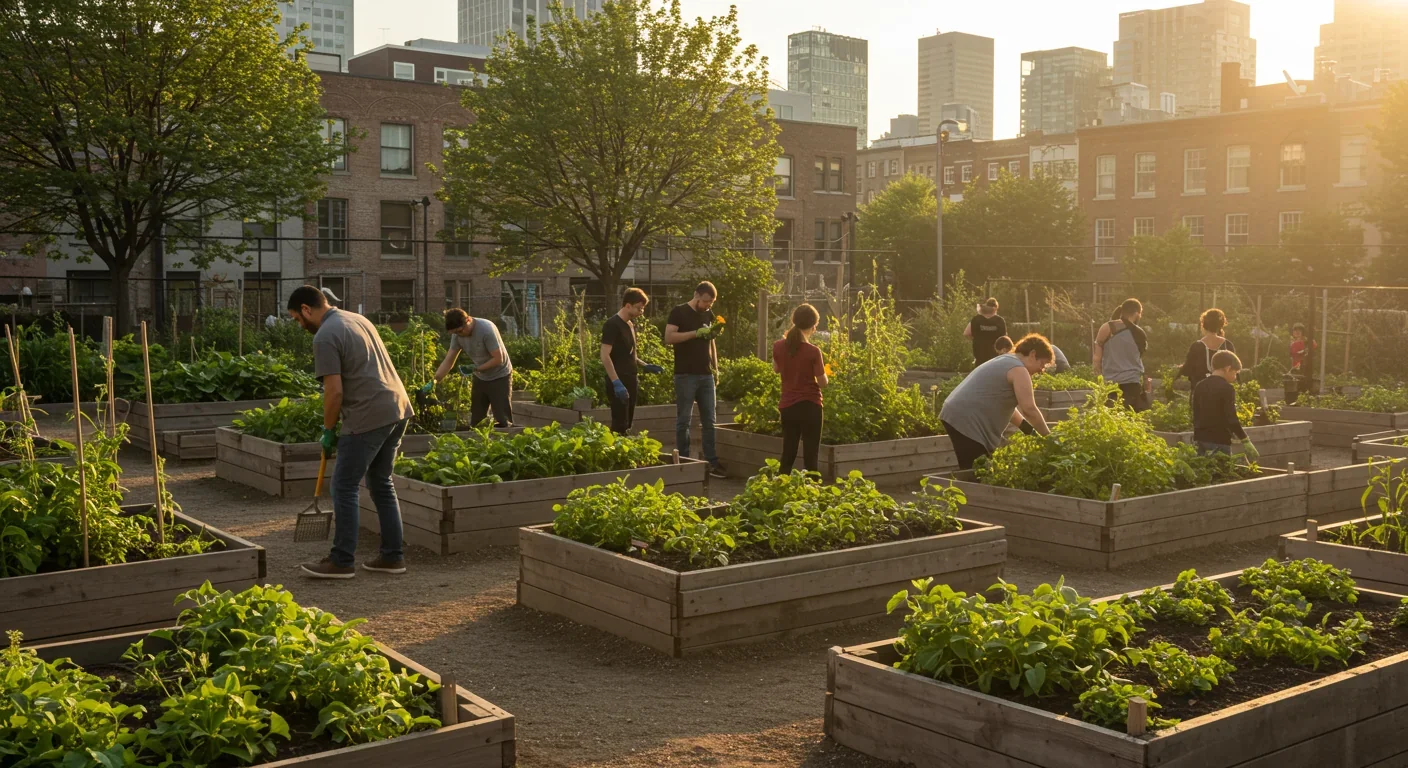
If mutual aid interests you - whether as someone needing support or wanting to organize - successful networks offer clear lessons.
Start hyperlocal. The most sustainable networks organize building-by-building or block-by-block, where people already know each other. Face-to-face relationships survive crises better than digital connections.
Build slowly and consistently. Crisis-sparked networks often collapse when urgency fades. Groups that establish regular rhythms - weekly food distributions, monthly skill shares, standing meeting times - develop the trust and structure to scale when needed.
Stay horizontal but designate roles. Successful mutual aid groups avoid rigid hierarchy but create clear responsibilities: someone coordinates schedules, someone manages finances transparently, someone communicates with partners. Rotating these roles prevents burnout and concentrations of power.
Connect local organizing to movement infrastructure. The Urban Institute research shows that mutual aid groups thrive when they can access fiscal sponsorship, legal support, and coordination networks. Reinventing all these systems locally wastes energy better spent on actual aid.
The most sustainable mutual aid networks start hyperlocal, build consistently, stay horizontal while designating clear roles, and connect to broader movement infrastructure rather than reinventing everything.
Be honest about limitations. Organizers emphasize that mutual aid can't and shouldn't replace robust public systems. It excels at building relationships, filling immediate gaps, and demonstrating alternatives. It struggles with scale, consistency, and addressing structural inequalities. Both things are true.
Mutual aid operates in permanent tension with state power. It proves communities can meet needs collectively, which threatens narratives that only governments or markets can coordinate resources. When mutual aid succeeds, it raises uncomfortable questions about why official systems fail.
But mutual aid also risks becoming what sociologists call "responsibilization," where neoliberal states cut services and celebrate voluntary networks picking up the pieces. The UK's 2020 mutual aid surge was heartwarming, but it also let the government off the hook for pandemic failures.
Dean Spade threads this needle by insisting mutual aid must remain explicitly political. It's not charity work that makes us feel good - it's building alternative power structures while demanding states do better. The community fridge feeds people and becomes a base for organizing tenants' unions that fight for housing justice.
This dual character explains why mutual aid attracts both anarchists who want to abolish state power and reformers who want to democratize it. Both see mutual aid as building collective capacity, though they differ on what comes next.
The mutual aid surge during COVID didn't vanish when case counts dropped. Many networks matured into permanent community infrastructure, now addressing housing, climate disasters, immigration enforcement, and chronic needs the pandemic highlighted but didn't create.
Climate change practically guarantees more disasters, which means more opportunities for mutual aid to demonstrate what coordination from below looks like. As state capacity strains under climate migration and infrastructure failures, the question becomes whether communities build mutual aid networks proactively or scramble reactively each crisis.
The digital coordination infrastructure continues evolving. What organizers learn about resilient communication during hurricanes translates to other contexts. What community fridges teach about low-barrier access informs other services. The knowledge itself circulates through mutual aid networks.
Political context matters enormously. Periods when state systems contract create both need and opportunity for mutual aid. But they also strain the volunteer capacity mutual aid requires. The balance between crisis response and sustainable organizing remains every network's central challenge.
If you've never participated in mutual aid and don't anticipate needing it, why should you care? Because it's changing how a generation thinks about helping.
Young people organizing community fridges aren't just addressing food insecurity. They're learning that they can identify problems and implement solutions without waiting for permission. They're building political consciousness through practice rather than theory. They're creating social infrastructure that will outlast individual campaigns.
When organizers describe mutual aid as "survival pending revolution," they mean it literally. Meet people's needs now, build power for transformation later. The same relationships that coordinate grocery deliveries can organize rent strikes. The same trust networks that distribute water after disasters can mobilize for climate action.
Mutual aid also challenges the learned helplessness modern society cultivates. We're trained to believe only experts and officials can solve problems, that ordinary people should stay in their lanes. Every successful mutual aid project disproves that story. Turns out neighbors with spreadsheets and solidarity can coordinate logistics that bureaucracies take months to organize.
This matters as larger systems destabilize. Whether the pressure comes from pandemics, climate disasters, economic shocks, or political upheaval, communities with strong mutual aid capacity will weather crises better than those waiting for official responses.
That capacity doesn't materialize overnight. It grows through practice, through regular interactions that build trust before emergencies hit. The neighborhood that runs a weekly community meal has infrastructure ready to activate when someone loses their job or a storm knocks out power.
The question isn't whether mutual aid will replace the welfare state. It won't and probably shouldn't. The question is whether we'll build robust mutual aid networks alongside advocating for robust public systems, because history suggests we'll need both in the decades ahead.
And if you're wondering whether mutual aid could work in your neighborhood, the answer is probably yes. Because it already is, somewhere close by. The question is whether you'll notice it, join it, or start your own. The vulnerability is universal. The response might as well be collective.
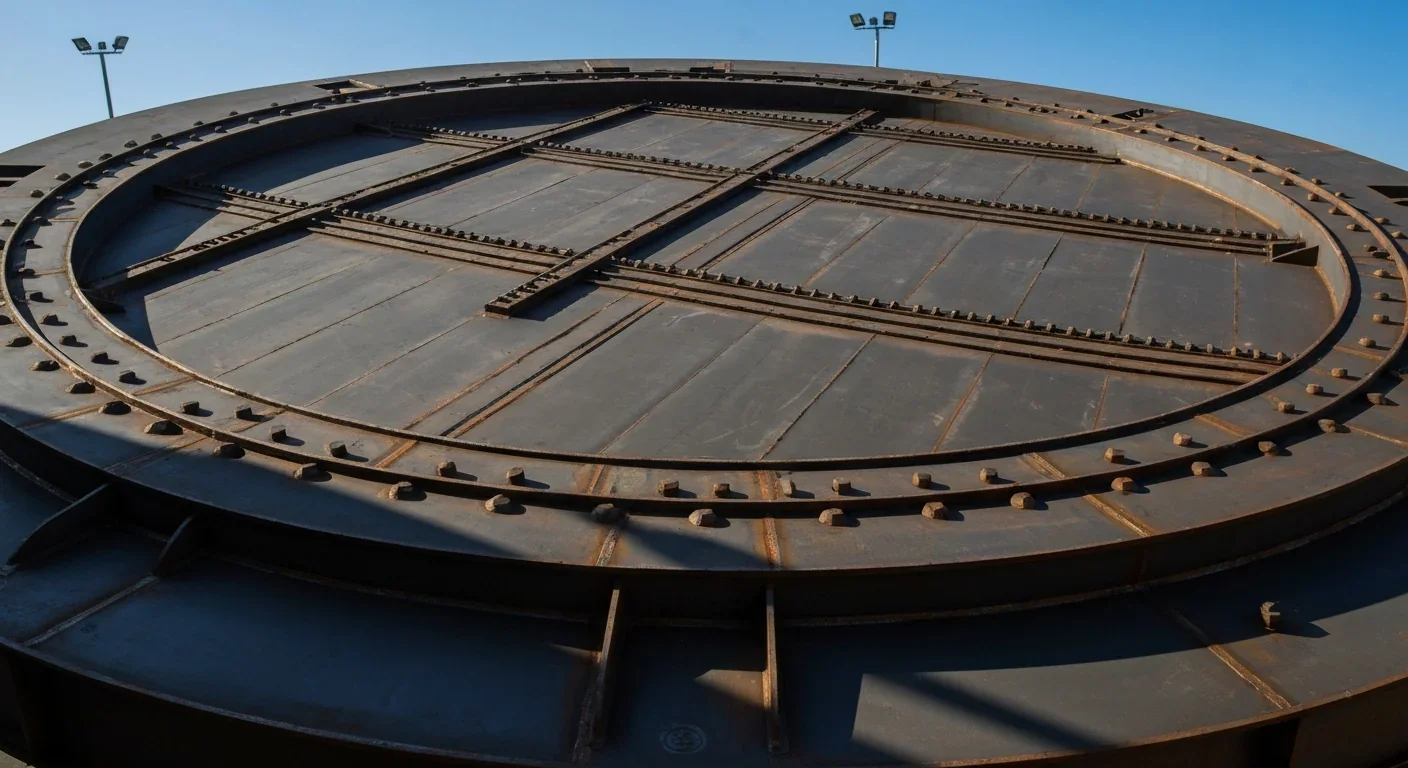
Project Orion was a real 1960s program to reach other stars by detonating 800 nuclear bombs behind a spacecraft. The physics worked and the engineering was feasible, but the 1963 nuclear test ban treaty killed it. It remains the most credible interstellar spacecraft ever designed.
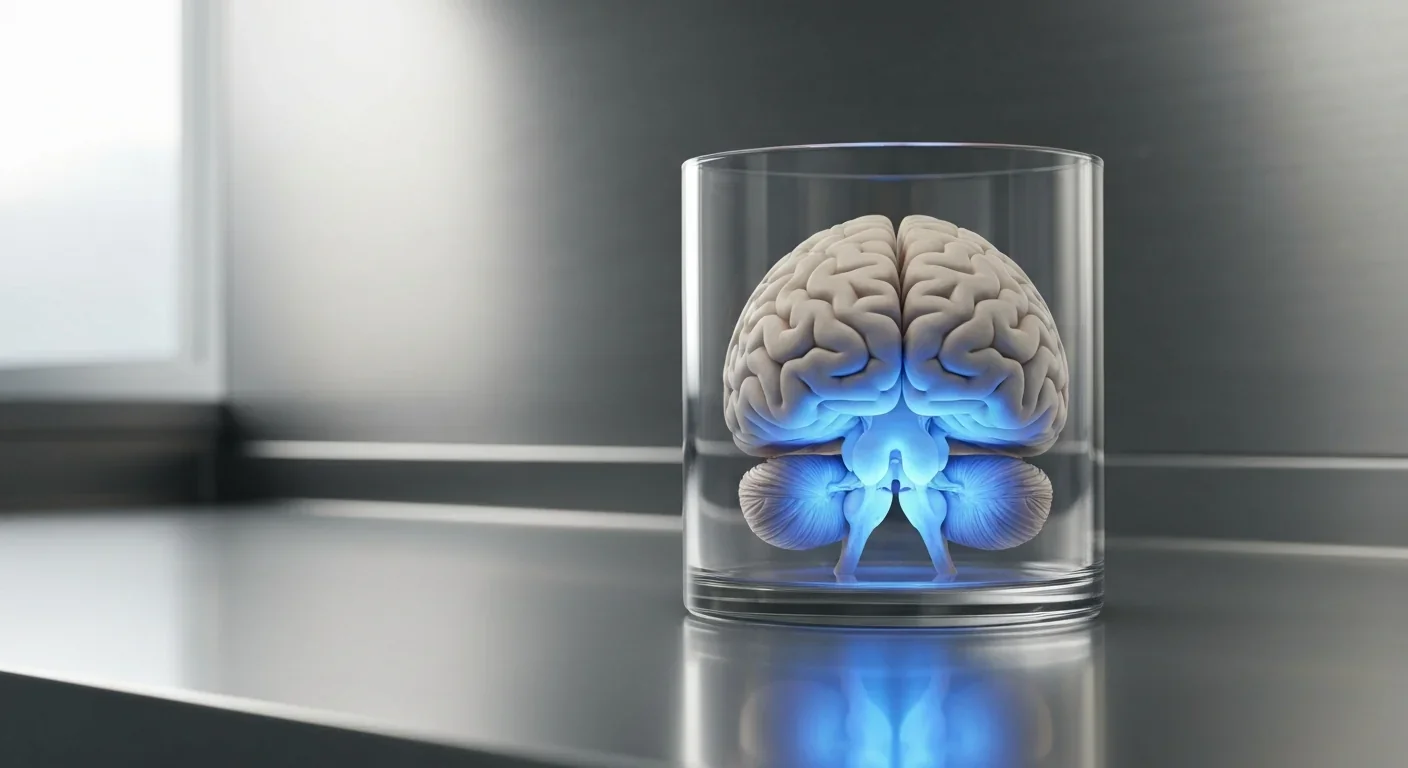
The locus coeruleus, a tiny brainstem structure, degenerates decades before Alzheimer's symptoms appear. Its loss cripples the brain's inflammation control, waste clearance, and sleep regulation. New imaging tools and noradrenergic therapies offer hope for early detection and prevention.
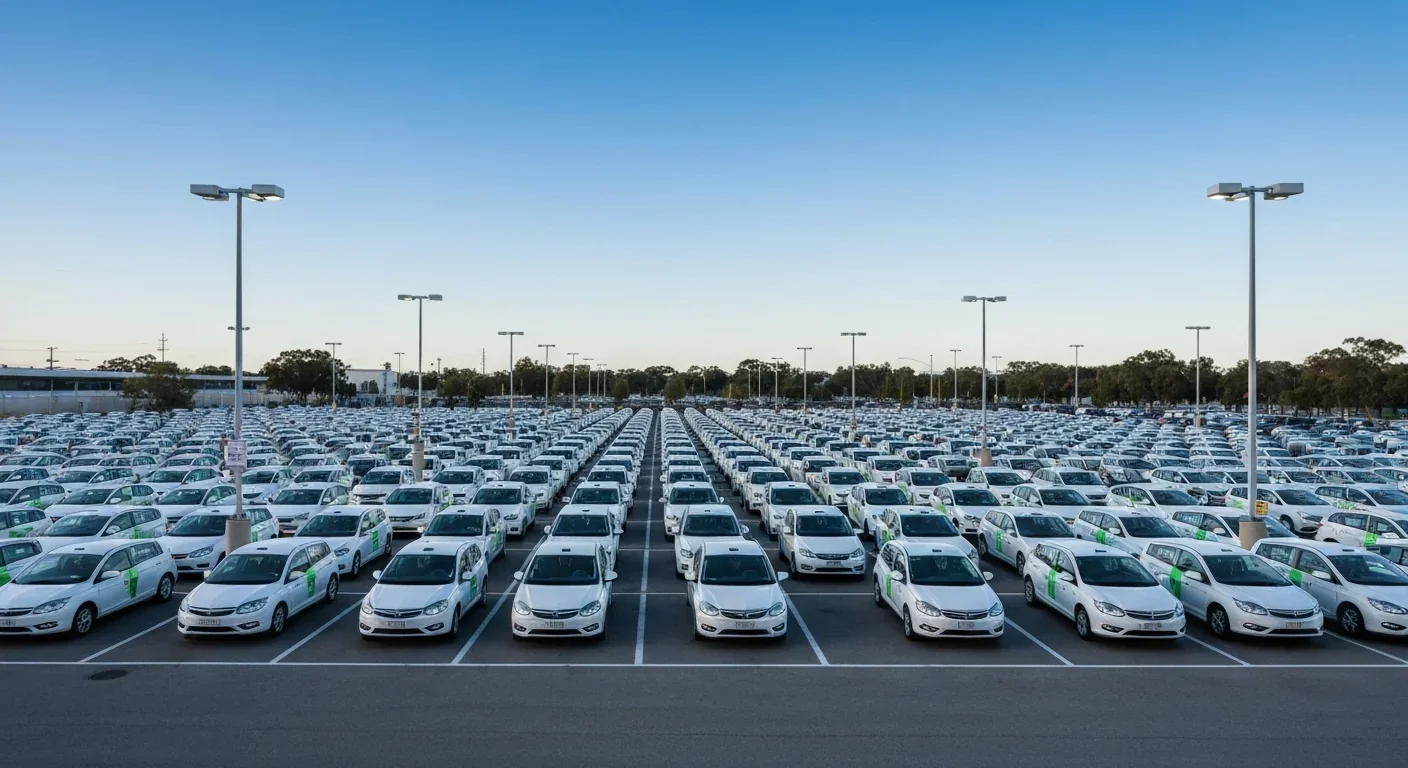
Research shows the sharing economy often increases total resource consumption through the Jevons paradox and rebound effects. Ride-sharing adds billions of vehicle miles, co-working spaces use more energy per worker, and diffused responsibility erodes conservation behavior. Breaking the paradox requires congestion pricing, accountability design, and matching sharing models to appropriate resource types.
Psychological reactance theory explains why banning or restricting things makes people want them more. From Prohibition to the Streisand effect to scarcity marketing, research shows that threatening people's freedom reliably backfires, and autonomy-supportive communication is far more effective.

A carnivorous pitcher plant in Borneo evolved to house bats instead of trapping insects, gaining up to 95% of its nitrogen from bat guano. The plant even built an ultrasonic reflector to help bats find it, revealing that carnivory in plants is a flexible spectrum.
The quantified self movement began as a hacker-ethos pursuit of personal insight, but corporate wearables now funnel biometric data to employers, insurers, and data brokers. With 81% of Americans wrongly believing health apps are HIPAA-protected, a regulatory void enables health data to be sold for pennies while generating anxiety instead of empowerment.

CXL memory pooling lets servers dynamically share DRAM over a cache-coherent interconnect, eliminating the 40% stranded memory waste in data centers. With commercial hardware now shipping and Azure deploying CXL cloud instances, this technology promises to cut memory costs by 50% while enabling composable infrastructure.

Loading featured articles...