Self-Tracking to Surveillance: Quantified Self's Fall

Self-Tracking to Surveillance: Quantified Self's Fall

The Authenticity Tax: How Being Yourself Became Labor

The Vacancy Paradox: Empty Homes and Homelessness

How Engagement Algorithms Turn Social Media Into Outrage

Data Dignity: Should You Own Your Personal Data?

The Great Log-Off: Why Millions Quit Social Media
TL;DR: College degrees promised middle-class security but credential inflation has transformed them from golden tickets to participation trophies. The wage premium fell from 79% to 75%, one-third of graduates are underemployed, and for-profit colleges accelerated the devaluation.
The promise was simple: get a degree, secure a good job, join the middle class. For decades, this equation worked. In 2000, workers with college degrees earned 68% more than high school graduates. By the mid-2010s, that premium peaked at 79%. Then something broke. Today, that advantage has fallen to 75%, and for millions of graduates, the calculation no longer adds up.
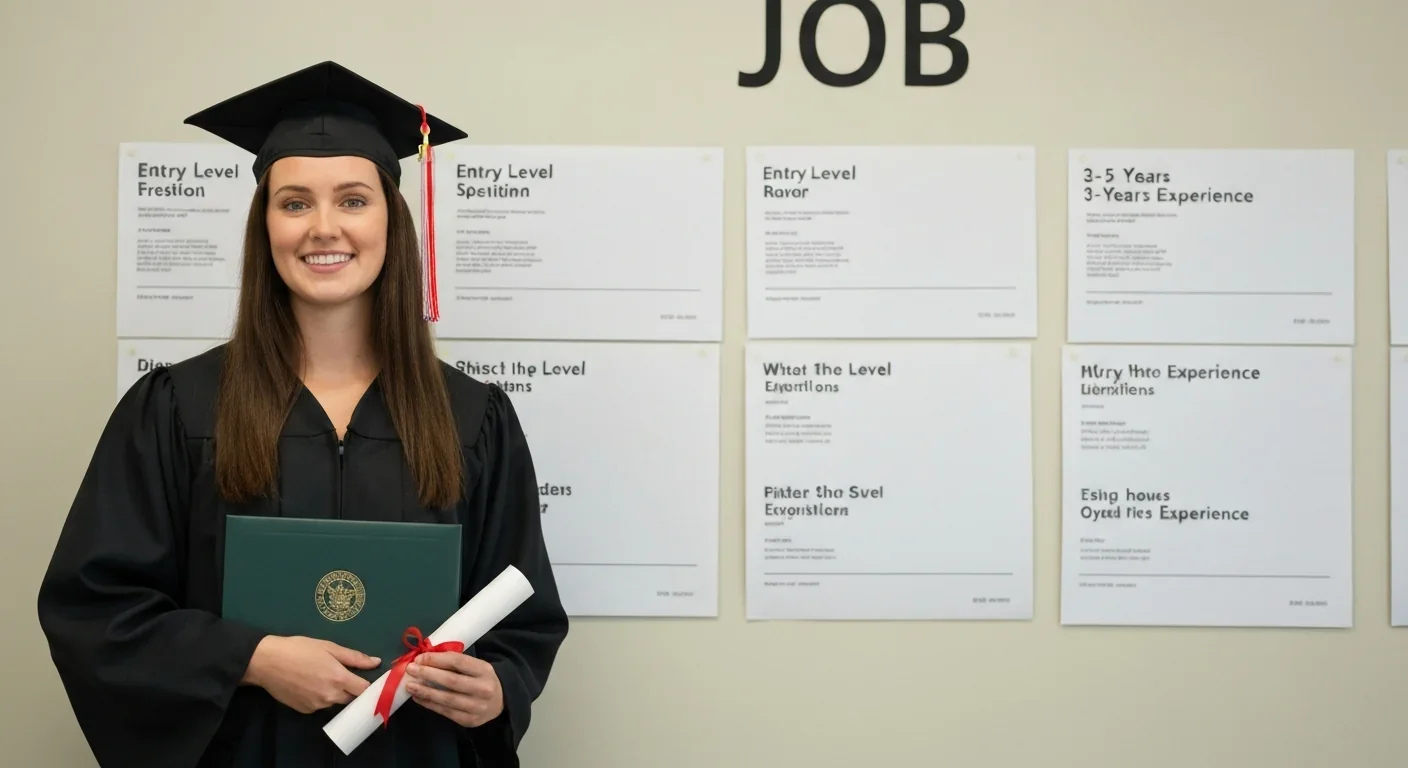
What happened wasn't a sudden crash. It was credential inflation - a slow-motion devaluation that turned bachelor's degrees from golden tickets into participation trophies. The forces behind this shift are complex: universities expanded enrollment, for-profit colleges flooded the market with dubious credentials, and employers started using degrees as crude screening tools rather than actual skill indicators. The result? About one-third of all college graduates are underemployed, working jobs that don't require the degrees they spent years earning.
This isn't just an economic puzzle. It's a generational crisis that's reshaping how we think about education, work, and social mobility.
The expansion of higher education seemed like progress. More people getting degrees meant more opportunity, right? Not exactly. Between 1980 and 2020, the proportion of Americans with bachelor's degrees nearly tripled. Universities built new campuses, online programs proliferated, and for-profit colleges advertised heavily to working adults.
But the job market didn't expand at the same pace. The mismatch created what economists call credential inflation - when educational requirements rise without corresponding increases in job complexity. A 2014 study found that 65% of job postings for executive secretaries now require bachelor's degrees, even though only 19% of people currently doing those jobs have one.
Think about that disconnect. The work hasn't changed. The credential requirement has.
When 65% of executive secretary postings require degrees but only 19% of current workers have them, you're not measuring qualification - you're measuring credential inflation.
This dynamic plays out across industries. Entry-level positions that once required high school diplomas now demand bachelor's degrees. Jobs that asked for bachelor's degrees now prefer master's. The ladder keeps rising, but workers aren't climbing higher - they're just running faster to stay in place.
The massification of higher education was supposed to democratize opportunity. Instead, it created a new form of inequality: those who can afford multiple degrees versus those drowning in debt for credentials that don't deliver promised returns.
Not all degrees are created equal, and nowhere is this clearer than in the for-profit college sector. These institutions capitalized on credential hunger, targeting people of color and low-income students with promises of flexible schedules and career advancement.
The reality was grimmer. For-profit colleges typically have lower graduation rates, higher costs, and fewer student services than nonprofit institutions. Students borrowed heavily - often more than $30,000 - for degrees that employers viewed skeptically. Many ended up worse off than when they enrolled, carrying debt without the credential value to justify it.

At the extreme end sit diploma mills: operations that sell degrees with minimal or no academic requirements. While obviously fraudulent, they reveal something important about credential inflation. When degrees become commodities rather than achievements, the temptation to shortcut the process grows. The global financial impact of academic fraud reaches into the billions, undermining legitimate credentials across the board.
The for-profit sector didn't create credential inflation alone, but it accelerated the process. By flooding the market with graduates - many poorly prepared - these institutions contributed to both the supply glut and the quality skepticism that now surrounds all degrees.
Even legitimate institutions played a role. As universities competed for students, many lowered admission standards and inflated grades. The average GPA at American colleges has risen steadily for decades. When everyone graduates with honors, what does honor mean?
The numbers tell a stark story. That 75% wage premium sounds substantial until you account for student debt, opportunity costs, and underemployment. The average graduate carries $30,000 in loans. At 5% interest over ten years, that's roughly $318 monthly - nearly $38,000 in total payments.
For many, the math doesn't work out. Recent studies show that Gen Z men with college degrees have unemployment rates approaching those of non-graduates - a development that would have seemed impossible a generation ago. The degree isn't failing to launch careers; it's becoming irrelevant to the launch entirely.
"Our findings suggest that historically tight labour markets in recent years have changed relative wages, possibly altering the perceived benefits of a college education."
- San Francisco Federal Reserve Economic Letter
What's driving this shift? Partly it's demographics. High school graduates have seen faster wage growth since 2011 than college graduates, particularly among Black and Hispanic workers. Tight labor markets have raised wages at the bottom, narrowing the gap from below rather than the top falling.
But there's also a supply problem. When everyone has a bachelor's degree, it stops being a differentiator. Employers need new signals to separate candidates, which leads to credential creep: master's degrees for jobs that once required bachelor's, specialized certifications on top of formal education, unpaid internships as gatekeeping mechanisms.
The irony is brutal. Students pursue degrees to stand out in the job market, but the collective effect of millions making the same calculation is that nobody stands out. The advantage they're buying disappears the moment everyone else buys it too.
Consider the underemployment rates by major. Liberal arts graduates face underemployment above 50%. Even STEM fields - supposedly recession-proof - now show significant underemployment. The STEM education bubble has burst, leaving computer science graduates competing for entry-level positions that could have been filled with associate degrees.
Economists have long understood degrees as signals - ways for workers to demonstrate ability and commitment to potential employers. The theory, developed by Nobel laureate Michael Spence, suggests that education functions as a costly signal that separates high-ability workers from low-ability ones.

But signals only work when they're expensive enough to be meaningful. As degrees became ubiquitous, the signal degraded. Employers responded in predictable ways: they started using degrees as crude screening mechanisms rather than genuine qualifications assessments. The bachelor's degree became a checkbox, a way to reduce the resume pile without actually evaluating candidates.
This creates perverse outcomes. Qualified workers without degrees get filtered out automatically. Recent graduates with degrees but no experience can't get interviews. The degree serves neither group well - it's just a bureaucratic hurdle that costs students years and tens of thousands of dollars.
The screening function also reveals why credential inflation is self-perpetuating. When employers require degrees for jobs that don't need them, they force workers to get credentials. Those workers then compete for jobs, making degrees even more necessary. The cycle feeds itself, with each generation requiring more education to achieve what the previous generation got with less.
Some employers are waking up to this dysfunction. In January 2024, 52% of job postings had no formal educational requirement, up significantly from five years earlier. The explicit four-year degree requirement fell from 20.4% to 17.8%. Companies like IBM, Google, and Delta Airlines have led the shift, removing degree requirements and focusing on skills assessments.
The backlash against credentialism is gaining momentum. In 2023, 55% of companies surveyed reported eliminating bachelor's degree requirements for some roles, with 70% focusing on entry-level positions. States are joining in: Maryland, New Jersey, and Virginia have removed degree requirements for many public-sector jobs.
This shift toward skills-based hiring represents more than policy tinkering. It's a fundamental rethinking of how we match people to work. Instead of using degrees as proxies for ability, companies are testing actual skills - coding challenges for programmers, work samples for designers, simulations for managers.
In 2023, 55% of companies eliminated bachelor's degree requirements for some roles. The counter-revolution against credentialism is underway.
The movement has limits, though. As the Brookings Institution notes, there's more to skills-based hiring than just removing degree requirements. Companies need robust assessment systems, training programs for workers without formal credentials, and willingness to invest in talent development rather than buying ready-made graduates.
Some workers are bypassing traditional education entirely. Registered apprenticeships offer paid training that culminates in recognized credentials. Coding bootcamps promise job-ready skills in months rather than years. Online platforms like Coursera and edX allow people to learn specific skills without enrolling in degree programs.
These alternatives address credential inflation from the supply side. If workers can get jobs without degrees, demand for expensive traditional education should fall. But cultural inertia is powerful. Parents still push children toward college. High schools measure success by acceptance rates. The signaling value of degrees, however degraded, persists.
The tension between skills and credentials plays out differently across demographics. Asian workers still earn a college wage premium of about 120% - roughly double other racial groups. For them, degrees still function as effective signals. But for Black and Hispanic workers, the premium has fallen sharply, suggesting that credential inflation affects disadvantaged groups disproportionately.

Credential inflation isn't uniquely American. The massification of higher education has swept through developed and developing nations alike, each grappling with similar contradictions between access and value.
The United Kingdom has seen undergraduate enrollment surge while graduate outcomes stagnate. Some observers wonder whether massification has driven UK higher education to the end of the road, with degrees losing value even as universities expand. The country faces the same paradox: more education leading to less differentiation.
Developing countries face even starker trade-offs. Expanding higher education competes with other development priorities - infrastructure, healthcare, basic education. When resources are limited, producing large numbers of graduates who can't find skilled employment wastes scarce capital. Yet political pressure to expand access remains intense, creating challenges unique to massification in developing contexts.
Germany offers an alternative model. The country's dual education system combines classroom learning with apprenticeships, creating pathways to skilled work without requiring university degrees. Technical careers carry less stigma than in the US, and vocational training is rigorous and respected. The system isn't perfect - it tracks students early, sometimes reinforcing inequality - but it avoids some of the credential inflation plaguing degree-obsessed societies.
Switzerland, Austria, and Denmark have similar systems. In these countries, roughly half of young people pursue vocational rather than academic paths. The results include lower youth unemployment, less student debt, and better matches between education and employment.
Could such systems work elsewhere? The challenge is cultural. American society equates college with success in ways that make vocational alternatives seem like second-best options. Changing that requires more than policy reform; it requires rethinking what we value and how we define achievement.
The statistics on graduate underemployment tell a troubling story. Roughly one-third of college graduates work in jobs that don't require their degrees. But the numbers vary dramatically by major, time since graduation, and economic conditions.
Recent college graduates bear the brunt of labor market shifts. When recessions hit, employers freeze hiring and raise requirements. Entry-level positions disappear or get reclassified as requiring experience. New graduates find themselves competing with experienced workers for jobs they would have easily gotten in better times.
The jobs and degrees of underemployed graduates reveal the mismatch. English majors working retail. Biology graduates doing administrative work. Business degrees leading to sales positions that require nothing beyond a high school education and personality.
"The college wage premium peaked in the mid-2010s at about 79% before falling to about 75% in 2022."
- San Francisco Federal Reserve Economic Letter
This underemployment has consequences beyond immediate wages. Workers in jobs below their skill level miss opportunities to develop expertise, build professional networks, and advance careers. The longer someone stays underemployed, the harder it becomes to break into positions matching their credentials. What begins as a temporary setback can become a permanent ceiling.
The psychological toll matters too. Students invest years in education, often going into debt, based on promised returns. When those returns don't materialize, the result isn't just financial stress - it's a sense of betrayal. The social contract around education has broken, and graduates know it.
Some argue that underemployment statistics overstate the problem because they don't capture learning, critical thinking, and civic benefits of education. College isn't just job training, this view holds; it's human development. But that defense rings hollow to graduates making loan payments on barista wages. When the financial burden is real and immediate, abstract benefits feel like consolation prizes.
Student debt transforms credential inflation from an economic inefficiency into a crisis. The average graduate owes $30,000, but many owe far more - $50,000, $75,000, even $100,000 for advanced degrees. These sums are manageable with high-paying jobs but crushing with underemployment or unemployment.

The relationship between debt and credentials creates vicious cycles. Students borrow to get degrees they need to compete for jobs. But the degrees don't guarantee jobs, leaving graduates with debt and no means to repay it. Default rates climb, credit scores fall, and financial stress compounds.
For-profit colleges deserve special mention here. Students at these institutions borrow heavily - often more than at traditional colleges - for credentials worth less in the job market. The Aspen Institute documented how for-profit colleges leave people of color worse off than when they enrolled, with debt burdens exceeding any wage benefits.
The Biden administration has attempted various forms of student debt relief, though legal challenges have blocked comprehensive forgiveness. But debt relief addresses symptoms, not causes. As long as credential inflation continues, future students will borrow, struggle, and demand relief in endless cycles.
A more fundamental solution requires rethinking higher education finance. Other developed countries subsidize university education, reducing or eliminating student debt. Income-driven repayment plans tie loan payments to earnings, preventing default but extending repayment periods. Free community college could provide pathways to credentials without debt.
Yet these reforms face political obstacles. Americans remain divided on whether taxpayers should fund higher education, whether students should bear the costs of degrees that benefit them individually, and whether debt relief is fair to those who already paid. The debate continues while debt grows.
Employers aren't passive victims of credential inflation - they've actively contributed to it. By using degrees as screening tools rather than assessing actual skills, companies create demand for credentials while ignoring whether those credentials relate to job performance.
This practice generates what economists call the skills mismatch crisis: employers claim they can't find qualified workers while millions of graduates can't find jobs matching their education. The problem isn't a shortage of skills; it's a failure to match skills to positions.
Part of this failure is laziness. Requiring degrees is easier than developing robust hiring processes that evaluate candidates holistically. HR departments overwhelmed with applications use education as a simple filter, regardless of whether it predicts job success.
But there's also genuine uncertainty. Employers struggle to assess soft skills - communication, problem-solving, adaptability - that matter more than technical knowledge in many roles. Degrees serve as crude proxies for these attributes, even though the correlation is weak.
The shift toward skills-based hiring aims to break this pattern. Rather than asking whether candidates have degrees, companies test whether they can do the work. Coding assessments for engineers. Writing samples for communicators. Behavioral interviews for managers.
Early results are promising. Companies like IBM and Google report that workers hired through skills-based processes perform as well as or better than traditional hires. The talent pool expands dramatically when you stop filtering by credentials and start evaluating ability.
But scaling these approaches requires investment. Skills assessments cost money to develop and administer. Training programs for workers without formal credentials need resources. Company cultures built around pedigree and prestige resist change.
The movement also faces skepticism. Some worry that removing degree requirements will reduce workforce quality. Others fear it could disadvantage workers who did invest in education, creating reverse discrimination. These concerns aren't entirely unfounded, but they also protect a status quo that serves neither workers nor employers well.
Education has long been considered an engine of social mobility - a way for talented people from modest backgrounds to climb the economic ladder. Credential inflation threatens that promise by making education necessary but not sufficient for advancement.
The pattern is clear: students from wealthy families can afford multiple degrees, prestigious universities, unpaid internships, and career risks. Students from working-class backgrounds can't. They take debt for bachelor's degrees, can't afford master's programs, need paid work instead of internships, and must accept the first job offer rather than holding out for better opportunities.
This dynamic doesn't just preserve inequality; it can entrench it. When credentials become arms races, those with resources win. The child of doctors can become a doctor through a combination of good schools, test prep, connections, and financial support. The child of factory workers faces barriers at every stage, even with equivalent talent and motivation.
When credentials become arms races, those with resources win - transforming education from an engine of mobility into a mechanism for entrenching inequality.
The result is that higher education, which should reduce inequality, increasingly reproduces it. Studies show that college remains a strong investment even with student debt, but the returns vary enormously by family background, major choice, institution quality, and labor market conditions. For students who navigate these variables successfully, education pays off. For those who don't, it's a debt trap.
Race and ethnicity complicate the picture further. The college wage premium has fallen most sharply for Black and Hispanic workers, even as Asian workers maintain high premiums. These disparities reflect broader patterns of labor market discrimination, occupational segregation, and differential access to high-value credentials and networks.
Addressing credential inflation requires interventions at multiple levels: individual decision-making, employer practices, higher education structure, and public policy.
At the individual level, students need better information about returns to different degrees and career paths. Too many choose majors based on passion or prestige without understanding employment prospects. Career counseling, transparent wage data, and honest conversations about debt burdens could improve decisions.
Employers can lead by removing unnecessary degree requirements, developing skills-based hiring processes, and investing in worker training. The 40% of companies dropping degree requirements represent a start, but broader adoption requires industry leadership and competitive pressure.
Higher education institutions should be more transparent about outcomes. Graduation rates, debt levels, employment statistics, and wage data should be easily accessible and comparable across institutions. Accountability measures could penalize schools with poor outcomes and reward those delivering strong returns.
Public policy offers several levers. Expanded Pell Grants could reduce student debt. Free community college could provide accessible pathways. Stricter regulation of for-profit colleges could prevent predatory practices. Tax incentives could encourage employer-sponsored training.
Some reformers propose more radical changes. Breaking the link between federal financial aid and accreditation could allow alternative credentials to compete. Public service loan forgiveness could be expanded. Income-share agreements - where students pay a percentage of future earnings rather than fixed loan amounts - could align education costs with outcomes.
The challenges are political and practical. Reform requires coordination across sectors - education, employment, government - that typically operate independently. Vested interests resist change: universities depend on tuition, lenders profit from debt, employers rely on credential screening.
Yet the status quo is unsustainable. As more students graduate into underemployment and debt, political pressure for reform will intensify. The question isn't whether the system will change, but how and when.
What comes after credential inflation? Several possibilities emerge from current trends and innovations.
One path is modular credentials - stackable certificates and micro-credentials that replace monolithic degrees. Instead of spending four years on a bachelor's, students could accumulate credits from multiple sources: community colleges, online platforms, employer training, apprenticeships. This flexibility could reduce costs, improve relevance, and allow workers to adapt as careers evolve.
Another approach emphasizes competency-based education - measuring what students know and can do rather than time spent in classrooms. Western Governors University pioneered this model, allowing students to progress as quickly as they demonstrate mastery. The approach could shorten time-to-degree and reduce costs while maintaining standards.
Digital credentials and blockchain-based verification might address fraud and transparency issues. If employers could instantly verify skills and accomplishments through tamper-proof digital records, the need for degree proxies could diminish. Workers could build verifiable portfolios demonstrating capabilities across contexts.
The shift toward lifelong learning recognizes that education doesn't end with formal schooling. As technology and economies change, workers need continuous skill development. Employers and governments that support ongoing learning through time off, tuition assistance, and accessible programs could help workers adapt without requiring full degree programs.
International models offer lessons. European countries with strong vocational systems show that prestigious non-university pathways can work. Asian countries with examination-based university admission demonstrate alternatives to the US focus on holistic applications and legacy preferences. Scandinavian countries with free or low-cost higher education prove that quality education doesn't require debt.
The credential inflation crisis didn't happen overnight, and it won't be solved quickly. Decades of policy choices, cultural assumptions, and economic shifts created the current dysfunction. Reversing course requires acknowledging that more education isn't always better, that degrees aren't magic tickets to prosperity, and that alternative pathways deserve respect and investment.
The good news is that change is already underway. Employers are questioning credential requirements. Students are exploring alternatives to traditional college. Policymakers are experimenting with reforms. The direction is right, even if the pace feels slow.
For today's students and workers, navigating this transition means being strategic. Understand the true costs and benefits of education. Develop verifiable skills. Build networks. Stay flexible. The rules are changing, and adaptability matters more than credentials.
For society, the challenge is ensuring that as we move beyond credential inflation, we don't abandon the genuine value of education - not just job training, but critical thinking, cultural literacy, and civic engagement. We need pathways to prosperity that don't require crushing debt, but we also need an educated citizenry capable of meeting complex challenges.
The degree glut revealed what happens when we treat education purely as private investment rather than public good, when we let markets rather than values drive learning, when we confuse credentials with capabilities. Moving forward requires rebalancing these priorities, remembering that education serves purposes beyond employment, and building systems that work for everyone, not just those who can afford to play credential arms races.
The race for diplomas bankrupted a generation. The question now is whether we'll let it bankrupt the next one too.

Project Orion was a real 1960s program to reach other stars by detonating 800 nuclear bombs behind a spacecraft. The physics worked and the engineering was feasible, but the 1963 nuclear test ban treaty killed it. It remains the most credible interstellar spacecraft ever designed.

The locus coeruleus, a tiny brainstem structure, degenerates decades before Alzheimer's symptoms appear. Its loss cripples the brain's inflammation control, waste clearance, and sleep regulation. New imaging tools and noradrenergic therapies offer hope for early detection and prevention.
Research shows the sharing economy often increases total resource consumption through the Jevons paradox and rebound effects. Ride-sharing adds billions of vehicle miles, co-working spaces use more energy per worker, and diffused responsibility erodes conservation behavior. Breaking the paradox requires congestion pricing, accountability design, and matching sharing models to appropriate resource types.

Psychological reactance theory explains why banning or restricting things makes people want them more. From Prohibition to the Streisand effect to scarcity marketing, research shows that threatening people's freedom reliably backfires, and autonomy-supportive communication is far more effective.

A carnivorous pitcher plant in Borneo evolved to house bats instead of trapping insects, gaining up to 95% of its nitrogen from bat guano. The plant even built an ultrasonic reflector to help bats find it, revealing that carnivory in plants is a flexible spectrum.
The quantified self movement began as a hacker-ethos pursuit of personal insight, but corporate wearables now funnel biometric data to employers, insurers, and data brokers. With 81% of Americans wrongly believing health apps are HIPAA-protected, a regulatory void enables health data to be sold for pennies while generating anxiety instead of empowerment.

CXL memory pooling lets servers dynamically share DRAM over a cache-coherent interconnect, eliminating the 40% stranded memory waste in data centers. With commercial hardware now shipping and Azure deploying CXL cloud instances, this technology promises to cut memory costs by 50% while enabling composable infrastructure.

Loading featured articles...