Self-Tracking to Surveillance: Quantified Self's Fall

Self-Tracking to Surveillance: Quantified Self's Fall

The Authenticity Tax: How Being Yourself Became Labor

The Vacancy Paradox: Empty Homes and Homelessness

How Engagement Algorithms Turn Social Media Into Outrage

Data Dignity: Should You Own Your Personal Data?

The Great Log-Off: Why Millions Quit Social Media
TL;DR: A hidden system of alternative credit scoring is reshaping financial access using utility bills, rent payments, and digital behavior data. While it promises inclusion for 45 million credit-invisible Americans, this parallel infrastructure operates with minimal transparency and regulatory oversight, potentially embedding algorithmic bias into life-altering decisions about loans, housing, and employment.
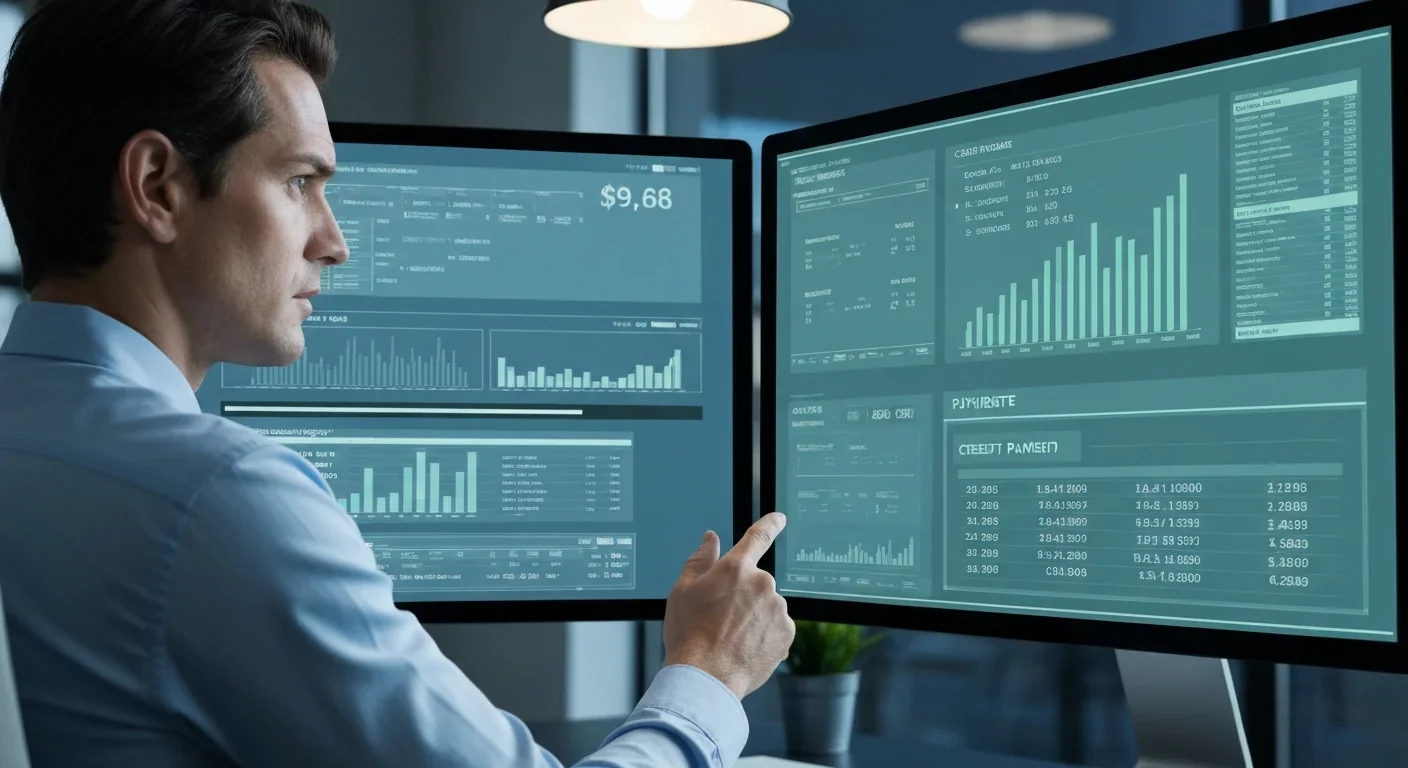
A parallel financial identity is forming around you right now. While you track your FICO score, a sprawling network of data brokers, fintech companies, and AI algorithms are building an alternative credit profile from your digital footprints - utility bills, rent payments, smartphone usage, even how you scroll through apps. This shadow score increasingly determines whether you get approved for loans, what interest rate you pay, if a landlord accepts your application, and sometimes whether an employer hires you.
Within the next five years, most Americans will have their financial futures determined not by a human loan officer, but by an algorithm they'll never see, using data they never consented to share. Industry projections suggest that 70% of consumer lending decisions are already driven by AI systems that integrate alternative data sources. The shift is happening quietly, without the public debate or regulatory oversight that typically accompanies such fundamental changes to how opportunity is distributed in society.
The gap between those who understand this new system and those who don't is widening into a chasm. Roughly 45 million Americans are considered credit invisible or unscorable by traditional metrics. For them, alternative scoring could open doors - or create new barriers disguised as innovation. The stakes couldn't be higher, because this isn't just about getting a credit card. It's about access to housing, employment, insurance, and the building blocks of financial stability.
Traditional credit scores emerged from a simple idea: your history of borrowing and repaying money predicts your future behavior. FICO scores, introduced in 1989, revolutionized lending by standardizing risk assessment. But this system has always had blind spots. Twenty percent of American adults fall into the category of credit invisible due to limited or no traditional credit history. Immigrants, young adults, gig workers, and people who simply avoid debt cards often lack the paper trail that FICO requires.
Alternative credit scoring flips this model completely. Instead of waiting for you to apply for credit, it watches how you live your financial life. Rent payments that used to disappear into the void now get reported to specialized bureaus. Your utility bills - electricity, water, gas, internet, phone - become data points in a scoring algorithm. Buy-now-pay-later services track whether you pay off that $50 purchase on time. Some systems analyze bank account cash flow, looking at deposit regularity, balance patterns, and spending habits.
The data universe keeps expanding. Property records, tax filings, deed transactions, address stability, even payday lending information flow into alternative scoring models. According to a 2023 LexisNexis study, 65% of financial institutions now use alternative data on anywhere from 50% to nearly 100% of new applicants. The industry is pulling approximately 800 million to 900 million alternative credit consumer reports in the U.S. for underwriting purposes annually - a volume that dwarfs traditional credit bureau activity.
Financial institutions are pulling 800-900 million alternative credit reports annually in the U.S. - far exceeding traditional credit bureau volumes and creating parallel financial identities for millions of consumers without their knowledge.
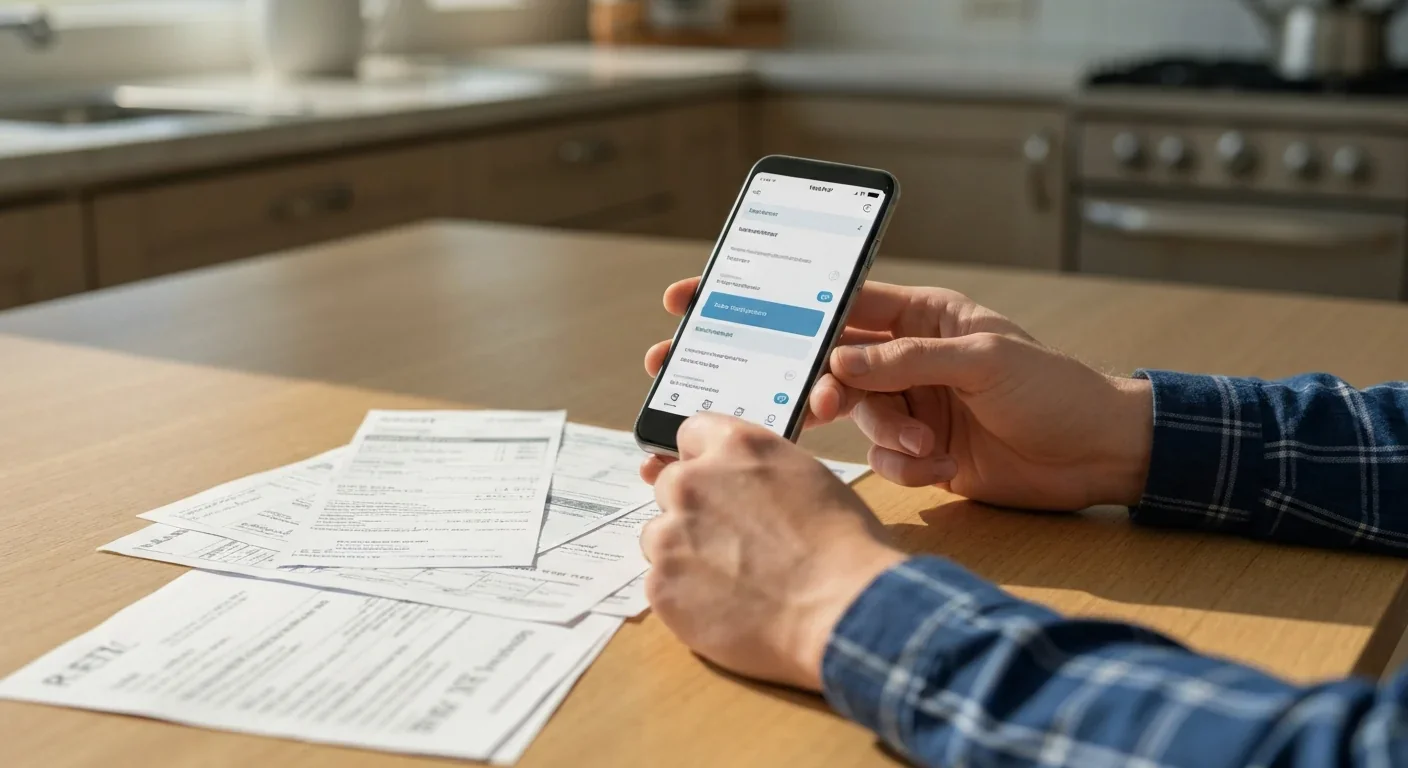
The mechanics of alternative scoring vary wildly by lender and purpose. Some institutions integrate alternative data directly into a primary credit score. Others maintain what's called a "secondary score" - a supplemental metric used to identify underestimated or overestimated applicants within a traditional credit score range. Kevin King of LexisNexis Risk Solutions notes that their RiskView system can reclassify upwards of 5% of consumers within a 20-point score band, significantly affecting both approval odds and interest rates.
Buy-now-pay-later lenders pioneered aggressive alternative data usage because their customer base often lacks traditional credit files. Affirm began reporting customer repayment data to Experian and TransUnion in early 2023, though competitors like Klarna and Afterpay remain hesitant, citing concerns about unfairly penalizing users. This fragmentation means your BNPL payment history might boost your score with one lender while remaining invisible to another.
In housing markets, tenant screening has evolved into a full-blown alternative credit ecosystem. Services like RentRedi partner with TransUnion to generate a "ResidentScore" that predicts rental eviction risk 15% better than traditional credit scores. Nearly 90% of landlords now run comprehensive tenant screening checks that pull credit history, eviction records, criminal background, and employment verification. Specialized bureaus like Landlord Credit Bureau create tenant-specific credit files that exist in parallel to standard credit reports.
The employment sector increasingly uses alternative data too. While the Fair Credit Reporting Act restricts how employers can use traditional credit reports, some background check providers incorporate alternative data that falls outside FCRA's scope. This creates a regulatory gray area where your rent payment history or utility bills might influence a hiring decision without your knowledge.
Insurance companies have also entered the alternative data game. Insurers use credit-based insurance scores to set premiums, arguing that payment behavior correlates with claims risk. When alternative data supplements these scores, the effects cascade through your financial life - a low score can mean paying hundreds more per year for auto or homeowners insurance, even if you've never filed a claim.

Advocates for alternative scoring make compelling arguments. Traditional credit systems exclude huge populations through no fault of their own. An estimated 26 million Americans are credit invisible, locked out of mainstream financial products because they haven't established conventional borrowing relationships. For immigrants who arrived with solid financial standing in their home countries, for young people building their financial lives, for those recovering from medical debt that torpedoed their FICO scores, alternative data offers a potential lifeline.
The inclusion argument extends beyond simple access. FICO research found that combining traditional and alternative data sources yielded models where nearly 60% of predictive power came from nontraditional sources. A 2022 case study showed that incorporating alternative data allowed lenders to accurately score more than 90% of applicants who would otherwise return as no-hit or thin-file by traditional models. In Italy, CRIF helped a multi-regional banking group implement alternative data sources, resulting in a 22% increase in customers adopting new banking products.
"The biggest advantage of alternative credit scoring fintech solutions is their ability to tap into the pool of credit-invisible customers."
- Django Stars, Alternative Credit Scoring Analysis
For lenders, the financial incentive is clear. Alternative data can elevate approval rates by over 10% in numerous portfolios, expanding their addressable market without proportionally increasing default risk. JPMorgan Chase and U.S. Bank participated in government-supported pilot programs to share bank deposit information with credit bureaus, enabling issuers to consider cash flow alongside traditional credit metrics.
From a consumer perspective, those who've been excluded from traditional credit markets often see dramatic improvements. Services like Experian Boost, launched in 2019, allow consumers to voluntarily connect bank accounts so the bureau can identify utility and telecom payment histories and add them to credit reports. For someone starting from zero, seeing rent and utility payments finally "count" feels like financial recognition.

But the alternative data revolution has a darker side that's increasingly coming into focus. The most fundamental issue is transparency - or the complete lack of it. Traditional credit reports are heavily regulated under the Fair Credit Reporting Act, which grants consumers the right to view their reports, dispute errors, and understand what information is being used against them. Alternative scoring operates largely outside this framework.
Most consumers have no idea that their smartphone usage patterns, subscription service payments, or even digital wallet consistency are being tracked and scored. The algorithms making these determinations are proprietary black boxes. When a lender denies your application based on alternative data, the adverse action notice might cite "insufficient credit history" or "unfavorable credit characteristics" without explaining which data points triggered the rejection.
This opacity creates a perfect environment for algorithmic bias to flourish. Even when companies carefully exclude protected characteristics like race, gender, or ZIP code from their models, bias infiltrates through proxy variables that strongly correlate with protected classes. The university you attended, whether you use prepaid phone plans, your employer type, neighborhood characteristics derived from address stability - all of these can serve as proxies for demographics.
Even when algorithms exclude protected characteristics like race and gender, bias finds its way in through proxy variables: prepaid phone usage, university attended, employer type, and address patterns all correlate with demographics - creating digital redlining disguised as objective data analysis.
A 2024 Urban Institute analysis of Home Mortgage Disclosure Act data found Black and Brown borrowers were more than twice as likely to be denied loans than white borrowers. A 2022 UC Berkeley study discovered African American and Latinx borrowers are charged nearly 5 basis points higher interest rates than credit-equivalent white counterparts - amounting to $450 million in extra interest per year. These disparities persist and sometimes amplify when AI-driven alternative scoring enters the picture.
The problem isn't just historical data reflecting past discrimination. AI and machine learning systems can perpetuate existing racial disparities in lending by embedding historical bias into credit risk models. A 2025 study of fintech and traditional lenders found that even under regulatory oversight, significant racial disparities persisted in mortgage lending, with algorithmic systems often amplifying rather than reducing these gaps.
"If an algorithm produces discriminatory results, the lender is liable even if they never intended to discriminate. This 'disparate impact' theory shifts focus from intent to outcomes."
- Consumer Financial Protection Bureau guidance
The financial services industry is projected to spend $97 billion on AI by 2027, growing 29% from 2023. This massive investment is happening faster than regulators can understand the systems being deployed. When discrimination occurs, proving it becomes nearly impossible because the decision-making process is opaque and the models are constantly evolving.
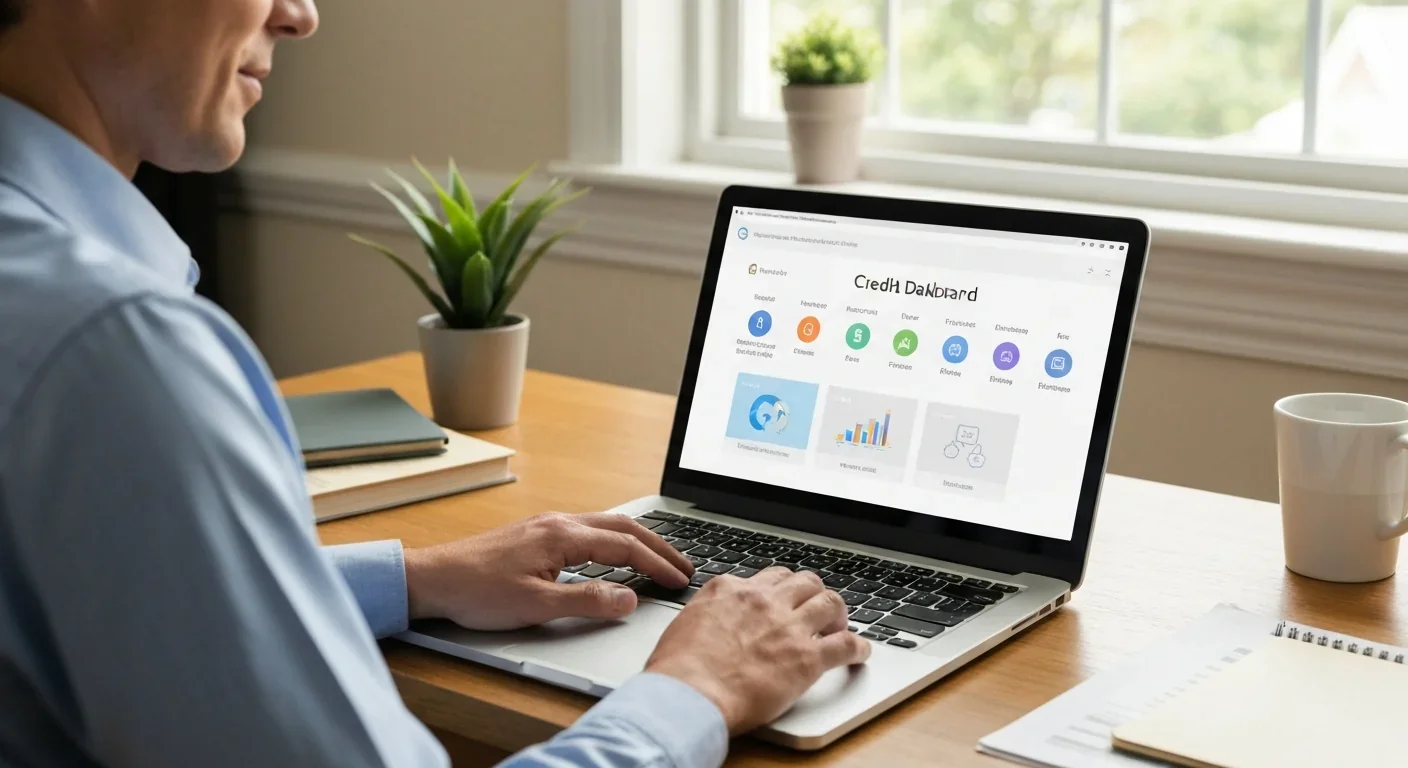
The regulatory landscape for alternative credit scoring resembles the Wild West. The Fair Credit Reporting Act, passed in 1970 and last substantially updated in 2003, predates the smartphone era and wasn't designed for the data ecosystem that now exists. The law applies to "consumer reporting agencies" but the definition doesn't clearly capture many alternative data providers who argue they're offering "scores" or "analytics" rather than "reports."
The Consumer Financial Protection Bureau has shown increasing interest in alternative scoring, holding hearings and issuing market inquiries. The CFPB's guidance emphasizes that if an algorithm produces discriminatory results, the lender remains liable even without discriminatory intent. This "disparate impact" theory shifts focus from intent to outcomes, a crucial principle for addressing algorithmic bias.
Yet enforcement remains scattered. The CFPB lacks the resources to audit every fintech startup deploying alternative scoring models. Many alternative data providers operate as vendors to lenders rather than as consumer reporting agencies themselves, creating jurisdictional complexity. Data privacy regulations like GDPR in Europe and CCPA in California provide some protections, but U.S. federal privacy law remains fragmented.
Some lenders conduct their own fairness testing, running "offline risk tests" to ensure new data sources don't introduce bias. But these tests are voluntary, not standardized, and their methodologies aren't publicly disclosed. Government-supported pilots like Project REACh represent tentative steps toward formalizing alternative data inclusion with proper safeguards, but progress is slow.
The regulatory gap is particularly concerning for emerging data types. Mobile phone metadata, app usage patterns, social media behavior, and even psychometric testing are being explored as potential credit signals. The methodologies are experimental, the fairness implications unknown, and the oversight essentially nonexistent.
Housing: The rental market illustrates how alternative scoring affects access to a fundamental need. A tenant with perfect rent payment history but no credit cards might face rejection if the landlord's screening service weights traditional credit scores heavily. Conversely, someone with a checkered past who's been paying rent on time for years might finally get recognition through services that report to tenant-specific bureaus. The bureau claims that one-third of delinquencies stop when landlords report rent payments, suggesting that visibility creates accountability. But 68% of tenants say they prefer rental properties that report payments, indicating asymmetric power - landlords can use alternative data to screen tenants, but tenants lack equivalent tools to evaluate landlords.
Employment: While explicit credit checks in hiring are regulated, alternative data in background checks operates in murkier territory. Some industries justify these checks as fraud prevention or security vetting. But when a job applicant is rejected based on an alternative score they can't view or contest, it violates basic fairness principles. The ripple effects are generational - if alternative scores disadvantage certain communities in employment access, it perpetuates economic inequality under a veneer of data-driven objectivity.
Financial Services: The lending sector is where alternative scoring was born and where it's most entrenched. Auto finance companies incorporate utility payment data. Mortgage lenders use rental payment history. Peer-to-peer platforms review mobile phone payment patterns. Banks pilot buy-now-pay-later performance as a credit input. For consumers with thin traditional credit files, this expansion can mean approval. But it also means more of your life is being surveilled and commodified, with limited transparency about which behaviors help or hurt your score.
Insurance: Credit-based insurance scores affect premiums for auto, home, and sometimes life insurance. When alternative data feeds into these calculations, the connection between the data and the insured risk becomes increasingly tenuous. Does your streaming service subscription history really predict whether you'll file a homeowners claim? The insurers' models say yes, but consumers and some regulators remain skeptical. The practical impact is that people in economically disadvantaged areas often pay more for insurance, partly because alternative data correlates with geography.
Most people have no strategy for managing their alternative credit profile because they don't know it exists. That ignorance is costly. Here's what you can do to understand and potentially improve your shadow score:
Know What's Being Collected: Start by identifying which of your regular payments might feed into alternative scoring. Rent, utilities (electricity, gas, water), phone bills, internet service, streaming subscriptions, and buy-now-pay-later purchases are the most common data points. Bank account activity including deposit patterns, balance levels, and overdraft history may also be analyzed if you apply for products that use open banking data.
Opt Into Positive Reporting: Services like Experian Boost, UltraFICO, and eCredable Lift allow you to voluntarily add utility and telecom payments to your credit reports. For the estimated 26 million credit-invisible Americans, this can be transformative. The process typically involves connecting your bank account so the service can identify qualifying payments. Importantly, these services usually report only positive payment history, meaning late payments don't get added.
Report Your Rent: If you're a renter with consistent payment history, consider using a rent reporting service. Some require landlord participation, while others can verify rent payments through bank statements. The impact varies by lender since not all use rent data, but it's especially valuable if you're building credit for a future mortgage application.
Understand Soft vs. Hard Inquiries: When you're being screened for an apartment or certain services, confirm whether it's a soft inquiry that won't affect your credit score. Many tenant screening services use soft pulls specifically to avoid harming applicants. If a hard inquiry is required, limit the number of applications you submit within a short period, as multiple hard pulls can drag down your score.
Your rent payments, utility bills, and even buy-now-pay-later purchases are building a parallel credit profile you can't see. Opt into services like Experian Boost to make your positive payment history visible - 26 million credit-invisible Americans could benefit but most don't know these tools exist.
Monitor Alternative Data Providers: While traditional credit reports from Equifax, Experian, and TransUnion are easy to access for free, alternative data is scattered across numerous providers. Some tenant screening bureaus allow consumers to request their records for free. Check whether services you use report to credit bureaus and whether they offer access to your data profile.
Maintain Payment Consistency: The core principle that makes traditional credit scoring work also applies to alternative data - consistency signals reliability. Autopay for utilities and recurring bills ensures you're never late. Maintaining stable housing and employment creates positive signals around "address stability" and "job history" that some algorithms weigh heavily.
Challenge Errors Aggressively: If you're denied based on information from a consumer report (alternative or traditional), you have the right under FCRA to see that report and dispute inaccuracies. Many alternative data providers aren't accustomed to consumers exercising these rights, so persistence matters. Document everything, follow up in writing, and escalate to the CFPB if providers are unresponsive.
Be Cautious with Data Sharing: When applying for financial products, read the fine print about data sharing permissions. Some applications ask permission to access your bank transactions, social media, or phone data. You can often decline these requests, though it might affect your approval odds. Weigh whether the product is worth granting access to additional personal information.
Advocate for Transparency: Contact your representatives about alternative credit scoring regulation. The more constituents voice concerns about algorithmic bias, lack of transparency, and consumer rights, the more political will there is for reform. Support organizations pushing for stronger data privacy laws and credit scoring oversight.
The genie is out of the bottle - alternative credit scoring is here to stay. The question is whether this system will be reformed to serve consumers fairly or whether it will calcify into a parallel infrastructure that reproduces existing inequalities with algorithmic efficiency.
Several potential paths exist. The most ambitious would be comprehensive federal privacy legislation that gives consumers ownership over their personal data, requiring explicit opt-in for non-traditional credit scoring uses. This would mirror GDPR's approach in Europe, where consumers must be told clearly what data is being collected and how it's used. The credit reporting industry strongly opposes this model, arguing it would reduce credit availability.
A middle path would expand FCRA to clearly cover alternative data providers, granting consumers the same rights to access, dispute, and understand alternative scores as they have with traditional credit reports. This could include requirements that algorithms produce explainable scores, so consumers understand which specific behaviors are helping or hurting them. The challenge is defining "consumer reporting agency" broadly enough to capture modern data brokers without stifling innovation.
Mandatory fairness testing represents another lever. Require any lending algorithm, whether using traditional or alternative data, to undergo regular audits for disparate impact across protected classes. Make the testing methodology and results public. This transparency would pressure companies to address bias and give consumer advocates data to push for improvements.
Industry self-regulation is already happening to some degree. Major lenders don't want the liability of discriminatory lending, so they're developing internal standards. But self-regulation without external oversight historically proves insufficient, especially when competitive pressures reward cutting corners.
The technical community is exploring "fairness-aware machine learning" that bakes equity considerations into algorithm design from the start. Techniques like adversarial debiasing, disparate impact analysis during model training, and counterfactual fairness testing show promise. But even technically fair algorithms can produce unfair outcomes if the underlying data reflects historical discrimination.
Ultimately, the future of alternative credit scoring depends on whether society decides to prioritize financial inclusion or unchecked innovation. Both are possible, but they require different regulatory structures. Inclusion demands transparency, accountability, and mechanisms to correct bias. Unchecked innovation assumes markets will self-correct and that access, even on potentially discriminatory terms, is better than exclusion.
If you take away one thing from understanding alternative credit scoring, it should be this: your financial identity is no longer confined to whether you pay your credit card bill on time. Everything you do that generates a digital payment trail is potentially being tracked, analyzed, and scored. This shadow system influences major life decisions - where you can live, what you pay for insurance, sometimes whether you get hired.
The asymmetry of information between you and the institutions scoring you is profound. They know your patterns better than you do. They see correlations you can't. They make decisions using data you didn't know existed. And when those decisions go against you, the reasons often remain opaque.
This doesn't mean alternative credit scoring is inherently bad. For millions of credit-invisible Americans, it offers a pathway to financial participation that traditional systems denied. For lenders, it provides a more complete picture of risk, potentially lowering default rates and expanding the addressable market. The technology itself is neutral.
But the implementation matters enormously. A system built without transparency, operated without accountability, and deployed without fairness testing won't magically produce equitable outcomes. It will encode existing biases into algorithmic form, making discrimination harder to detect and challenge while giving it the veneer of objective, data-driven decision-making.
You have more power than you might think. Awareness is the first step. Understanding what's being collected and how it might be used lets you make informed decisions about data sharing. Exercising your rights to access and dispute credit information puts pressure on providers to maintain accuracy. Supporting regulatory reforms creates political momentum for change.
The shadow credit system is shaping your financial future whether you engage with it or not. The only question is whether you'll participate knowingly, on your own terms, or remain unaware while algorithms make increasingly consequential decisions about your life. In an age where data is power, literacy about how that data is used is no longer optional - it's a survival skill for navigating modern financial markets.
The next time you pay your electric bill, stream a show, or split a purchase into installments, remember: somewhere, an algorithm is watching, learning, and scoring. And that score might matter more than you think.

Project Orion was a real 1960s program to reach other stars by detonating 800 nuclear bombs behind a spacecraft. The physics worked and the engineering was feasible, but the 1963 nuclear test ban treaty killed it. It remains the most credible interstellar spacecraft ever designed.

The locus coeruleus, a tiny brainstem structure, degenerates decades before Alzheimer's symptoms appear. Its loss cripples the brain's inflammation control, waste clearance, and sleep regulation. New imaging tools and noradrenergic therapies offer hope for early detection and prevention.

Research shows the sharing economy often increases total resource consumption through the Jevons paradox and rebound effects. Ride-sharing adds billions of vehicle miles, co-working spaces use more energy per worker, and diffused responsibility erodes conservation behavior. Breaking the paradox requires congestion pricing, accountability design, and matching sharing models to appropriate resource types.

Psychological reactance theory explains why banning or restricting things makes people want them more. From Prohibition to the Streisand effect to scarcity marketing, research shows that threatening people's freedom reliably backfires, and autonomy-supportive communication is far more effective.

A carnivorous pitcher plant in Borneo evolved to house bats instead of trapping insects, gaining up to 95% of its nitrogen from bat guano. The plant even built an ultrasonic reflector to help bats find it, revealing that carnivory in plants is a flexible spectrum.
The quantified self movement began as a hacker-ethos pursuit of personal insight, but corporate wearables now funnel biometric data to employers, insurers, and data brokers. With 81% of Americans wrongly believing health apps are HIPAA-protected, a regulatory void enables health data to be sold for pennies while generating anxiety instead of empowerment.
CXL memory pooling lets servers dynamically share DRAM over a cache-coherent interconnect, eliminating the 40% stranded memory waste in data centers. With commercial hardware now shipping and Azure deploying CXL cloud instances, this technology promises to cut memory costs by 50% while enabling composable infrastructure.

Loading featured articles...