Self-Tracking to Surveillance: Quantified Self's Fall

Self-Tracking to Surveillance: Quantified Self's Fall

The Authenticity Tax: How Being Yourself Became Labor

The Vacancy Paradox: Empty Homes and Homelessness

How Engagement Algorithms Turn Social Media Into Outrage

Data Dignity: Should You Own Your Personal Data?

The Great Log-Off: Why Millions Quit Social Media
TL;DR: A century of exclusionary zoning laws eliminated affordable housing options like duplexes and triplexes from American cities, creating today's affordability crisis. Now, cities from Minneapolis to Oregon are legalizing 'missing middle' housing again, offering hope that reform can restore urban affordability.
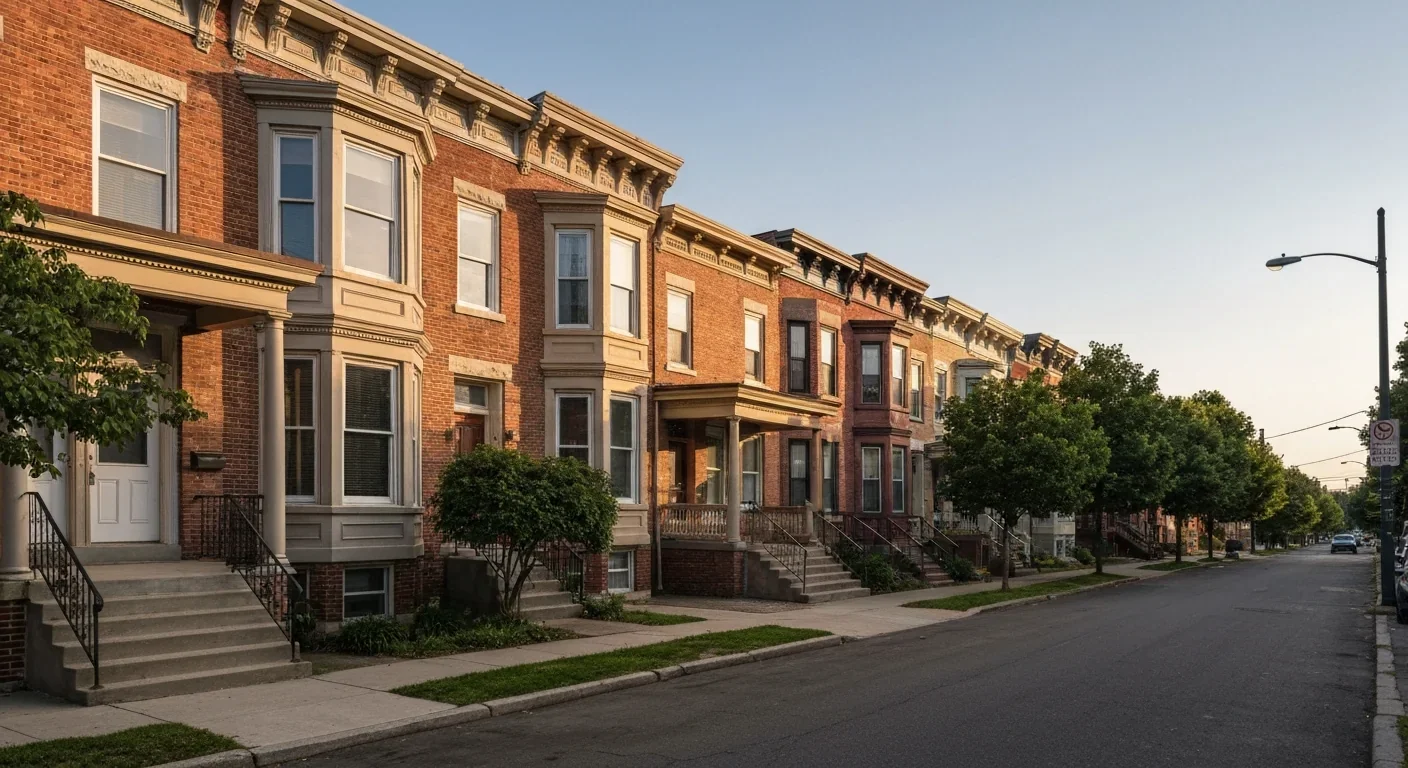
Walk through any pre-war American city and you'll notice something curious. The most charming neighborhoods - Brooklyn's brownstones, Boston's triple-deckers, Chicago's two-flats - couldn't legally be built today. Not because we've lost the architectural know-how, but because a century of zoning laws systematically outlawed the very housing that made cities affordable. We called it progress. We called it protecting property values. What we actually created was a housing crisis that's pricing millions out of the places they call home.
The term "missing middle housing" describes what vanished: duplexes, triplexes, courtyard apartments, townhouses - the medium-density options that once filled the gap between single-family homes and large apartment buildings. These weren't luxury developments or public housing projects. They were the bread-and-butter of urban living, the places where teachers, nurses, and shopkeepers could afford to live near their work. Today, in cities from Minneapolis to San Francisco, they're mostly illegal to build.
The story begins in 1926, when the Supreme Court handed down a decision that would reshape American cities for generations. In Village of Euclid v. Ambler Realty Co., the court upheld the right of municipalities to segregate land uses through comprehensive zoning. The village of Euclid, Ohio had divided its territory into districts, reserving vast swaths exclusively for single-family homes. The court called it a reasonable exercise of police power. Real estate developers called it the future.
What followed was nothing short of revolutionary. City after city adopted Euclidean zoning, often dedicating 70% or more of residential land to single-family homes only. Los Angeles restricted 75% of its residential areas. Seattle, Portland, and San Francisco followed similar patterns. The message was clear: apartments and multi-family housing were incompatible with "good" neighborhoods.
But the motivations weren't purely about land use planning. As historians have documented, early zoning advocates explicitly conflated density with poverty and crime, while idealizing suburban estate living as morally superior. Some cities used zoning as a proxy for racial segregation after explicit racial covenants became unenforceable. The policies were often written in the language of public health and urban planning, but they served to exclude based on class and race.
Before zoning regulations, most urban dwellers in the lower to middle-income brackets lived in dense, walkable neighborhoods within practical distance of their workplaces - housing diversity was the norm, not the exception.
Before these regulations took hold, American cities looked fundamentally different. At the turn of the 20th century, most urban dwellers in the lower to middle-income brackets lived in dense, walkable neighborhoods within practical distance of their workplaces. Two-flats in Chicago, rowhouses in Philadelphia and Baltimore, triple-deckers in Boston, bungalow courts in California - these housing types dominated the urban landscape and provided affordable options across the income spectrum.

The elimination of missing middle housing didn't happen in isolation. Federal policies turbocharged the transformation. The Federal Housing Administration, established during the New Deal, refused to insure mortgages in neighborhoods with multi-family housing or racial integration. The FHA's Underwriting Manual literally recommended "prohibition of the occupancy of properties except by the race for which they are intended" and advised against insuring properties near "incompatible racial groups."
Meanwhile, massive federal investments in highways made car-dependent suburban living practical - and municipal zoning made it mandatory. Cities required minimum lot sizes, setbacks, and parking minimums that effectively prohibited anything but detached single-family homes in most residential areas. These regulations helped make cars the default transportation choice for middle-class Americans by the 1960s, which in turn undermined the financial viability of public transit.
The results were dramatic. Between 1940 and 1980, the share of housing units in structures with 2-4 units - classic missing middle housing - plummeted from nearly 20% of the national housing stock to less than 10%. In many cities, it approached zero. New construction became a binary choice: either detached single-family homes on large lots, or large apartment complexes requiring significant capital and navigating complex approval processes.
The economic consequences of this regulatory straitjacket are now impossible to ignore. In metro areas with strict zoning, housing costs have skyrocketed far beyond what income growth can explain. A Harvard study found that legalizing missing middle housing could unlock significant affordability gains, particularly in high-opportunity neighborhoods currently zoned exclusively for single-family homes.
The mechanism is straightforward: when you prohibit building anything but expensive single-family homes on most residential land, housing supply cannot respond to demand. Population growth and economic vitality drive up prices, but restrictive zoning prevents the natural densification that historically kept cities affordable. A duplex on a standard lot provides two homes where zoning currently allows one. A fourplex provides four. The math is simple, even if the politics aren't.
"Strict zoning regulations in high-productivity cities have reduced US GDP by trillions of dollars by preventing workers from moving to where their labor would be most valuable."
- National Bureau of Economic Research
Research from the National Bureau of Economic Research quantifies the impact: strict zoning regulations in high-productivity cities have reduced US GDP by trillions of dollars by preventing workers from moving to where their labor would be most valuable. When housing costs in San Francisco or Boston price out teachers, healthcare workers, and service employees, the entire economy suffers.
The social equity dimensions run even deeper. Exclusionary zoning has reinforced residential segregation by income and race, concentrating poverty in some neighborhoods while reserving high-opportunity areas for the wealthy. Children growing up in neighborhoods with good schools, low crime, and economic opportunity have dramatically better life outcomes - but zoning laws have made those neighborhoods accessible only to those who can afford million-dollar single-family homes.
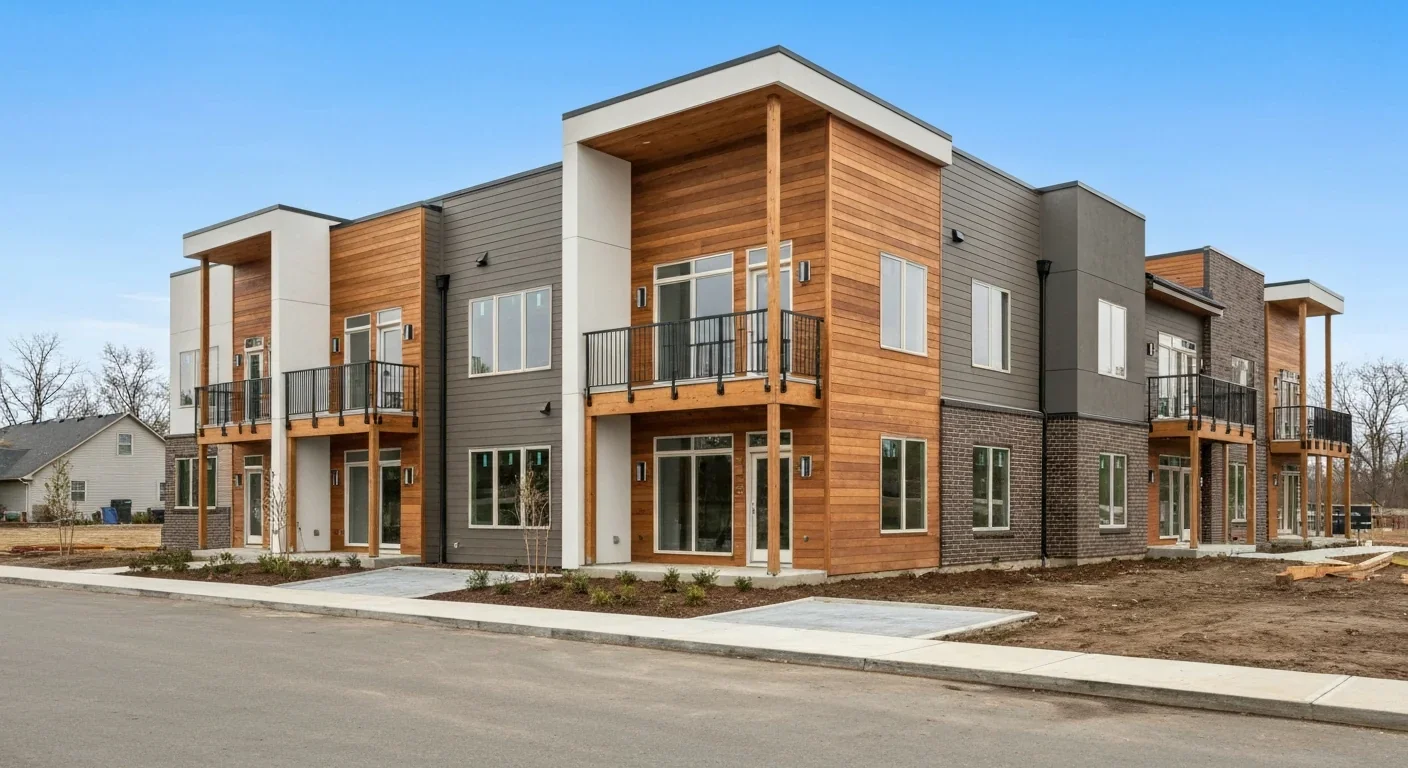
Environmental consequences compound the problem. By forcing development into low-density suburban patterns, exclusionary zoning has driven car-dependent sprawl that increases greenhouse gas emissions, destroys natural habitats, and makes wildfires more destructive. The inefficient land use also drives up infrastructure costs, as cities must maintain more roads, sewers, and utilities per resident.
Something is shifting. After decades of accepting strict zoning as immutable, cities and states are beginning to legalize missing middle housing again. The reforms vary in scope and approach, but the direction is unmistakable.
Oregon made headlines in 2019 with House Bill 2001, which requires cities over 10,000 residents to allow duplexes on all lots zoned for single-family homes, and cities over 25,000 to allow triplexes, fourplexes, and cottage clusters. Preliminary data suggests the reforms are working, with duplex permits increasing significantly, though advocates argue the state needs to go further and allow larger multi-family buildings near transit and commercial corridors.
Minneapolis abolished single-family zoning entirely in 2018, allowing up to three units on any residential lot citywide. Early research from UCLA's Luskin School found that the reforms led to more housing construction, particularly in previously exclusive neighborhoods, without causing the displacement that opponents feared. The city is now seeing fourplexes and small apartment buildings rise in neighborhoods that had been frozen in amber for generations.
California, facing perhaps the nation's most acute housing crisis, has passed a flurry of reforms. State law now allows accessory dwelling units (ADUs) on most single-family lots, requires cities to allow multi-family housing near transit, and streamlines approval for projects that include affordable units. Even the powerful California Coastal Commission, long criticized as a barrier to housing development, is showing signs of a pro-building shift.
Massachusetts, Washington State, and New York are among the growing number of states enacting zoning reforms, signaling a nationwide shift in housing policy after decades of restrictive regulations.
Massachusetts enacted legislation requiring communities served by the MBTA transit system to allow multi-family housing near transit stations. Washington State has encouraged cities to increase residential capacity. New York City is grappling with regulations to legalize basement apartments that have housed immigrant families for decades but remained in legal limbo.

Yet reform faces fierce headwinds. Opposition comes from multiple directions, each with different motivations but often overlapping in effect.
Incumbent homeowners worry that allowing more housing will reduce their property values - though research suggests these fears are often overblown, as the value of being able to develop land frequently exceeds any reduction from increased supply. Neighborhood associations resist "changing the character" of their communities, language that often masks exclusionary impulses. Some environmental groups, ironically, oppose density in the name of protecting open space, even though urban density is far more environmentally sustainable than sprawl.
The implementation challenges go beyond politics. Building codes, parking requirements, and other regulations can nullify zoning reforms if not addressed comprehensively. In Massachusetts, despite statewide legalization of ADUs, many communities have imposed restrictions that make them difficult or impossible to build in practice. Advocates argue that simply legalizing missing middle housing isn't enough - reforms must also address parking mandates, setback requirements, and approval processes that add costs and delays.
The construction industry itself presents obstacles. Decades of building nothing but single-family homes and large apartment buildings means the expertise and business models for missing middle development have atrophied. Builders need to relearn how to profitably construct fourplexes and small apartment buildings. Lenders need to develop financing products appropriate for these projects. It takes time for markets to adapt.
Some critics argue that zoning reform is a distraction from the "real" solutions to housing affordability: rent control, public housing, and stronger tenant protections. Proponents counter that we need all of these tools, and that restricting supply makes every other intervention more expensive and less effective. The debate often breaks along ideological lines, with market-oriented advocates emphasizing the role of supply restrictions and progressive activists focusing on tenant protections and public investment.
As reforms accumulate, we're learning what moves the needle. Simply allowing missing middle housing as a theoretical right isn't sufficient if practical barriers remain. The most effective reforms combine zoning changes with complementary policies.
Eliminating or drastically reducing parking requirements makes small-scale development financially viable. A fourplex that must provide eight parking spaces often can't pencil out on a standard urban lot. Allowing development by right - without discretionary review boards that can kill projects - speeds construction and reduces costs. Updating building codes to reflect modern construction methods and materials can significantly reduce expenses.
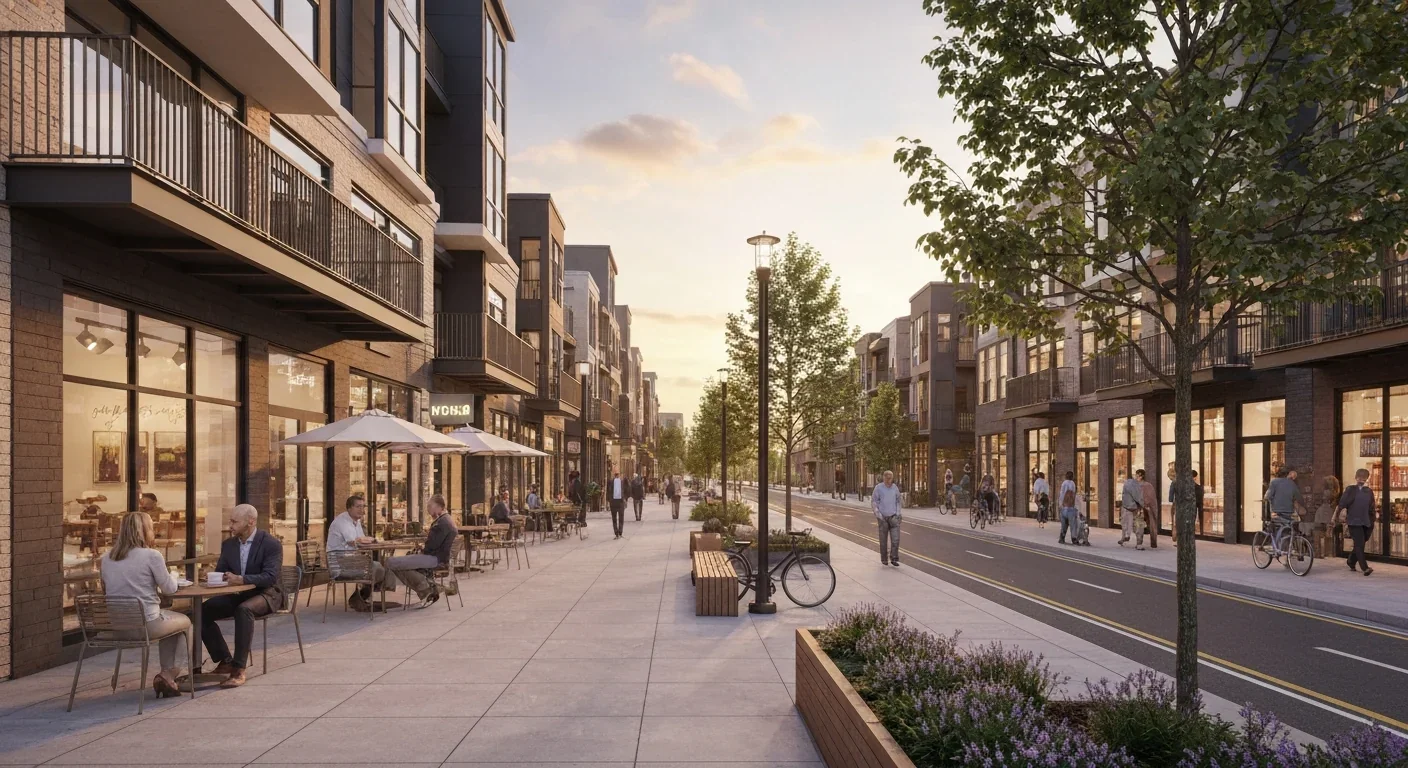
Financial incentives help overcome market inertia. Inclusionary zoning, which requires or incentivizes affordable units in new developments, remains controversial but has produced results in some markets. Tax incentives for ADU construction have spurred development in cities from Portland to Los Angeles. Pre-approved designs can reduce architectural costs for small builders.
Scale matters. Reforms work best when applied broadly rather than piecemeal. Minneapolis eliminated single-family zoning citywide rather than in selected areas, avoiding the concentrated opposition that often kills more limited reforms. Oregon required changes statewide, preventing wealthy suburbs from opting out. Research suggests that comprehensive approaches are more likely to produce meaningful housing supply increases.
The housing affordability crisis didn't materialize overnight, and zoning reform won't solve it immediately. Even the most optimistic projections suggest it will take years or decades of sustained building to meaningfully impact prices in high-cost markets. Construction takes time. Market actors need to adapt to new rules. Neighbors need to adjust to changing streetscapes.
But the direction is increasingly clear. The mid-20th century experiment in mandating universal single-family suburbia has failed on its own terms. It has not produced broadly shared prosperity or stable housing costs. Instead, it has generated sprawl, segregation, and a housing shortage that undermines economic growth and social mobility.
"The triple-deckers of Boston, the brownstones of Brooklyn, the courtyard apartments of Los Angeles - these remain among the most desirable housing in the country precisely because they offer the combination of urban amenities and residential character that strict zoning prohibits."
- Urban Planning Researchers
The good news is that we don't need to invent solutions from scratch. We can look to our own history, to the walkable, mixed-density neighborhoods that still command premium prices in every American city. The triple-deckers of Boston, the brownstones of Brooklyn, the courtyard apartments of Los Angeles - these remain among the most desirable housing in the country precisely because they offer the combination of urban amenities and residential character that strict zoning prohibits.
Making that housing legal to build again won't solve every problem. We'll still need investments in affordable housing, stronger tenant protections, and programs to help low-income families access opportunity-rich neighborhoods. But we can't build our way out of a housing shortage if building is illegal. Legalizing missing middle housing is a necessary foundation, even if it's not sufficient by itself.
The reforms spreading across the country suggest a different vision of urban life. One where teachers and nurses can afford to live in the neighborhoods where they work. Where young families don't need to choose between a long commute and financial stress. Where the housing diversity that once characterized American cities becomes possible again.
It won't be easy. Every parcel of land involves entrenched interests, and every neighborhood has passionate defenders of the status quo. But the cost of inaction keeps mounting. Housing costs continue to rise faster than incomes. Climate change demands denser, more sustainable urban forms. Social mobility requires access to opportunity-rich neighborhoods.
A century ago, American cities made a choice to outlaw the housing that had built them. That choice has shaped our cities, our economy, and our society in profound ways. Now a new generation of reformers is asking whether we can choose differently. Whether we can bring back the missing middle and, with it, the possibility of affordable urban life. The answer may determine what kind of cities we inhabit for the next hundred years.

Project Orion was a real 1960s program to reach other stars by detonating 800 nuclear bombs behind a spacecraft. The physics worked and the engineering was feasible, but the 1963 nuclear test ban treaty killed it. It remains the most credible interstellar spacecraft ever designed.

The locus coeruleus, a tiny brainstem structure, degenerates decades before Alzheimer's symptoms appear. Its loss cripples the brain's inflammation control, waste clearance, and sleep regulation. New imaging tools and noradrenergic therapies offer hope for early detection and prevention.

Research shows the sharing economy often increases total resource consumption through the Jevons paradox and rebound effects. Ride-sharing adds billions of vehicle miles, co-working spaces use more energy per worker, and diffused responsibility erodes conservation behavior. Breaking the paradox requires congestion pricing, accountability design, and matching sharing models to appropriate resource types.

Psychological reactance theory explains why banning or restricting things makes people want them more. From Prohibition to the Streisand effect to scarcity marketing, research shows that threatening people's freedom reliably backfires, and autonomy-supportive communication is far more effective.

A carnivorous pitcher plant in Borneo evolved to house bats instead of trapping insects, gaining up to 95% of its nitrogen from bat guano. The plant even built an ultrasonic reflector to help bats find it, revealing that carnivory in plants is a flexible spectrum.
The quantified self movement began as a hacker-ethos pursuit of personal insight, but corporate wearables now funnel biometric data to employers, insurers, and data brokers. With 81% of Americans wrongly believing health apps are HIPAA-protected, a regulatory void enables health data to be sold for pennies while generating anxiety instead of empowerment.

CXL memory pooling lets servers dynamically share DRAM over a cache-coherent interconnect, eliminating the 40% stranded memory waste in data centers. With commercial hardware now shipping and Azure deploying CXL cloud instances, this technology promises to cut memory costs by 50% while enabling composable infrastructure.

Loading featured articles...